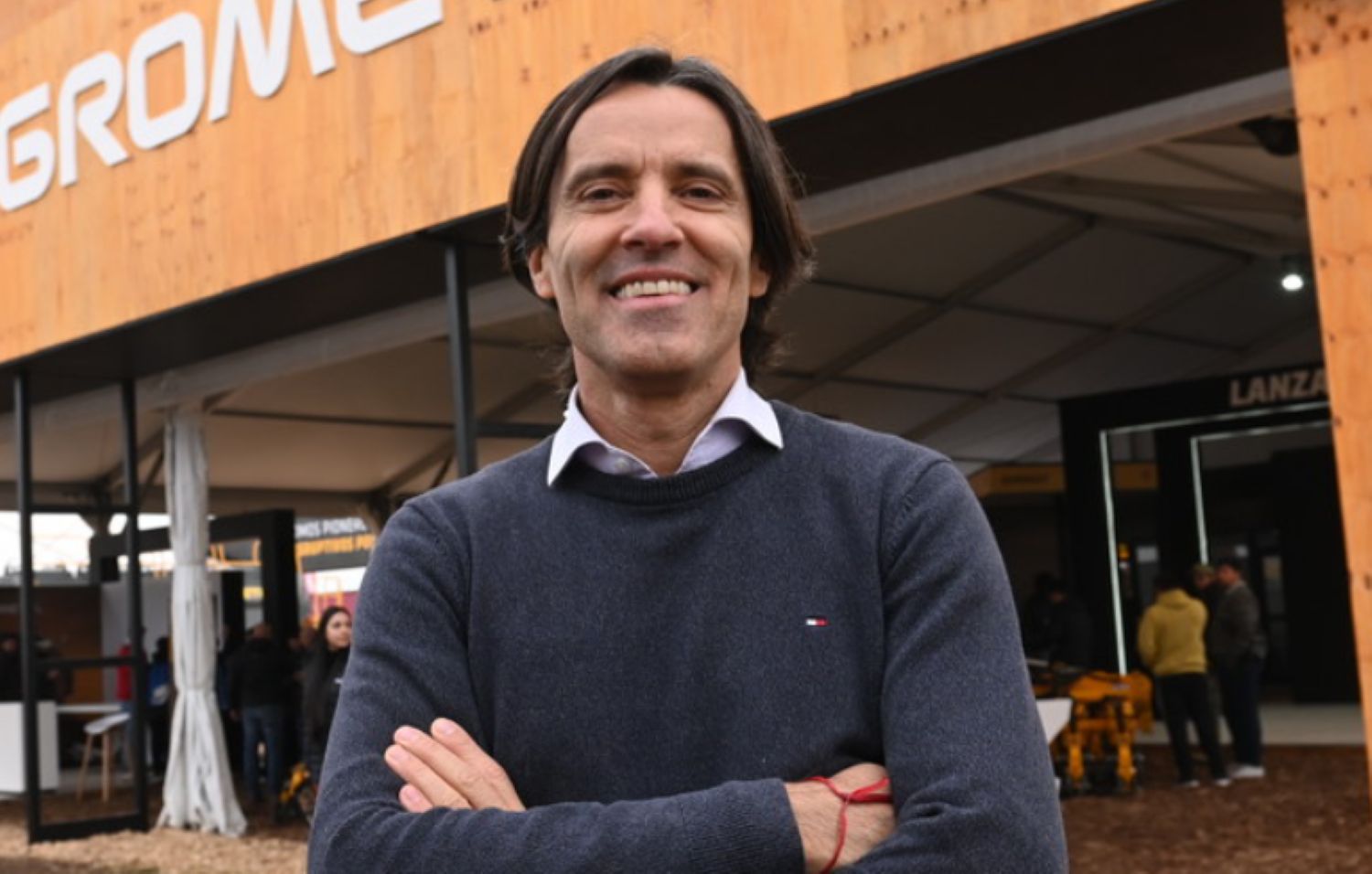
Ariel Szarfsztejn does not know how to code, but one weekend he set about building, with the help of an artificial intelligence agent, a program to bring together his medical test results from the past fifteen years. He wanted to have them all in one place and compare the results. He spent eight hours at his computer.
He instructed it to look for the tests at the medical centers where he had been treated, retrieve the data and chart changes over time. He also asked it to produce a diagnosis. As he recounts the experience, he points out that his wife can vouch for the hours he spent sitting there. She is in the audience.
He did not do it for work. He was curious and enjoyed experimenting.
He tells the story during a talk with students and graduates of the University of Buenos Aires’ School of Economic Sciences. He explains that he has an economics degree, has never practiced as an economist and knows nothing about programming. Even so, he was able to build the program. That is why he recommends trying these tools and learning to use them: he is convinced they will need them in their professional lives.
On January 1, 2026, he took over at Mercado Libre. Galperin had held the position for twenty-six years, since founding the company in 1999, and became executive chairman. No one had succeeded him in that role before Szarfsztejn’s arrival.
He was 43 when his appointment was announced in May 2025. He had studied Economics at the University of Buenos Aires and completed an MBA at Stanford. He joined Mercado Libre in 2017, recruited by Pedro Arnt, then chief financial officer, and had been president of the commerce business since 2023.
Learning With People to Manage
His first job was in human resources at Citibank. He then moved to a small pharmaceutical company undergoing insolvency proceedings. Because the budget could not cover hiring someone with more experience, he was entrusted with production and logistics. He was very young and was put in charge of between twenty and thirty people.
There he realized that working with people was more complicated than what he had studied. Books could explain what to do, but then he had to reach agreements with people of different ages, with different experience and different ways of working.
It would have helped him to know that when he left university. Having more patience would have helped, too: he wanted to move quickly and became frustrated when things took longer than he had imagined. Over time, he understood that he could not rush every process in a company.
At Boston Consulting Group, he changed subjects every few months: he would go from working with a bank to a consumer goods company or a project with the Chilean government. He had to learn quickly about each one. He took away a way of working that he still uses: organizing the information and understanding the problem before proposing a solution.
His MBA at Stanford brought him closer to technology. When he returned, he joined Despegar, where he began working with developers and learning about the process of turning an idea into a product.
Nine Months Later, Logistics
He had joined Mercado Libre to lead strategy. Nine months later, he took charge of logistics, although he knew little about it. He had become involved because deliveries could hold back the company’s growth. He helped prepare a plan to build a network of its own and, when the time came to put it into practice, he was offered the job himself.
As he recalls, until then every shipment had been handled by the postal service of the country concerned: Mercado Libre did not touch a box. He had to open warehouses, organize transportation, develop systems and hire people. Orders kept coming in while they were putting all of that together.
He still considers it the hardest challenge of his career.
In 2018, Mercado Envíos had sixty people. During the talk, he estimated that it now has around seventy thousand.
For the company as a whole, he spoke of around one hundred and thirty thousand employees, although he admitted he no longer had the exact number.
He says his career within the company changed as a result of that experience in logistics.
Making Decisions Without Becoming Paralyzed
The interviewer asks how he handles the pressure of making decisions involving millions of dollars and the work of thousands of people.
“The healthiest approach is not being fully aware,” he replies.
He says that if he started thinking about everything that could happen with each decision, he would find it difficult to keep going. And the calculation extends beyond employees: there are the sellers who make a living from their businesses on Mercado Libre, as well as the buyers. In the previous year alone, he said, one hundred and twenty million people had bought on the platform.
Sometimes he comes across someone using a Mercado Pago QR code to receive a payment or ask for help. He says those scenes make him proud: he can see what their work is for.
There is something about his work that he would like his daughters to remember: in 2018, he helped launch a feature that allows users to earn returns on the money available in Mercado Pago. He recalls that Argentina had around four hundred thousand brokerage accounts at the time. To invest, people first had to open an account, complete forms and decide what to do with that money.
Today, he says, twenty million people earn returns on the balance they hold in the app.
When discussing his responsibilities as CEO, he returns to football. To explain how he feels at Mercado Libre, he turns to Real Madrid: he is already on the team he wanted to play for; the next step is to win the Champions League. For him, that means Mercado Libre and Mercado Pago continuing to improve their users’ lives.
Asking Why
As CEO, he is particularly concerned with how to pass on to newcomers the way of working he found at Mercado Libre.
Within Mercado Libre, they compare themselves to a high-performance sports team. They expect good results, competition with outsiders and collaboration among teammates. He devotes much of his time to ensuring that this way of working is maintained as the company grows.
For his part, he likes to know the details and ask why things are done in a particular way. He acknowledges that this persistence can unsettle people who are starting to work with him. But he also says that many of his best ideas emerge from listening to the answers.
He does not want to oversee every task. He seeks to understand enough to discuss a decision and help solve a problem. He describes himself as demanding and fair, adding that he tries to treat people humanely.
Choosing the Next Job
Szarfsztejn says he never made a career decision with a position he wanted to hold ten years later in mind. Nor does he believe he could have planned the path that led him to run Mercado Libre.
If someone had mapped out that path from the outside, it would hardly have included moving from strategy to logistics nine months after joining.
He prefers to talk about what can be decided at each stage: accepting a job that offers opportunities to learn, making the most of an opportunity and recognizing when an offer is not a good fit.
He has made lists of advantages and disadvantages before changing jobs. Even so, he acknowledges that part of the decision involves imagining himself in that place, working with those people, and paying attention to how he feels.
At the end of the talk, he returns to the attitude toward difficulties. He recommends spending less time wondering why things go wrong and more time considering what can be done. He puts it in a few words: complain less and solve more.