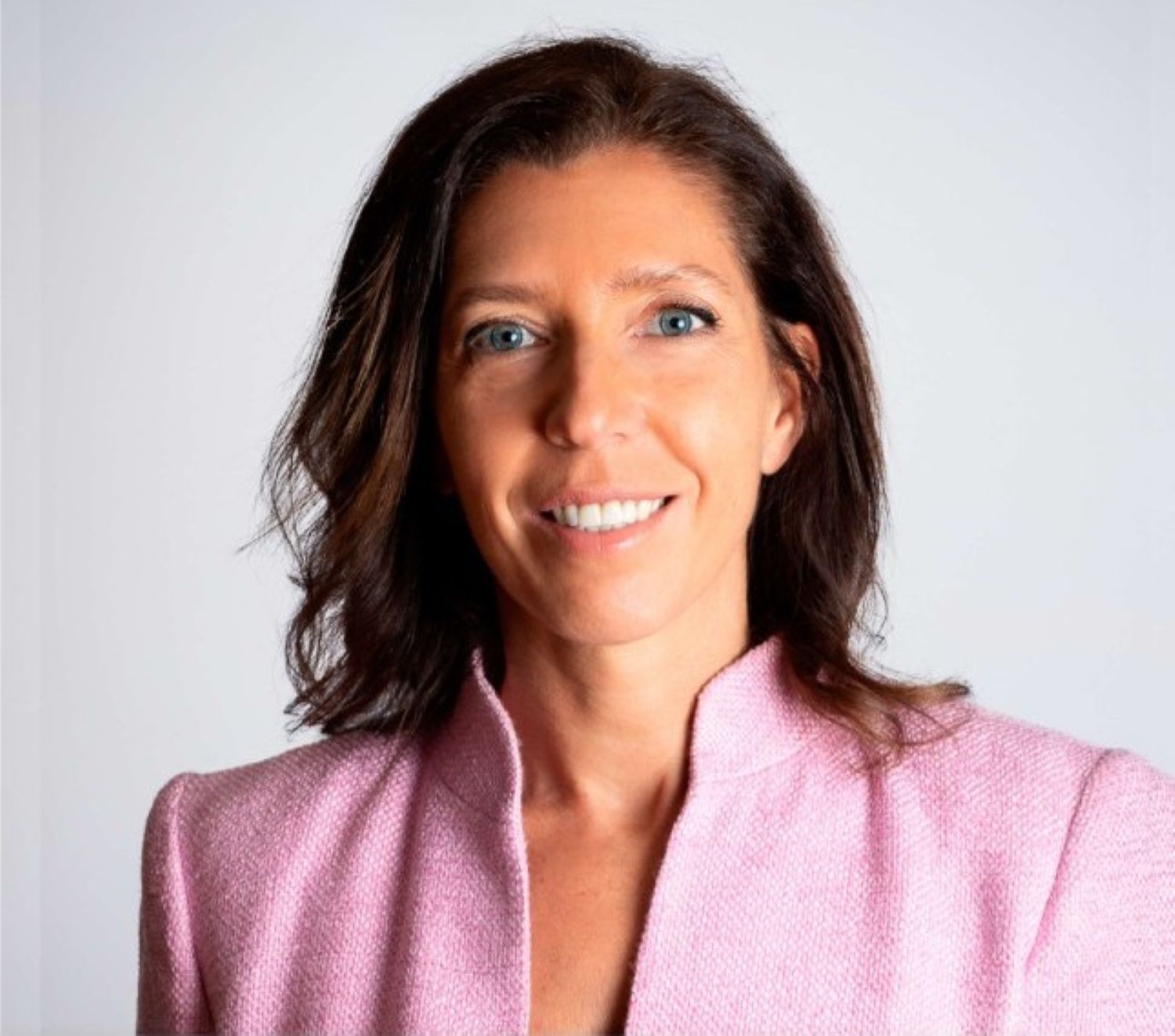
She joined a recently privatized power generation company in Neuquén in 1994, shortly after graduating as an accountant. Dominion, Duke Energy, Orazul and Aconcagua Energía followed, but she remained. Her career reflects much of the recent history of Argentina’s electricity market. Today, she also chairs AmCham Argentina and is the first woman to hold that position.
One power plant, five owners and the same executive
The Alto Valle thermal power plant opened on February 24, 1969, on the banks of the Neuquén River, to supply the construction site of the El Chocón-Cerros Colorados hydroelectric complex. Fifty-seven years later, it is still operating.
During that period, it had five owners: the Argentine state, Dominion, Duke Energy, Orazul and, since December 2023, Aconcagua Energía. Mariana Schoua experienced every one of those transitions from inside the company, except the first.
She joined in 1994, shortly after earning her accounting degree from the University of Buenos Aires. She was hired by the general manager of Dominion, the American company that had obtained the Cerros Colorados concession one year earlier during the privatization of Hidronor.
Operations were divided between Neuquén and Buenos Aires, and there was still no clearly defined corporate structure. Schoua was practically the first employee in the Buenos Aires office after the general manager.
She was young, female and an accountant in a male-dominated industry largely run by engineers.
“I am no longer young. The rest still applies.”
Duke, Orazul and the return to Argentine ownership
In August 1999, Duke Energy acquired Dominion’s operations in Argentina, Peru, Bolivia and Belize for $405 million. In March 2000, it took control of the power plants in Neuquén.
Schoua spent a decade working in administration and finance, became CFO and, in 2012, took charge of the Argentine operation.
In October 2016, Duke announced its departure from Latin America and sold those assets to I Squared Capital for approximately $1.2 billion. The new owner renamed the business Orazul, and Schoua remained president of the operation.
Seven years later, in December 2023, Aconcagua Energía —founded by former YPF executives Diego Trabucco and Javier Basso— acquired Orazul Argentina for $9.2 million.
The transaction included 576 MW of installed capacity at Planicie Banderita and Alto Valle, stakes in the Manuel Belgrano, San Martín and Vuelta de Obligado power plants, the Coronel Dorrego wind project, licenses to trade gas and electricity, and 102 employees. Schoua was placed in charge of the power generation business.
After thirty years working for international groups, Aconcagua Energía became the first Argentine company in her career.
The hydroelectric plant that changed hands again
The latest chapter contains a certain irony. The Cerros Colorados concession, granted in 1993 for thirty years, expired. The government launched a new tender for the four Comahue hydroelectric complexes and, in late 2025, Aconcagua sold the concessionaire to BML Inversora, part of the MSU Group.
In December, following a tie-breaking process, the power plant was awarded for another thirty years to the Edison Group, which submitted an offer of $64.1 million.
This means that the hydroelectric complex Schoua had accompanied since 1994 no longer belongs to the company she leads. Aconcagua retains the thermal power plant, its stakes in other generation companies, the wind project and the gas business.
Learning to lead in an industry of engineers
So many changes also shaped her management style.
“The electricity industry has gone through many regulatory changes,” she explains.
That is why she insists on listening, opening up the decision-making process and incorporating different perspectives. She believes diversity improves the quality of decisions, creates competitive advantages and encourages creativity.
Among the figures from her early career, she highlights a manager who was a nuclear engineer trained at the Balseiro Institute and had professional experience in the United States and Europe. He managed with a degree of openness that was unusual in Argentina during the 1990s.
She regarded him as a mentor, although he never knew it. He was also the person who encouraged her to complete a postgraduate degree in Electricity Markets and Natural Gas at the ITBA. Since then, Schoua has repeated the same advice: complement a general education with specific knowledge of the business.
She remembers meetings from those years dominated by middle-aged engineers. She felt that every word she said was being examined, so she arrived more prepared than necessary.
“If I have something valuable to contribute, it does not matter that I am a woman. They will listen to me,” she thought.
Over time, she realized that this pressure had also made her tougher.
Twins, motherhood and six months within a career
While serving as CFO, she became pregnant with twins who were born extremely prematurely. As soon as she was discharged from the hospital, she organized a working day from 8 a.m. to 3 p.m., with two hours to breastfeed —two because there were two babies— and then returned to the clinic.
It was extremely difficult. She eventually requested a six-month leave of absence.
Today, her sons are 20 years old and 1.85 meters tall. She summarizes that decision with a simple calculation:
“They were six months within a career of more than thirty years. I could not allow that to define my professional path.”
When she was offered the leadership of Duke Argentina in 2012, she did not immediately accept. She first spoke with her husband because the position involved more travel. Today, she wonders whether a man would also have felt that he needed to consult his partner before answering.
Vital Voices and conscious leadership
When she took over, she noticed that almost no women were leading power generation companies in Argentina. She approached Vital Voices to better understand that gap, began mentoring other female executives and now serves on the board of Voces Vitales Cono Sur.
That experience also shaped her idea of conscious leadership: a way of managing in which words, personal example and even the manner of listening all matter.
When asked who gave her the best advice during her career, she answers without hesitation: the people who worked with her.
The first woman to chair AmCham Argentina
Since June 2025, she has chaired AmCham Argentina, an organization with more than a century of history that brings together more than 700 companies responsible for approximately one-quarter of the country’s GDP.
For the first time, the organization is being led by a woman. Schoua reached the presidency from an Argentine company, an unusual detail for a chamber historically associated with American corporations.
“It is unconventional. It sends a powerful message,” she explains.
In April, during the opening of the organization’s annual meeting, she focused on tax reform, clear rules and predictability.
“Without investment, there is no development, and without clear rules, there is no investment.”
When she was once asked to name her most important role model, she did not choose a business leader. She named her grandmother, the woman who always insisted that she study and remain independent.