A taipa is a ridge of soil that rice growers build to retain water. It is soft by definition and also represents a significant part of their capital. A seeder that presses on it with too much force does not cross it: it breaks it apart.
That was the example he chose before an audience of engineers, students and farmers to explain what distinguishes an Agrometal machine. He did not bring a seeder to that conference. He brought a planting unit.
Too much force cannot be applied on a taipa, he says, because it falls apart.
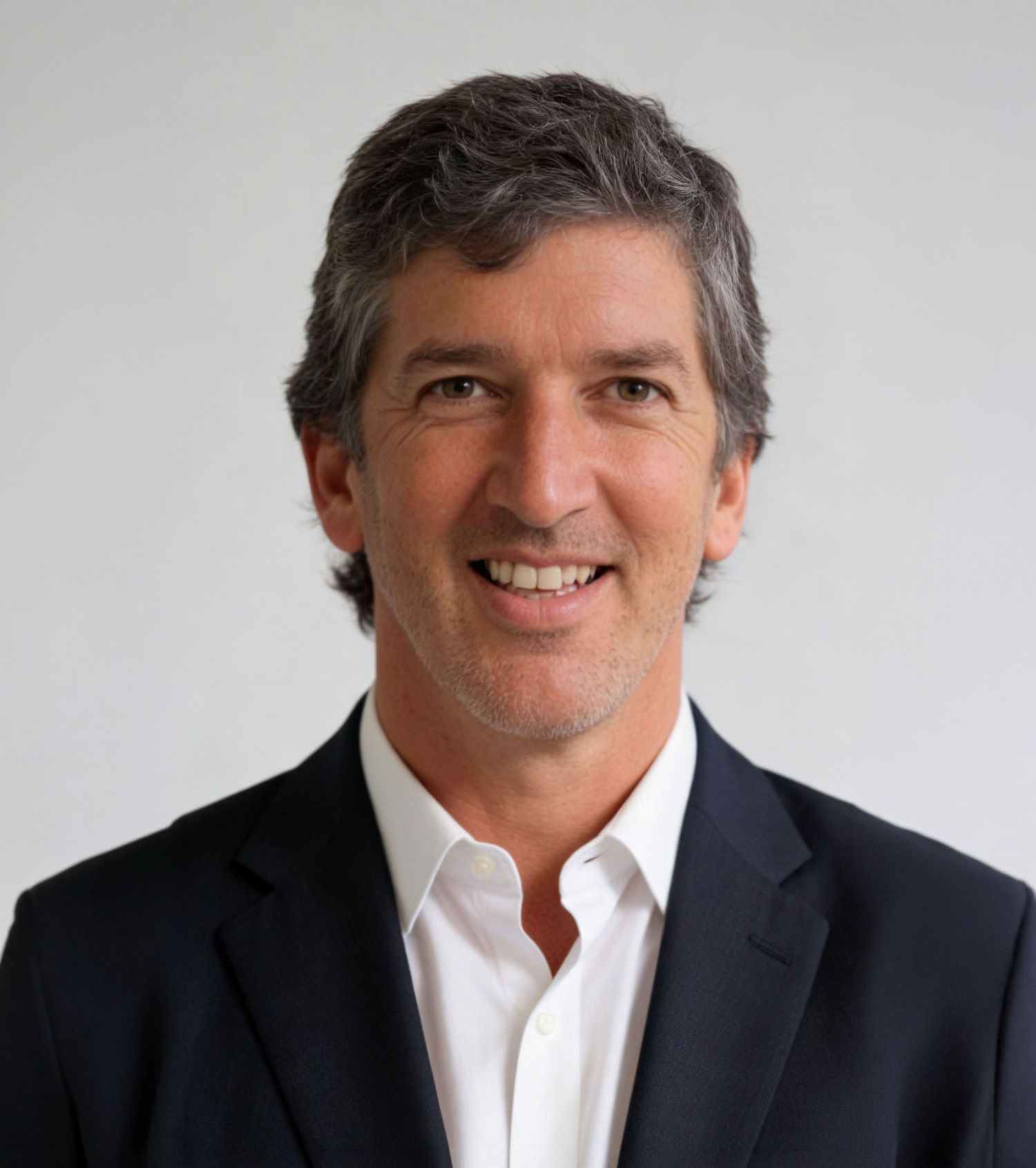
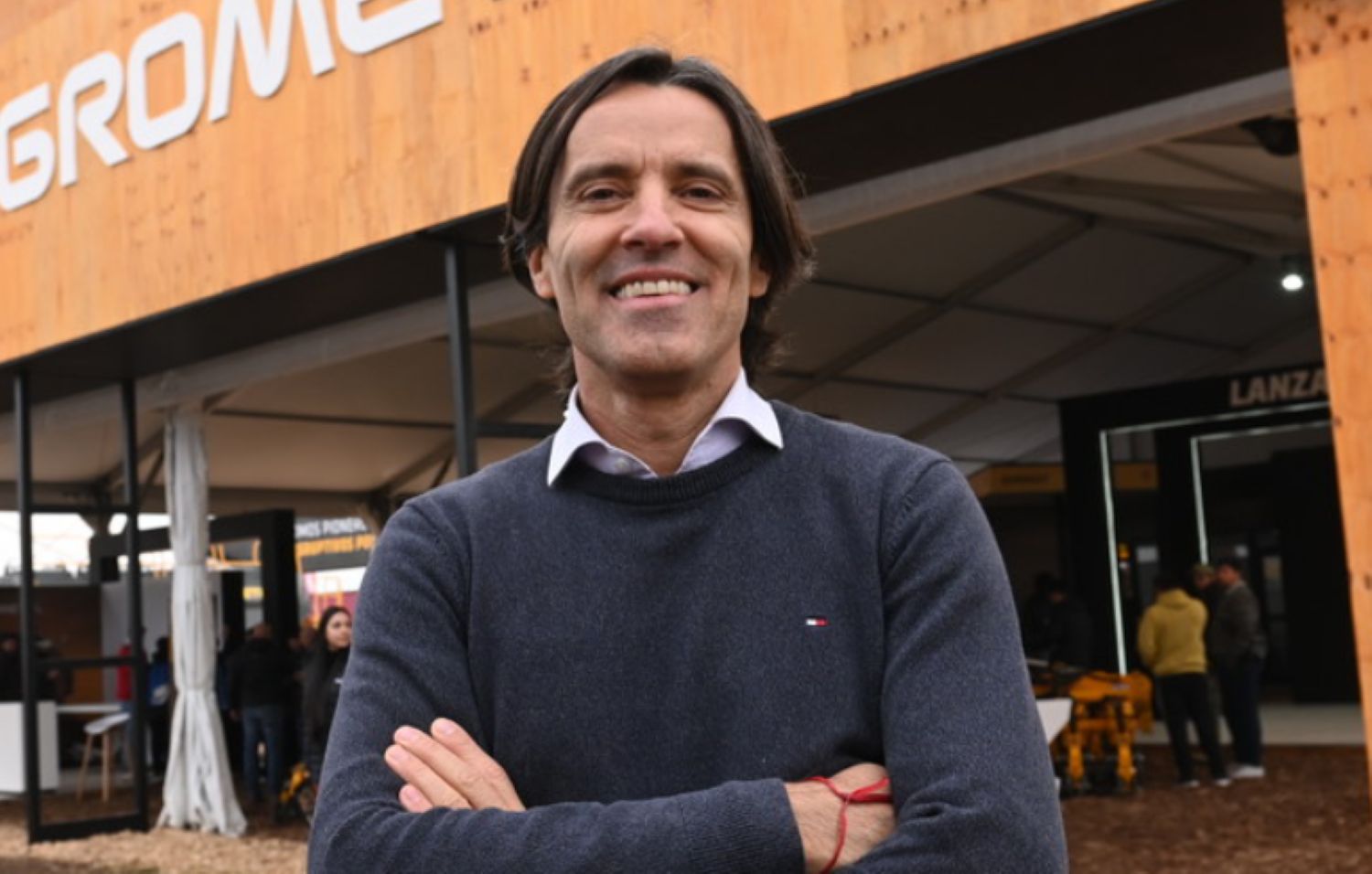
The man speaking is Adolfo Felippa, CEO of Agrometal. His entire career unfolded in the automotive industry: he joined Renault at the age of 18 and left Paris to settle in Monte Maíz.
Now he explains taipas.
He joined at 18
When the conversation turns to why he made the move, Adolfo Felippa does not mention the position. He mentions the motivation. He says he has the same drive today as when he started in the automotive industry and that he wanted a change.
The hardest leap was one of vocabulary: moving from automotive jargon to the language of farming and, as he puts it, coming into direct contact with the land.
His argument about the industry he joined is not sentimental, but based on its position within the production chain. He maintains that this is where the entire food production system begins and that, for this reason, what the company manufactures contributes to a link that cannot be replaced.
Everything else, he believes, is transferable. The international experience and the working methods he learned in the automotive industry can be applied to agriculture.
The invitation came from Rosana Negrini, president of Agrometal. Felippa believes his arrival was less the result of a personal choice than a response to the needs of a new stage. He thinks he was brought in because of the changes beginning to take place in the country and stresses that, since then, they have worked and moved forward together.
Needed yesterday
The change at Agrometal did not begin with him. The company started it two years before his arrival. What changed afterward was the speed, and Felippa is explicit about that: they began accelerating because acceleration was necessary.
The reason he gives is economic openness. Unlike much of Argentina’s industrial sector, which views it with suspicion, he interprets it through his own professional background. He comes from abroad, and competing internationally against manufacturers from other countries is normal. He argues that this makes companies improve.
From there comes the objective that guides his management: to globalize the company and make it international, taking Argentine products to other markets. He presents it as a double opportunity, both for the company and for the country, and adds something that is particularly significant in Argentina: after many years, it is once again possible to plan and look to the future with optimism.
The only limit he imposes is the clock. He also says they have no time, that they must move quickly, and defines the deadline with a phrase he repeats: this new Argentina needed it yesterday.
From row 1 to row 36
The strategy is supported by concrete machinery. When he presented the new APX L, Adolfo Felippa explained where the design had come from: not from the engineering department, but from what customers had told them.
The key issue identified by farmers was uniformity. Planting quality must remain consistent from the central row to the outermost one—row 36—with the load distributed equally across all of them. A machine is not judged by what it does in the middle, but by what it does at the edge.
That principle is replicated throughout the rest of the product line, where development focuses on three variables that have historically competed against one another: machine operability, planting quality and soil protection. Improving one at the expense of the other two is the easy part. Aligning all three is the real challenge.
That is why the company changed the way it presents itself at industry conferences. The expectation, he explains, is not to display a machine but to show its evolution. The easiest component to discuss from a technical perspective is the planting system.
They brought two units: the rice planting unit, which can also be used for small grains, and the CPR unit for coarse grains.
He values the format because of the feedback it generates. He describes it as mutual learning between the company’s engineers and farmers, a discussion about technology and what lies ahead.
The roadmap he draws from there can be reduced to three points: more technology, a stronger focus on the planting system and listening to customers to understand what they need.
What does not depend on him
Up to that point, everything falls within his decision-making. The problem appears when the conversation shifts to the moment of purchase.
Felippa describes the situation without embellishment: a difficult Argentina, shaped by movements in the exchange rate and bank lending rates. In that context, the variable that determines whether a seeder is sold or not lies beyond the factory’s control.
His demand is direct. Farmers need the support of banks, and for the agricultural sector that is essential. He says it twice in succession.
He acknowledges one move by the government—the reduction in export duties, which he describes as a first step—and immediately asks for the next one: further progress on interest rates.
The combination
For Felippa, the convergence of his arrival, the company’s 75th anniversary and the new economic climate is not a coincidence but a synthesis. He describes it as a combination: his arrival, the anniversary and a different Argentina. The conclusion he draws is that there is also a different Agrometal.
The results of the trade-show season reinforce that interpretation. He says they arrived with expectations, are leaving with positive results and that people are beginning to notice the difference.
He comes from an industry where the launch of a new model is planned years in advance, with the calendar in hand.
He arrived in one where the calendar is set by interest rates.