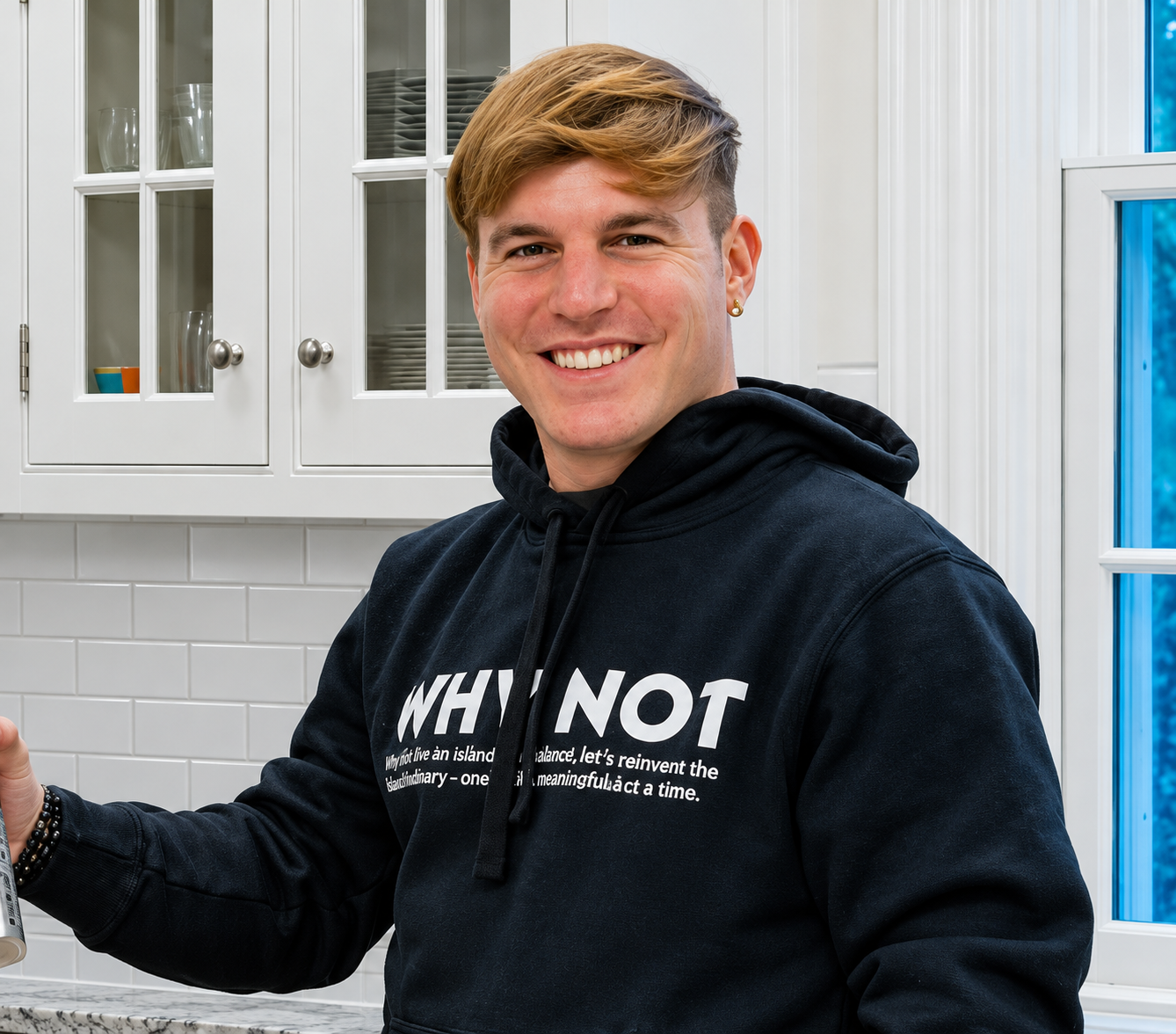
Matías Muchnick spent years trying to explain that there was a technology company behind NotCo’s plant-based mayonnaise and milk. The products on supermarket shelves were the public face of the company, but much of the work happened in the lab, where his team used artificial intelligence to study food and develop new formulations.
Now the co-founder and CEO of the Chilean company is focused on expanding that technology business. He says NotCo works with more than thirty consumer goods companies and secured a contract through a competitive bidding process that also drew companies such as Microsoft, Palantir, OpenAI and Anthropic.
At thirty-seven, Muchnick talks about this stage as a fresh start. He founded NotCo at twenty-six and has since been through years of expansion, a funding crisis and a restructuring that forced him to make difficult decisions. He says he still has the enthusiasm he felt in those early days, though he now brings more experience to running the company.
The Products and the Technology Behind Them
NotCo became known for its plant-based versions of foods such as milk and mayonnaise. In its first five years on the market, it reached 130 products on supermarket shelves across Chile, Argentina, Brazil, Colombia, Mexico, the United States and Canada.
The company also raised around $400 million. Its backers included Jeff Bezos, the investment firm Kaszek and figures from the world of sports. It later partnered with Kraft Heinz to launch plant-based versions of products in the United States.
Muchnick also recalls collaborations with brands such as Doritos. Those releases, he says, sold better than expected and brought the products to people who might not have sought out a plant-based alternative on their own.
As the brand gained shelf space, the team continued working on Giuseppe, the artificial intelligence system NotCo had been developing from the start. The idea was to study ingredients and their properties to find combinations that could reproduce qualities of other foods, such as their taste, aroma, color or texture.
That work was hard to explain. Muchnick says he spent years talking about a technology many people still did not understand or consider relevant. The company invested in laboratory equipment, including spectrometers to analyze the molecules in its products, but much of the public mainly saw the packaging and advertising campaigns.
As generative AI advanced, he says, those conversations began to change. More companies became interested in what NotCo had built and in how it might be used beyond the products the company sold under its own brand.
Returning to Chile and Rethinking the Business
After years of expansion came a more difficult period. Venture capital investment in Latin America fell after its 2021 peak, and companies that had grown with that funding had to revisit their plans.
Muchnick acknowledges that he had never led a company through that kind of crisis. He had not been an entrepreneur during either the dot-com crash or the 2008 financial crisis. He had to rethink his approach to growth and pay closer attention to costs.
During that period, he left New York and returned to Chile, to the office where he had started the company. He also began visiting supermarkets. He went to chains such as Walmart, Jumbo, Chedraui and Carrefour to see how the products were doing and work out what decisions he needed to make.
Some were difficult. He stopped making products he liked because they fell short of the minimum gross margin he had set for the business. He also tried changes that did not work.
He says there were times when most of the adjustments failed. Even so, the team kept reviewing the results, making corrections and trying again. With each attempt, he explains, they got better at identifying what worked and what to leave behind.
One Company, Two Businesses
While working to get the finances in order, Muchnick took another proposal to the board. He wanted to split the company into two units, one dedicated to food and the other to developing and selling technology for the industry.
That led to NotCo Foods and NotCo AI, with separate teams and goals. He asked the food business to break even. He says it did so while the other team continued developing the artificial intelligence platform.
The board backed the idea, he says. Its members saw that the technology business could open up a much bigger opportunity than selling NotCo’s own products. For Muchnick, it was one of the most important decisions he had made since founding the company.
The restructuring was difficult. Running both businesses at once required changes to the teams and their responsibilities. It also taught him something about leadership. The people who help a company through one stage are not always the people it needs for the next.
What Giuseppe Does
Giuseppe starts with data about food. According to Muchnick, the team spent a decade gathering data on the molecular composition and physical and chemical properties of foods and linking those data to sensory evaluations conducted by people.
Clients contribute formulas, studies and consumer tests. The aim is to help companies develop or modify products, whether by using less of an ingredient or by finding an alternative when a raw material becomes scarce or more expensive.
Muchnick points out that people do not always buy what they say they prefer in a survey. The system therefore also tries to account for differences between what consumers say and what they actually choose.
One of the company’s tools is called Giuseppe World. It simulates virtual consumers based on sensory, social and demographic patterns. The idea is to test how a product might perform before it is manufactured and brought to market.
Muchnick says the tool can cut development timelines from as much as two years to about three months. He also says three products tested through the simulation have already reached the market.
The First Technology Contracts
Muchnick says a multinational hired NotCo to tackle a project it had been unable to solve internally for fifteen years. By his account, the NotCo team completed the work in six months, and the company’s owner could not tell the new version from the original in a blind test.
He says the project led to an eighteen-month technology contract worth more than $30 million. In a separate bidding process, he adds, NotCo beat major technology companies competing to lead a client’s AI transformation.
Muchnick says the company is working on about eighty projects with more than thirty businesses. Examples include reducing cocoa or sugar content, developing orange flavors without using oranges and looking for alternatives to make spreads similar to hazelnut spreads.
The revenue model varies by agreement. Clients can pay for the formula or share a percentage of sales. Muchnick puts gross margins in the technology business at around 80%.
Each Founder’s Role
The growth of NotCo AI has also changed which founders are most visible. In the early years, Muchnick was the public face of the company. He spoke about the brand, the products and its expansion into new markets.
Now, he says, many conversations with clients focus on how the technology works. Karim Pichara, the company’s co-founder and technical lead, takes a more prominent role in those meetings.
Muchnick emphasizes Pichara’s work as a data scientist and says each founder brings something different depending on what the company needs at a given stage. While Muchnick was promoting the products and building the commercial business, Pichara and his team were developing the technology they now present to other companies.
The shift has drawn attention outside the food industry as well. Muchnick says that after NotCo won a bid, Microsoft expressed interest in distributing the technology to its consumer goods clients. Investors who had learned about the project years earlier and passed on it also got back in touch.
What Changed for Him as CEO
Muchnick says his decade at the helm of NotCo forced him to rethink how he works. In the early years, his focus was growth. Later, he had to learn to lead when adding products or entering new markets was no longer enough.
One of his personal rules, he says, is to keep his shares. He also did not allow team members to sell shares through secondary transactions. He believes that tying his future to the company’s keeps him involved in its problems and decisions.
He also believes in speaking frankly within the company, even when he does not have all the answers. He acknowledges that there were times when he did not know which way to go and had to admit it to his team.
To get through those periods, he leaned on his family, especially his father and older brother, both of whom have business experience. He also sought advice from investors who had weathered other crises and went to therapy.
In his personal life, he says he put off getting married and having children to devote more time to the company. It was a deliberate decision, and he says he is at peace with it.
Returning to the Original Idea
Muchnick acknowledges that NotCo has had periods of intense public attention, with investments, partnerships and media appearances. He says seeing his photo on a magazine cover does little for him. What he values is that the people who worked at the company for years can see that their early bet on technology is beginning to get recognition.
He tells entrepreneurs to protect the instincts they started with. For him, that means staying close enough to a problem to make decisions about it, an ability that can weaken as a company grows and adds layers of organization.
In one of his first presentations to investors, he recalls saying he wanted to turn NotCo into a research and development tool for the consumer goods industry. Ten years later, with a company different from the one that started out selling plant-based foods, he feels closer to that idea.