In March 2020, as the COVID-19 pandemic spread, Juliana Cassataro and her team submitted a proposal to develop a vaccine in Argentina. They were working at the National University of San Martín and received an initial grant of six million pesos. Animal studies, trials involving volunteers and the possibility of manufacturing it at scale still lay ahead.
Three years later, on October 18, 2023, ANMAT approved ARVAC Cecilia Grierson as a COVID-19 booster. The vaccine was developed by a team from UNSAM and CONICET together with Laboratorio Pablo Cassará. It has been available in pharmacies since 2024.
For Cassataro, an immunologist and CONICET researcher, the work did not end with a formulation. The project covered the stages from laboratory design to clinical trials and domestic production. The technology developed can also serve as a foundation for work on other vaccines.
A childhood in Mar del Plata
Cassataro was born on May 26, 1974, and grew up in Mar del Plata with her paternal grandparents. They gave her books about nature, providing some of her earliest encounters with subjects she would later study.
Her parents were forcibly disappeared by security forces in 1977, when she was three. According to public accounts, a great-uncle found her and her sister 46 days later. Cassataro has said she prefers to keep that history separate from her scientific career.
She studied Biological Sciences at the National University of Mar del Plata, graduating in 1998. She then completed a doctorate in Immunology at the University of Buenos Aires in 2003.
Two years later, she joined CONICET. Her work continued at the Institute of Biotechnology Research at the National University of San Martín, where she leads a laboratory devoted to immunology, infectious diseases and vaccine development.
Her work before the pandemic
Before COVID-19 reached Argentina, Cassataro was already studying how to improve the body’s response to infections. Part of her research focused on adjuvants, substances added to some vaccines to strengthen the immune response.
Over those years, she published scientific papers and contributed to developments that led to three international patents. She also received funding from the Gates Foundation and distinctions including the Bunge y Born Award in 2014 and the Houssay Award in 2017.
That experience provided the foundation for her team’s work when the new coronavirus emerged. In March 2020, the Ministry of Science launched an emergency call to fund pandemic-related projects. Cassataro and her colleagues submitted a proposal to develop prevention tools and received six million pesos.
A vaccine made in Argentina
The first experiments were conducted in mice. The results encouraged the team to continue, but testing the vaccine in people and manufacturing it required capabilities beyond those of the university laboratory.
Laboratorio Pablo Cassará, an Argentine pharmaceutical company, joined the project in late 2020. The partnership made it possible to move toward clinical trials and plan dose manufacturing.
The team chose a recombinant protein platform. One reason was that it could be developed and manufactured domestically. The vaccine can also be stored in standard refrigerators, an important feature for distribution.
The platform also allows the formulation to be modified to address new variants. According to the team, that adaptation can be completed in around three months.
In March 2022, ANMAT authorized the phase 1 trial, which involved 80 volunteers. The results of the preclinical research were published in Nature. Phases 2 and 3 began in January 2023, with thousands of participants at centers across the country.
ANMAT approval followed on October 18, 2023. The vaccine was named ARVAC Cecilia Grierson in honor of Argentina’s first female physician.
From the laboratory to human trials
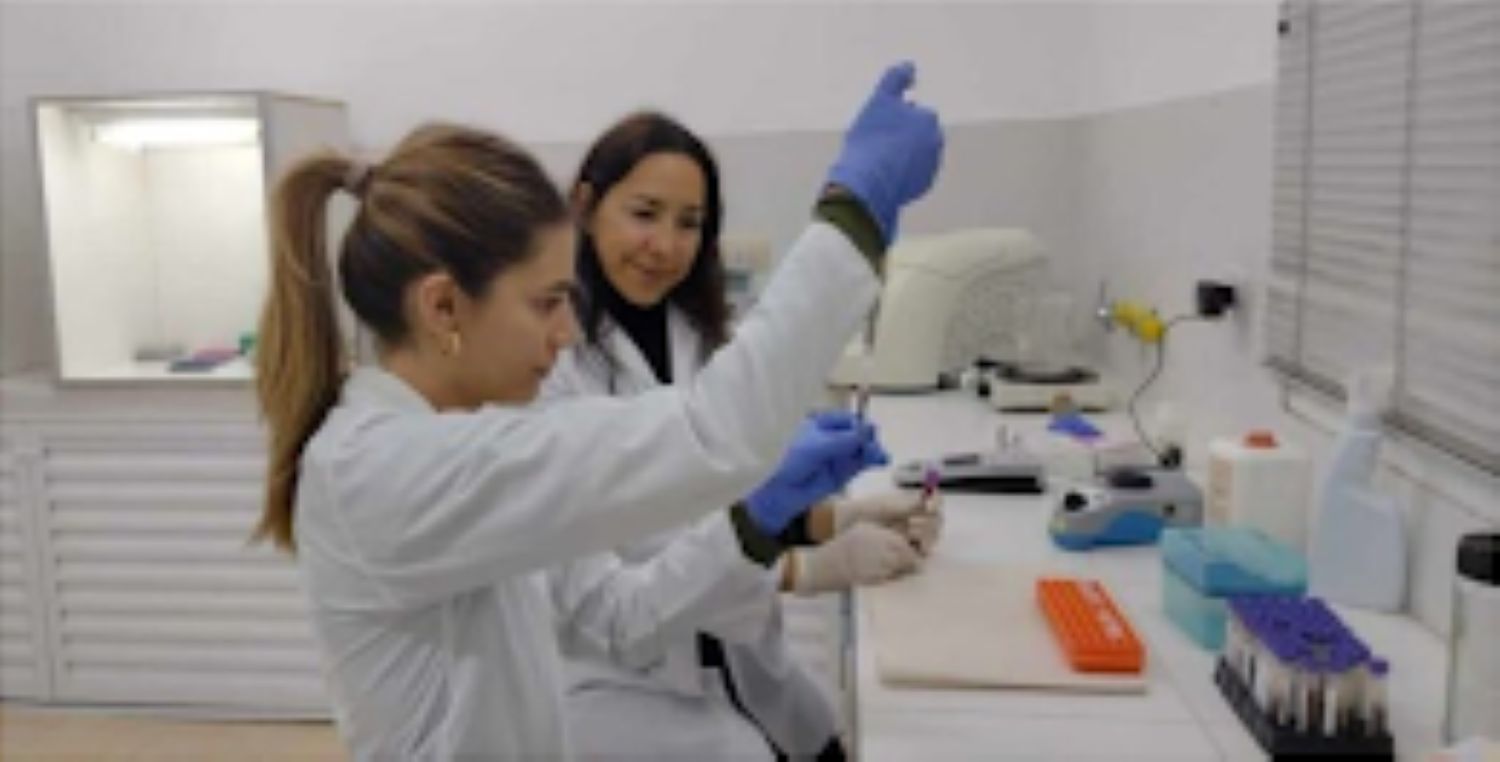
The project reached a stage rarely achieved by a development originating at an Argentine university: testing a preventive vaccine in humans. Doing so required research teams, healthcare staff, study centers and volunteers, as well as the laboratory responsible for manufacturing it.
Cassataro often emphasizes that collective effort. Researchers on the team include Karina Pasquevich and Lorena Coria. UNSAM, CONICET, Laboratorio Pablo Cassará and the volunteers who received the vaccine during the studies also took part.
During development, Cassataro avoided describing the project as an accomplished goal. She wanted the vaccine to complete the process and reach the people who needed it. In 2024, it became available in pharmacies as a COVID-19 booster.
A platform for further research
The technology used for ARVAC was not limited to the coronavirus. The knowledge and procedures developed by the team can be used to study other diseases and work on vaccines adapted to new variants.
For Cassataro, that learning is part of the outcome. The project brought together public research, clinical trials and private manufacturing in Argentina. It also left teams with experience in the stages needed to take a vaccine from the laboratory to approval.
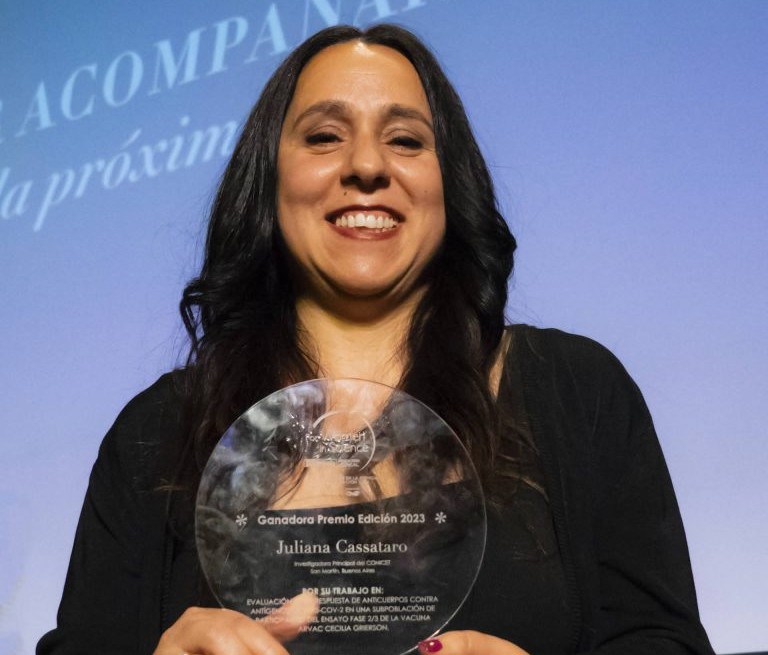
Among other distinctions, the researcher received a L’Oréal-UNESCO special mention and a Konex Award in 2023 for her work during the pandemic.
When discussing scientific life, she often recalls that much of the work involves difficulties: experiments that do not produce the expected results, rejected funding applications and papers that require further revision. Even so, she continues to choose that work. ARVAC was the result of years of research and the efforts of many people who joined when a new disease emerged.