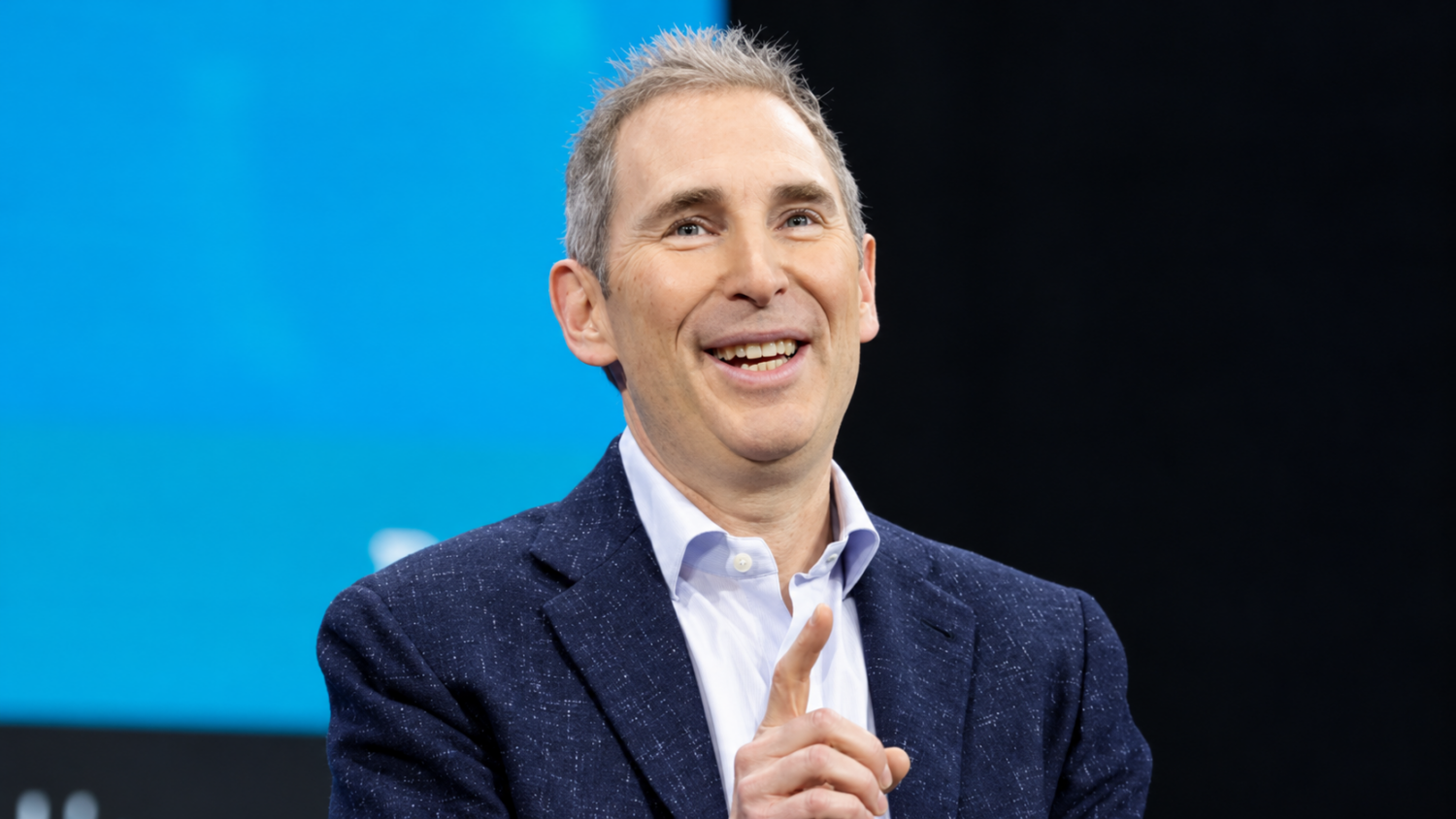
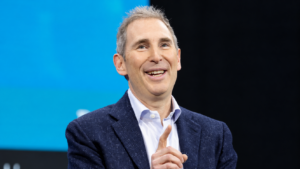
Every Sunday during football season, Andy Jassy gets up early in Seattle and places an Amazon order: bagels and an assortment of chips, usually Ruffles. New York Giants games start at ten in the morning on the West Coast, and the order arrives before kickoff. Since 1998, he has watched them with three friends who grew up in New York and moved to Seattle around the same time he did. The group is called Giants Anonymous. He admits this year has been rough.
The scene captures two traits of Amazon’s CEO. One is loyalty: he has been with the company for 28 and a half years, and he makes a point of counting the half. The other is speed. Throughout that time, he says, Amazon has always felt as though it was moving too slowly, even when it was objectively faster than almost any other company. It is never enough.
The Worst Presentation of His Life
Before running one of the largest companies in the world, Jassy wanted to become a professional athlete. His father took him to see the Giants and Rangers from the age of three. He played tennis and soccer, including a little in college, until he accepted that he was not good enough. After that, he tried almost everything: sports commentary, production, helping coach his high school soccer team, working in a Manhattan golf shop, spending a summer as a legal assistant, working in investment banking, and starting a couple of businesses. It was not part of a strategy. He simply did not know what he wanted.
Tennis left him with one lesson. You can play the best match of your year at nine in the morning and then lose badly at two in the afternoon to someone who should not beat you. In either case, you have to turn the page because another match is coming.
He had to put that lesson into practice early at Amazon. He was co-leading marketing and had to present the operating plan to Jeff Bezos in a six-hour meeting with around 180 slides. He was on the sixth or seventh slide, about customer retention, when Bezos interrupted him and said all the numbers were wrong. Jassy asked why, listened, and realized Bezos was right. Bezos then asked why he should believe the rest of the presentation. Jassy replied that he hoped he would, because there were about 173 slides left.
The meeting did not go well, but it became a turning point. His greatest fear whenever he moved up was that the new people around him would discover he did not know what he was talking about. That fear came true, and the next day everyone still treated him as part of the team. A year later, Bezos chose him as his “shadow,” a role similar to chief of staff that placed him in every meeting, including one-on-ones, which therefore stopped being one-on-one.
Therapy for a Team That Did Not Believe
AWS grew out of that role. Bezos and Jassy could not understand why projects took so long. Their peers explained that every team spent months rebuilding the same things: servers, storage, and databases. Between 70% and 80% of the time went into infrastructure, leaving only the rest for what actually differentiated the product. If they could reverse that equation, they would move much faster. And if Amazon, a technically strong company, had that problem, other companies probably did too.
AWS launched in 2006. In the early years, many inside Amazon thought it was absurd: an online store selling computing capacity to developers. Almost every month, one of Jassy’s best colleagues would walk into his office and suggest going back to what they knew and building tools for e-commerce. When he got home, his wife would ask how his day had been, and he would say he felt like he was providing therapy for the team and for himself. Once she asked whether he was sure it was going to work. He had no idea.
What gave them focus was concentrating on what they could control: whom to hire, what to build, pricing, security, and operations. Whether companies would abandon their own data centers was beyond their control. Today, AWS is running at an annualized revenue rate of $132 billion.
The Same Movie, This Time With Chips
The current bet repeats that story at a staggering scale. Amazon expects to invest around $220 billion in 2026, more than previously planned because of rising memory prices, and still says it will not have enough capacity to meet demand this year or next. Jassy says the demand already committed for 2028 is remarkable. He once believed AWS might reach several hundred billion dollars in revenue; now he thinks it could be at least twice that, perhaps eventually reaching a trillion dollars a year. His argument is based on accounting: data centers last thirty years or more, but the investment consumes cash flow upfront, before the company can begin collecting revenue.
When Donald Trump called on technology companies to generate their own energy, Jassy responded that Amazon had always been prepared to do so. He noted that the company had been the world’s largest corporate buyer of renewable energy in each of the previous five years and had signed nuclear energy agreements.
The other piece is silicon. Jassy says Intel taught him that a market leader does not always prioritize lowering prices. That is why Amazon designed Graviton, its own processor, now used significantly by nine out of its thousand largest customers. He sees the same story playing out with Nvidia, with which Amazon maintains a deep partnership. Trainium, its AI chip, already powers much of Bedrock, its model platform, while Anthropic trains models on hundreds of thousands of those chips. Amazon’s cloud also works with OpenAI under a recent agreement. Without proprietary silicon, Jassy says, any inference business is at a strategic disadvantage.
The World’s Largest Startup
With around 1.6 million employees, Jassy insists that Amazon’s recent cuts were not about AI but about culture. Rapid growth had created layers of managers, meetings before the meeting before the meeting, and people who stopped arriving with recommendations because they knew the decision would be made three meetings later. He wants Amazon to operate like the world’s largest startup and wants the owners of decisions to start making those decisions again.
On the future of work, he admits he would like to know the exact answer. He expects disruption in the short term and new professions later, much like cloud architects, a job that did not exist twenty years ago.
He tells recent graduates what he learned himself. You do not need to know at 22 what you want to do with your life. No presentation is an exam that you either pass or fail. You have to be willing to start at the bottom and, above all, become a learning machine. The moment someone thinks they already know everything they need to know, he says, is the beginning of the end.
At the other end of the spectrum are his less corporate records. When he arrived in Seattle knowing nobody, he started a club with colleagues that went out for chicken wings every Tuesday and eventually turned into an annual competition. His record is 57 wings. He ended up unable to stand.
When asked how many games the Giants would win this season, he said seven and added that he hoped for more. It is a cautious prediction for someone who has just committed $220 billion. But he still follows the rule of tennis: the morning match is over, and another one is coming.