
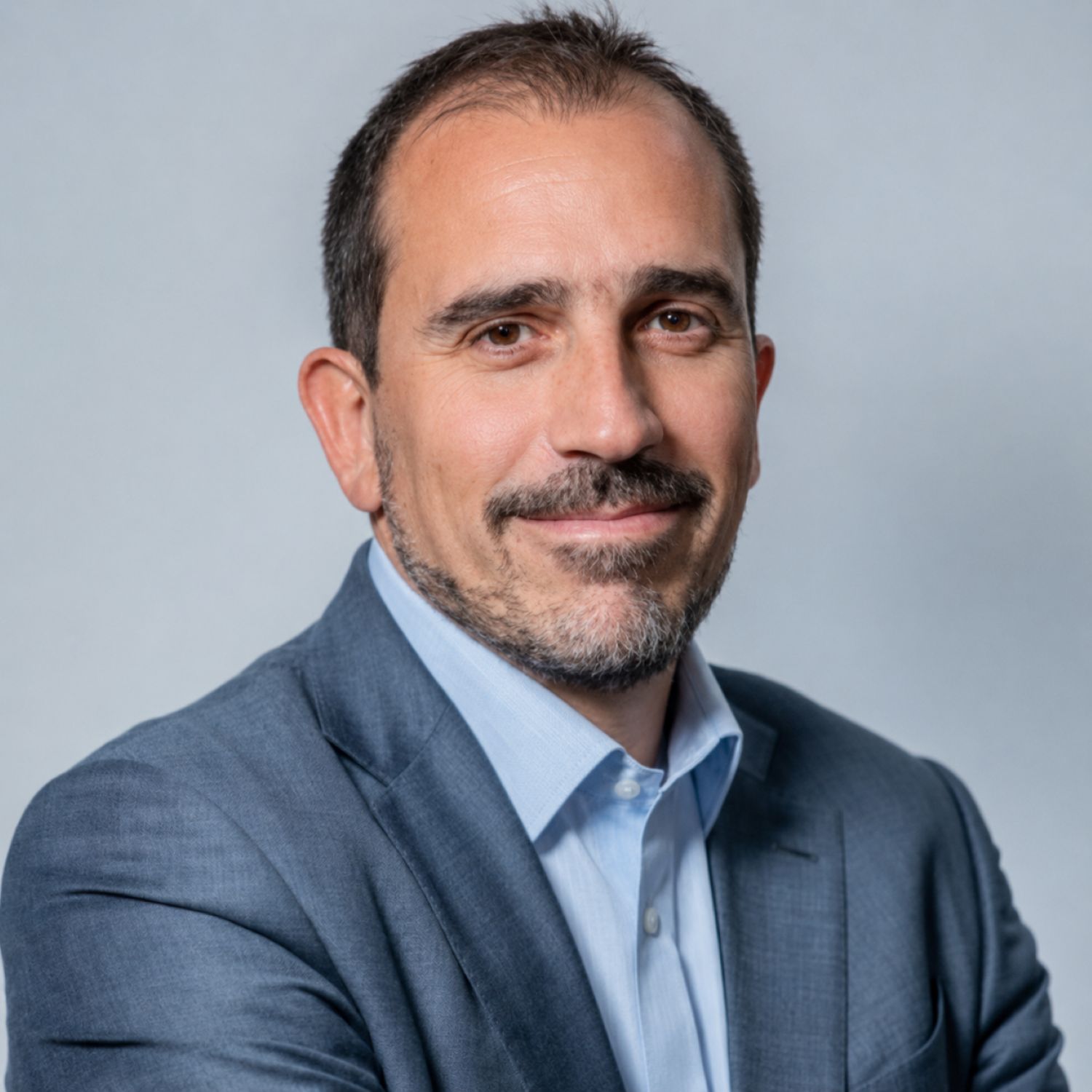
The electronics engineer who began at AES selling the output of a power plant built with Chile in mind.
In 1999, a 643 MW combined-cycle power plant began operating in Cobos, forty kilometres from the city of Salta. It had not been designed for Argentina.
Termoandes was the first Argentine power plant built for export. Its electricity travelled through a 345 kV transmission line stretching 408 kilometres, crossing the Andes at an altitude of more than five thousand metres before reaching Chile’s Northern Interconnected System. Most of the power was destined for the mining industry in the Atacama region. In the 1990s, the calculation seemed straightforward. Sending electricity across the mountains was cheaper than transporting the gas and generating it there.
The calculation failed. The Asian financial crisis slowed Chilean mining activity, while new pipelines began carrying gas from Salta directly to power plants on the other side of the Andes. The plant ended up operating at roughly one-third of its capacity. It had 643 MW installed and only one buyer across the border.
In 2006, with that problem still unresolved, a commercial manager who had spent years selling energy projects across the region arrived at Termoandes. His name was Martín Genesio.
From sales to operations
Genesio holds a degree in electronics engineering from the National Technological University. He later completed postgraduate studies in electricity and natural gas markets at ITBA, earned an Executive MBA cum laude from IAE Business School at Universidad Austral, and obtained a management certificate from Darden, the University of Virginia’s business school.
Before joining AES, he worked at Mercados Energéticos Consultores, where he was responsible for Latin America and the Caribbean, and at EDF Global Solutions, part of the French Électricité de France group, as international sales manager.
He entered the industry through contracts rather than machinery.
He then moved up through the company one step at a time. First, he became general manager of Termoandes. Later, he was appointed managing director of operations for all AES businesses in Argentina. In 2015, he took over as president and CEO. Nearly twenty years at the same company, looking at the business first from sales, then from the plant, and finally from the boardroom.
Today, AES Argentina has been operating in the country for almost 33 years and has more than 4 GW of installed capacity across ten thermal, hydroelectric, and wind power plants in Buenos Aires, Neuquén, Salta, and San Juan.
The missing link
When Genesio describes what his company does, he sets aside the word energy and chooses another. He speaks of an intermediate sector.
In his view, the electricity sector does not create value in isolation, but because no other industry can grow without it. Without available capacity and a transmission line to carry it where it is needed, no mine, factory, or data centre can be built.
Mining is the example he uses. The sector does not lack resources, he says. It lacks infrastructure. Logistics are needed to move minerals to export ports, and transmission networks are required to supply projects located in areas where available capacity is limited. A deposit without a nearby power line is, in practical terms, a more expensive deposit.
It is exactly the problem the Salta power plant faced in 2006, only reversed.
The clients that have yet to arrive
The other type of client Genesio wants for Argentina has not arrived yet.
In the United States, AES is one of the main electricity suppliers to companies such as Meta, Google, and Microsoft. The stated ambition is to bring that demand to Argentina. The gap is easy to measure. According to the Argentine Internet Chamber, the country’s thirteen data centres have a combined capacity of only about 32 MW. By the first quarter of 2026, São Paulo had already reached 536.7 MW and Querétaro 298.2 MW.
Before deciding where to build a data centre, those companies ask how many megawatts are available, how long it will take to connect, and what rules will apply ten years from now.
Investment continues within the company in the meantime. At Vientos Bonaerenses, between Bahía Blanca and Tornquist, AES is installing sixteen Vestas V162 wind turbines that will add 102.4 MW, with an investment of about $150 million. Genesio expects the project to begin operating in early 2027. It is the fourth wind project undertaken by AES in Argentina.
Potential
There is a phrase Genesio has repeated for years that sums up the way he sees the country.
He says Argentina ranks among the countries with the greatest energy potential in the world.
The problem is that this has been true for a long time. The country has always remained attached to the idea of potential without ever reaching the stage of development.
That assessment comes from someone who entered the business managing a 643 MW power plant that had all the energy in the world and only one cable through which to sell it.


