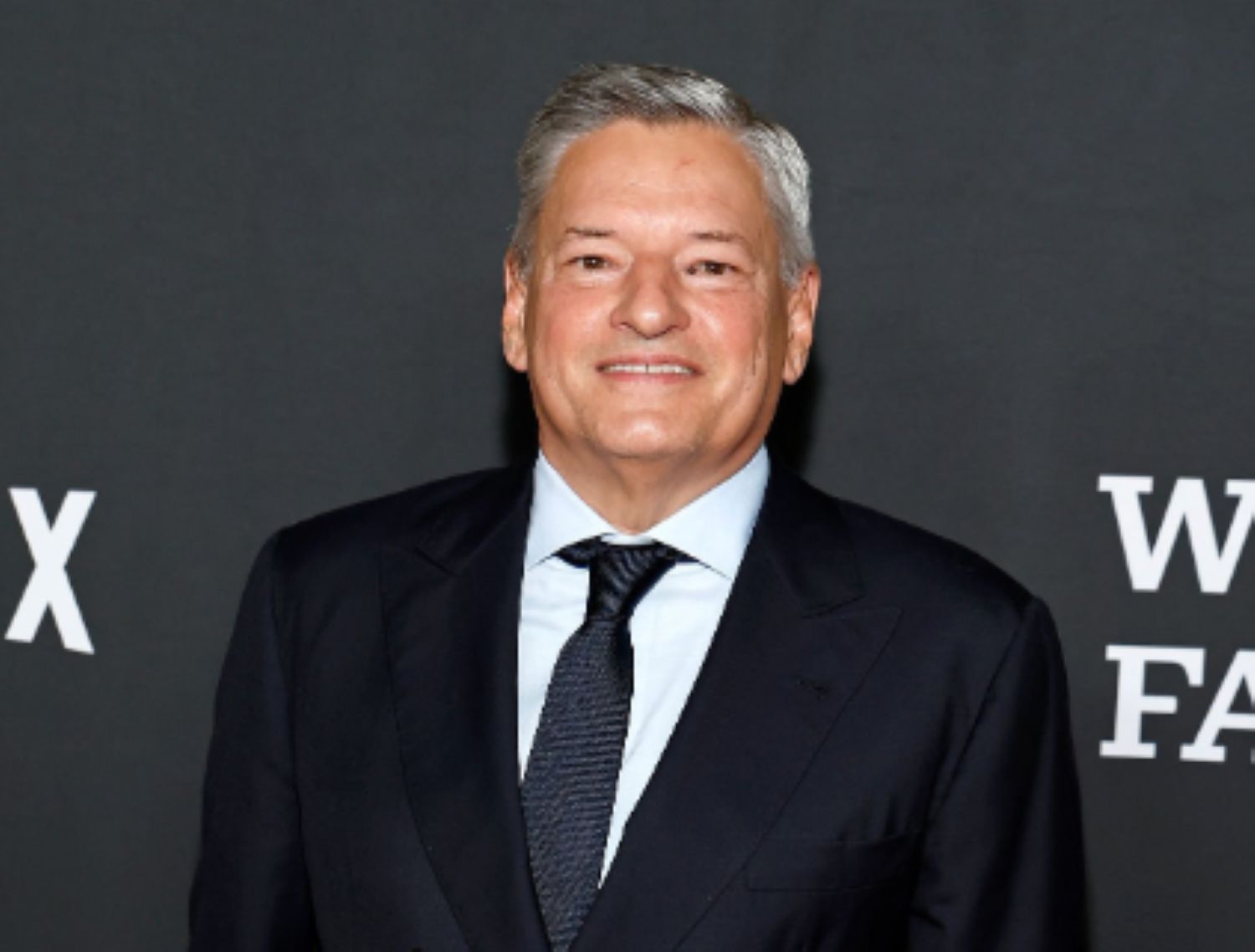
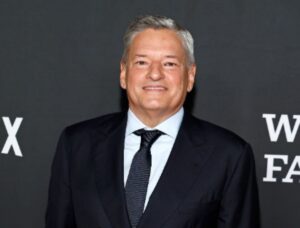
As a teenager, Ted Sarandos worked at a video store in Phoenix. What he enjoyed most was not watching movies for free, but recommending something to each customer that they probably would not have chosen on their own.
Many years later, he ended up running Netflix and came very close to acquiring Warner Bros., HBO Max and one of Hollywood’s most important catalogs. When the time came to raise the offer, he decided not to.
Sarandos grew up in Phoenix in a family of five children. His father was a union electrician; his mother was a homemaker. He spent a great deal of time watching television and going to movie theaters to escape the Arizona heat.
Then came the video store.
From behind the counter, he watched people browse the shelves, turn boxes over to read the synopsis and ask what was worth renting. Sarandos discovered that he could easily remember movies, actors and directors and that he was also fairly good at understanding what each person might enjoy.
Decades later, he was still talking about that job.
In February 2026, he told the story before the U.S. Senate antitrust subcommittee. By then, he was Netflix’s co-CEO and was there to defend an approximately $83 billion deal for Warner Bros.
From the Video Store to Netflix
When Sarandos joined Netflix, the company still had only a few hundred employees and its business consisted of mailing DVDs to customers.
The advantage was fairly simple: customers no longer had to go to the video store.
Then came streaming. Later came original productions: House of Cards, Stranger Things, The Crown and a list that eventually turned Netflix into one of the world’s leading studios as well.
Sarandos argues that the idea behind all of this changed less than it might seem: give more options to the person sitting in front of a screen trying to decide what to watch.
During his Senate testimony, he described that moment as “the moment of truth.”
For Netflix, he said, the competition there is not only HBO, Disney or Paramount. Traditional television and YouTube also compete for the same attention. According to Sarandos, YouTube stopped being simply a short-video website a long time ago and became television.
The Warner Deal
Warner Bros. offered something Netflix had never had.
It was not only Harry Potter, DC, The Sopranos or Game of Thrones. There was also a studio with theatrical distribution, production for other companies and more than a century of films and television series.
In December 2025, Netflix reached an agreement to acquire the studio and HBO Max.
Paramount had other plans.
The company led by David Ellison, with financial backing from his father, Larry Ellison, launched a hostile bid for Warner and began increasing the price.
Sarandos went out to defend his deal.
He insisted that Netflix was not buying a copy of itself. Warner had businesses his company did not have, particularly theatrical distribution and content production for third parties.
He also pointed out that roughly eight out of ten U.S. HBO Max subscribers already had Netflix.
Before the senators, he also promised to maintain a 45-day theatrical window for Warner films and to continue publicly reporting box-office results.
He said it knowing there were reasons for skepticism. For years, Sarandos himself had questioned much of the traditional movie-theater model.
A Difficult Hearing
The Washington hearing was far from comfortable.
A person dressed as the Monopoly character sat behind Sarandos. One senator directly asked him whether monopolies were good for the United States.
There were also questions about children’s content on Netflix, political donations by employees and the company’s ideological positions.
Ted Cruz even asked whether they were sitting on “stolen land.” Sarandos replied that he did not know the history of the property.
Josh Hawley pressed him to commit to a traditional residual-payment system for actors and other industry workers. Sarandos tried to explain that Netflix uses a different model and usually pays more money upfront.
Hawley replied that it sounded like a very long way of saying no.
A few days later, Sarandos appeared on a Hollywood podcast and was asked whether Netflix was willing to increase its offer for Warner.
His answer was fairly clear.
He said Netflix had always been disciplined when buying companies and content, that it had often preferred to walk away and that he had no problem letting someone else overpay.
Netflix Walks Away
It did not take long before he had to prove it.
At the end of February, Paramount increased its offer to $31 per share.
Warner gave Netflix four business days to decide whether it wanted to improve its proposal.
Netflix needed less than two hours.
It said no.
Sarandos called Warner CEO David Zaslav and told him that Netflix was withdrawing from a deal that could have given it control of franchises such as Harry Potter, Batman and much of HBO’s catalog.
In the statement he signed with Greg Peters, he explained that the company had reached a price beyond which the acquisition no longer made financial sense.
Wall Street welcomed the decision. Netflix shares rose around 10% in after-hours trading.
Paramount also had to assume the $2.8 billion payment Warner owed Netflix for terminating the agreement.
Weeks later, during the company’s first-quarter earnings presentation, Sarandos returned to the subject.
He said the experience had proven something important inside Netflix: the company could become excited about a huge transaction and still walk away when the price stopped making sense.
Sarandos has spent much of his professional life trying to understand what is worth choosing.
This time, he decided that Warner, at that price, was not.