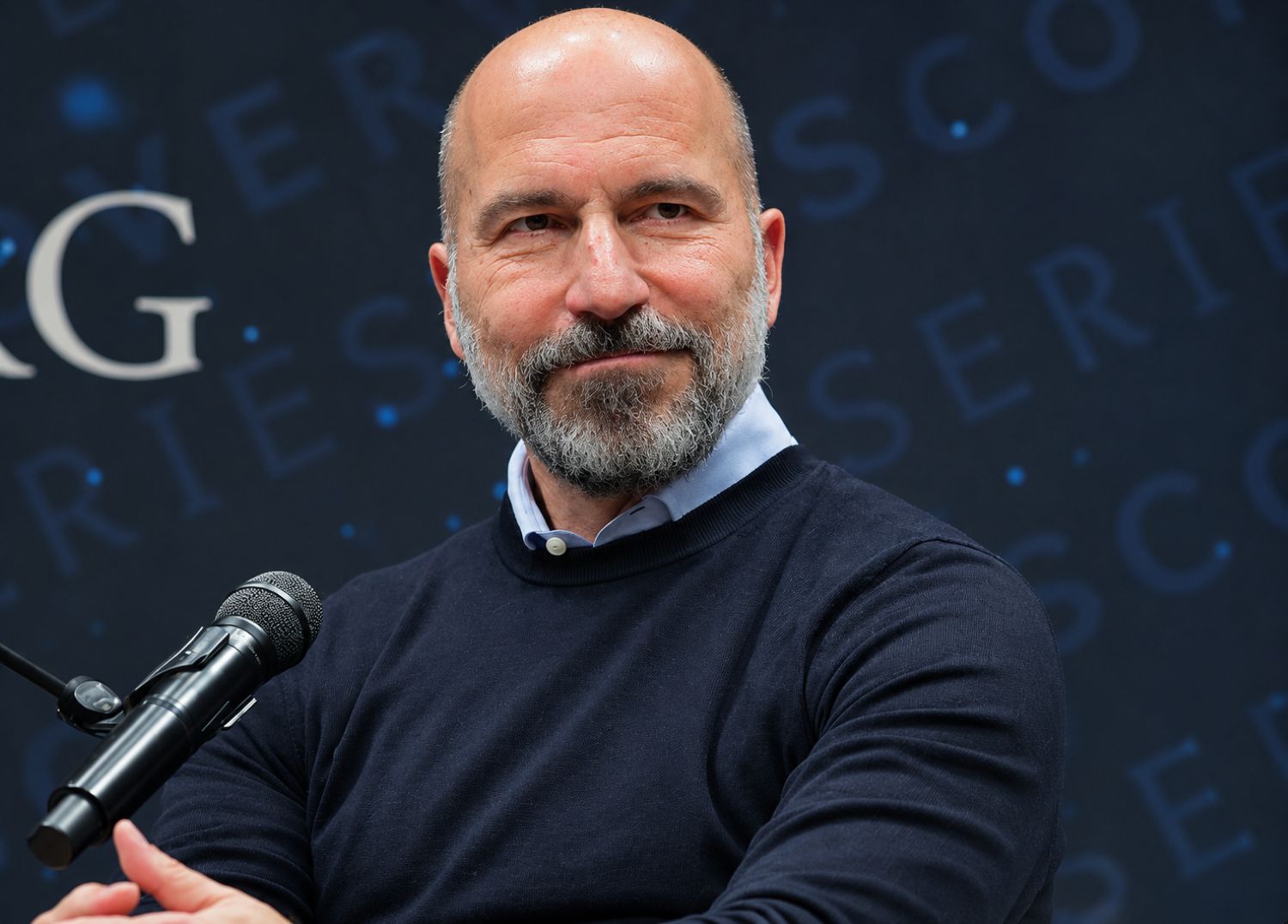
Dara Khosrowshahi was nine when he left Iran with his family. They thought they would spend some time in France and soon return home. The revolution prevented that, and they eventually settled in the United States.
In 2017, after leading Expedia for thirteen years, he received an offer from Uber. The company was in crisis, and its founder, Travis Kalanick, had just stepped down. Khosrowshahi agreed to take over.
Uber now operates in more than 70 countries and completes over 10 billion trips a year. During a visit to Argentina marking the company’s tenth anniversary in the country, its CEO announced a US$500 million investment and the return of Uber Eats.
Starting over in another country
The Khosrowshahi family owned pharmaceutical factories and consumer goods businesses in Iran. His parents had chosen to reinvest their money in the country. They lost their assets during the revolution.
An uncle welcomed them to New York. Dara started school there, where some classmates would lock him in a janitor’s closet and pretend he was a hostage. They left him there until someone found him. Years later, he recalled those incidents with laughter.
His mother went to work to raise her three sons. His father tried to establish new businesses in the United States, but his first ventures failed. Khosrowshahi says watching him struggle left a lasting impression.
At home, they did not talk about recovering their lost fortune, although he felt they had been given a second chance and should make the most of it. At sixteen, he got his first job pumping gas at a service station.
Over time, he began calling that drive to work and rebuild “the immigrant mindset.” He says his family’s experience also led him to a personal decision: not to let either good or bad fortune define him entirely.
From engineering to business
His father told him he could choose his profession, as long as he became a doctor or an engineer. Dara chose engineering and studied electrical bioengineering at Brown University.
After graduating, he had a job offer in Kentucky. But his girlfriend lived in New York, and he wanted to stay close to her. He called his brother, who worked at the investment bank Allen & Company, and asked for help getting a job there.
At the bank, he met Barry Diller, a media executive and client of the firm. During a transaction, Diller asked to speak with the analyst who had prepared the financial figures. Khosrowshahi remembers hurriedly printing the spreadsheets before meeting him.
Diller hired him, and they worked together for more than twenty years across businesses within the IAC group.
Rising through Expedia and a deal that fell through
He eventually took charge of finance for the travel business, which included Expedia, Hotels.com and Hotwire. When the search for a CEO began, Khosrowshahi put himself forward.
He now laughs about how he got the job: he says Diller was desperate to find someone and that he did not fully understand what he was accepting. He stayed at the helm of Expedia for thirteen years.
One memory from that period is an acquisition that never happened. Expedia had made progress toward a deal for Priceline, the owner of Booking.com, which was then a much smaller company.
Expedia’s shares fell after a disappointing quarter, and the board began questioning the acquisition. Khosrowshahi had only recently become CEO and did not push back. Later, he tried to restart negotiations, but the opportunity had passed.
Looking back, he believes he should have stood his ground. He says the experience taught him to listen to other people’s advice while also defending a decision when he is convinced of the reasoning behind it.
The offer he initially turned down
In 2017, a recruiter called Khosrowshahi to offer him the top job at Uber. His first answer was no.
He changed his mind after speaking with Spotify founder Daniel Ek during a conference in Sun Valley. Ek had recommended him for the role and encouraged him to consider the impact he could have at Uber.
The following morning, Khosrowshahi called the recruiter from the parking lot to hear more about the offer. He eventually accepted.
The pandemic and the layoffs
In 2020, Uber trips fell sharply as the pandemic spread. Khosrowshahi estimates the decline reached 85%. The company was already losing money, and restrictions made its position even more difficult.
Before deciding what to do, he requested more data and continued meeting with his team. Eventually, the chief financial officer told him they had already reviewed the information and that it was time to make a decision.
Khosrowshahi spent the night thinking. The next day, he moved ahead with the largest workforce reduction in Uber’s history: more than 5,000 people lost their jobs. He remembers it as one of the hardest moments of his tenure because he had to dismiss people who had devoted years of work to the company.
In his assessment, the cuts allowed Uber to survive. While trips declined, food delivery grew rapidly. Uber Eats, which had previously accounted for around 10% of the business, came to represent close to half. Today, according to the figures he cites, the company generates more than US$10 billion in annual free cash flow.
Delivering food and driving passengers
While pandemic restrictions were still in place, Khosrowshahi bought an electric bicycle and began delivering food in San Francisco. He says he needed to get out of the house, but also wanted to find out what working with the app was like. Later, he drove passengers in a Tesla. On those trips, he encountered difficulties faced by couriers and drivers that he had not always been aware of from his office.
In Buenos Aires, he also met with drivers who had not been told he would attend. Among the stories he heard, he remembers a mother of six who started driving to take one of her daughters to Disney for her fifteenth birthday. She managed to make the trip happen.
Learning to listen
His father taught him that leading a team also means helping others. Khosrowshahi says he tries to bring that idea to his work at Uber.
From Barry Diller, he remembers the habit of speaking directly to the person who did the work, just as Diller had done when Khosrowshahi was an analyst at Allen & Company. For Khosrowshahi, listening to those people reveals problems that can get lost as information passes through several layers of a company.
During his visit to Argentina, he advised young people to learn how to use artificial intelligence tools such as ChatGPT or Claude. He compares this moment to the arrival of the internet and believes the technology creates opportunities for those willing to learn about it.
He tells people starting their careers to make time for learning: there are opportunities to start again, but the years that pass cannot be recovered.