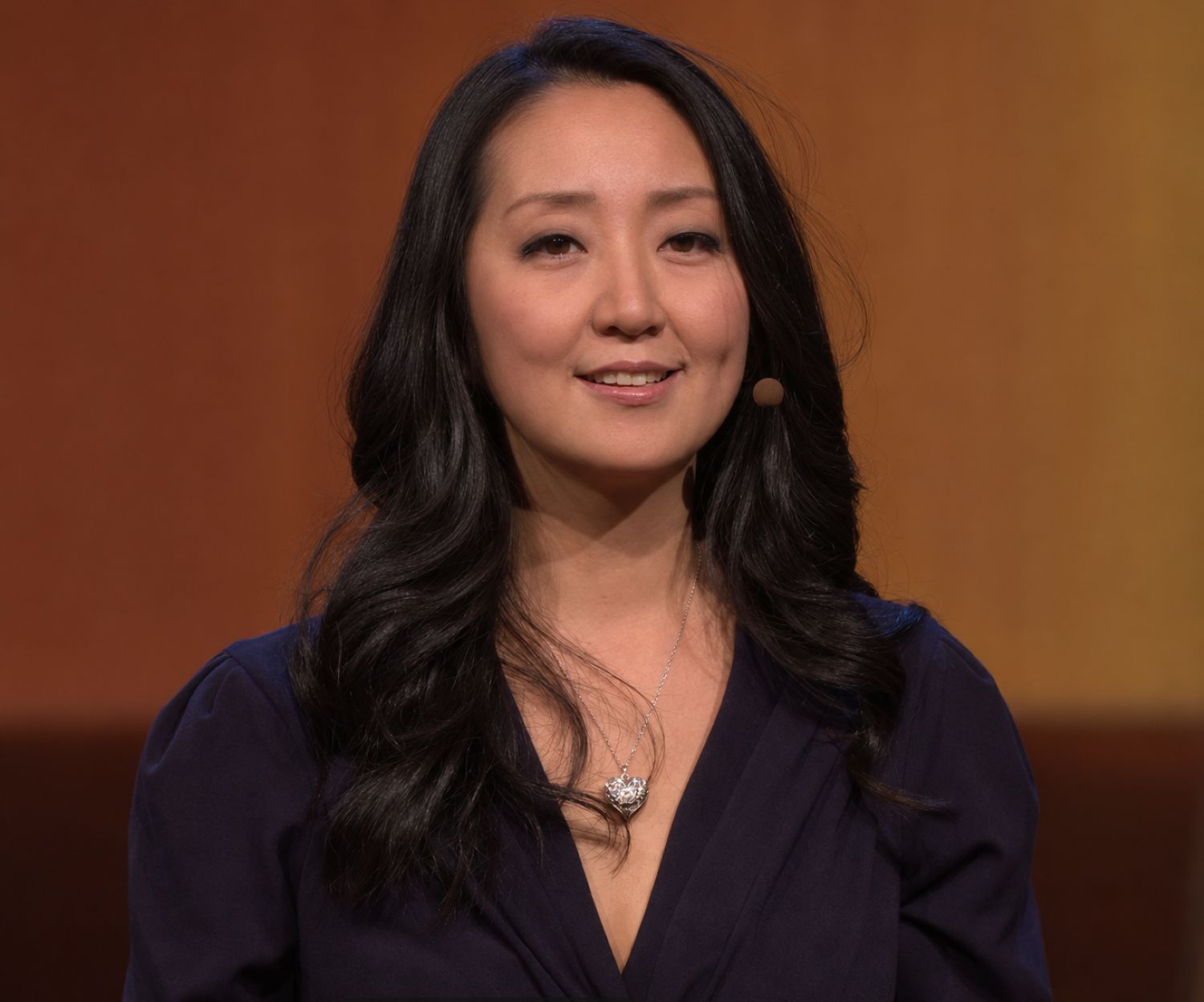

Rebeca Hwang’s introduction reads like a map. She was born in Seoul, grew up in Buenos Aires — she considers herself Argentine — and has lived in the United States for more than two decades. She invests in startups from San Francisco and teaches technology entrepreneurship at Stanford. As a general partner at Kalei Ventures, the fund she co-founded to back early-stage Latin American technology companies, she moves between these worlds as a translator, connecting cultures, innovation ecosystems, and generations of entrepreneurs coming up across the Americas.
In recent years, several Latin American media outlets have interviewed her about artificial intelligence. They ask what is happening in Silicon Valley and how those changes could affect work and education in the region.
Top of her class at Colegio Nacional de Buenos Aires
Hwang spent her childhood and teenage years in central Buenos Aires after her family emigrated from South Korea. She attended Colegio Nacional de Buenos Aires and graduated at the top of her class. She continued her studies in the United States, first studying chemical engineering and pursuing a master’s degree at MIT, then completing a doctorate at Stanford in 2008.
In the early 2000s, she worked at Procter & Gamble. She went on to found companies and invest in other entrepreneurs’ projects. She also began teaching during those years and continued to teach while running her businesses and working with investment funds.
A platform to help any entrepreneur gain visibility
Her best-known venture began in San Francisco in 2007. YouNoodle, the startup competition platform she co-founded and led as CEO from 2011 to 2013, connects governments, companies, foundations, and universities with entrepreneurial communities through open innovation programs. Its early backers included PayPal co-founders Peter Thiel and Max Levchin, as well as Korean angel investor Charles Lho. As Hwang explained, the idea was to give a young person in Argentina or Singapore a chance to get noticed online. The platform is still active, with a team split between San Francisco and Mexico, and Hwang remains on its board.
Alongside her own ventures, Hwang helped create programs where other entrepreneurs could present their projects and find support. She co-founded Cleantech Open, a clean technology competition, as well as Startup Malaysia and Startup Nations Summit. She also served on the boards of Global Entrepreneurship Network and Imagine H2O.
In 2012, MIT Technology Review included her in its regional selection of innovators under 35 and later in its global list. The World Economic Forum named her a Young Global Leader, and Forbes included her among twenty young women founders it recommended following on Twitter.
Two funds with distinct investment theses
In 2013, Hwang founded Rivet Ventures with Shadi Mehraein and Christina Brodbeck. They looked for companies whose products or services counted women among their primary users and buyers. They wanted to understand what women needed and how they made purchasing decisions so they could identify businesses to invest in. Hwang also pointed out that women continued to have less access to resources and opportunities.
In 2019 came Kalei Ventures, the fund that turned her attention south again. It invests in early-stage technology startups across Latin America, with a focus on Argentina, Mexico, Colombia, Chile, Brazil, and Uruguay. It selects companies for their potential to expand internationally and become leaders in their categories. The fund gave a formal structure to work she had been doing through separate initiatives, bringing Silicon Valley capital and methods to founders in the region where she grew up.
Diversity within as an advantage
Hwang also pursued a career in teaching. She teaches technology entrepreneurship at Stanford and taught at Tec de Monterrey for five years. At Thunderbird, Arizona State University’s business school, she was a professor of practice and directed a center focused on global entrepreneurship and family businesses.
In her TED talk on the power of diversity within, she drew on her own life to argue that having multiple identities is an advantage in creating and investing. She gave the talk in Vancouver and presented it again at TED en Español in New York and at TEDx Córdoba in 2018.
In recent years, she has been at the center of the conversation about AI. “Artificial intelligence is about human expansion, rather than technology,” she said at a Fundación OSDE talk in Buenos Aires. In another interview, she described it as the first truly revolutionary transition she had seen in more than twenty years in the United States, one unfolding in months instead of years. In December 2025, she was the keynote speaker at Echar Pa’lante in Puerto Rico, where she spoke about rethinking education and human skills for the AI era.
In 2026, she spoke with La Nación and El Tiempo about the risks posed by AI systems that can act on their own and about technological competition between the United States and China. She also took part in meetings with Argentine entrepreneurs to discuss how they could use these tools.