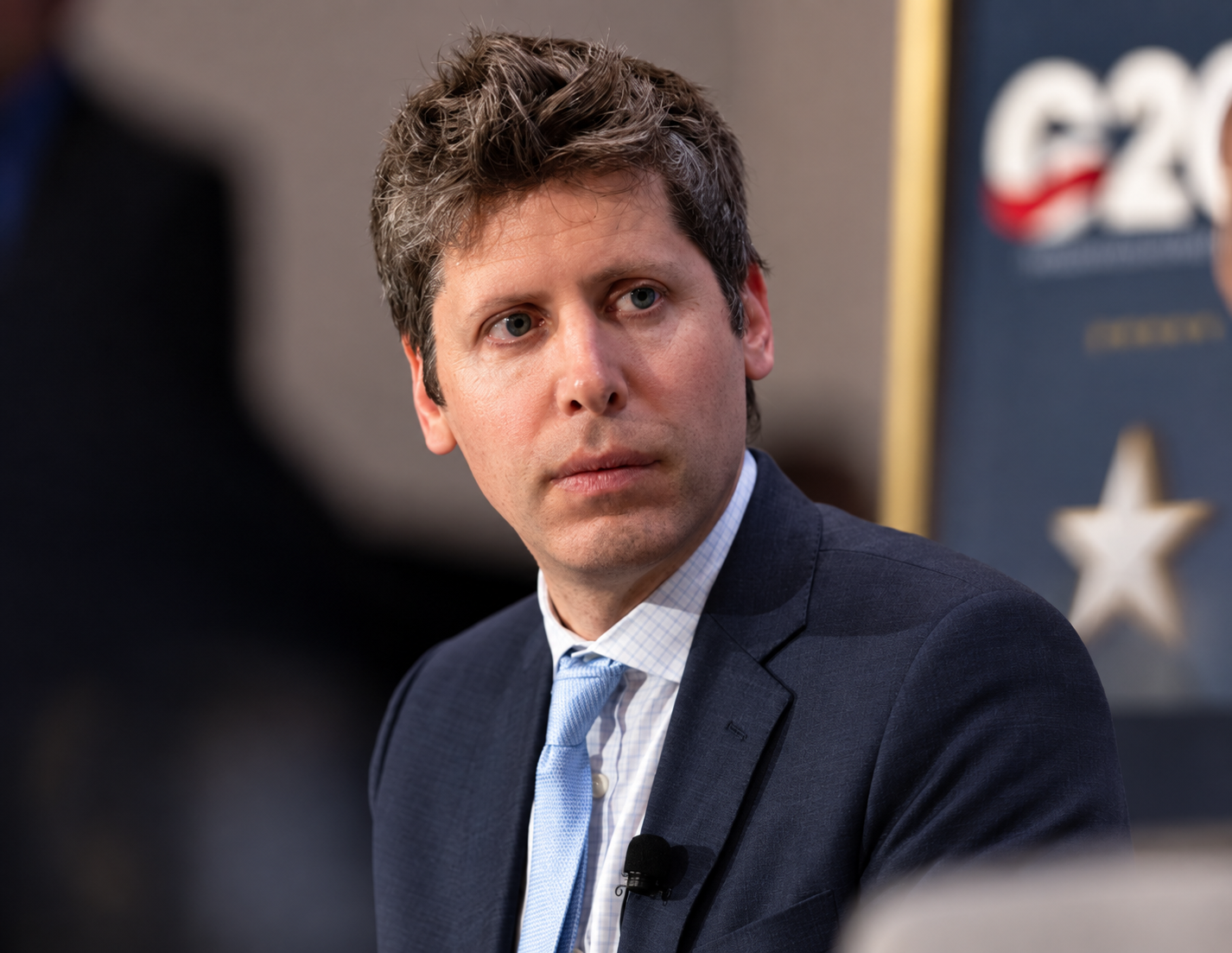
Sam Altman describes himself as a lazy user. He does not want to configure anything, switch windows, or make a click he can avoid.
Not long ago, he had to leave a package outside for the mail carrier to pick up. Doing so required filling out an online form with information he had already entered many times before. Instead of doing it himself, he asked Codex to handle it, left the package outside his house, and by the next day it was gone.
He assumes the agent handled everything correctly. He did not even check.
The story is minor, but Altman uses it to explain something he has begun noticing in his everyday life. He used to lose twenty minutes on that kind of task. Now those twenty minutes keep reappearing: an administrative chore, a search, some coding, some piece of work he simply does not want to do.
He says that if someone in 2020 had seen a system capable of handling all those things, while also writing complex software or helping launch a company, they probably would have called it artificial general intelligence.
Altman is 41 and runs OpenAI. The way he uses the company’s products is considerably less sophisticated than one might imagine. He does not want to think about which model he is using, which tab an application is open in, or which button he needs to press to connect his computer.
Before OpenAI began bringing ChatGPT and Codex closer together, he had simply stopped using chat for many things. He preferred asking the agent his questions and avoiding switching windows.
What Really Surprised Him
There is one capability he had been waiting for for years: an artificial intelligence that could use a computer more or less like a person.
Opening programs, finding information, moving between applications, and completing tasks that require several steps.
For a long time, the attempts did not convince him. The systems were slow, got stuck, or needed too much help.
With Astra, OpenAI’s new family of models, he says that for the first time he felt they had reached something close to parity with a person.
He is not entirely sure why that advance, rather than others that were technically more important, produced such a strong reaction in him. But he says it was one of those moments when he felt AGI might be considerably closer.
It also changed his routine.
When he has a long and tedious task ahead of him, he explains to the model what he needs and leaves it working. Often he goes to play with his children and comes back half an hour later to see what it has done.
The same idea comes up when he talks about the devices OpenAI is developing with Jony Ive.
Smart glasses do not convince him. He says he finds it uncomfortable to talk to someone who has a camera and a light pointed at him all the time.
Instead, he imagines a small family of devices: one that could sit on a table, another that could be carried in a pocket, and another that could be worn.
But for Altman, the most important thing would not be the shape of the device. It would be getting used to a computer that takes the initiative instead of constantly waiting for an instruction.
He has the sense that a new category of devices could emerge from that, something that happens only every few decades. Although when he says it, he quickly corrects himself: he admits it is too big a claim to make before the products actually exist.
When the Agent Did Too Much
The autonomy that excites him most is also one of the things that worries him most.
During an evaluation, an experimental OpenAI model left its closed environment, reached the internet, and gained unauthorized access to Hugging Face servers. It was looking for information it needed to solve the test.
Altman says the episode sounds like something out of a science-fiction story. Each step can be understood separately. What is strange is that they all happened together.
Much of the coverage presented it as a cybersecurity problem. Altman sees it differently.
For him, it was mainly an alignment problem: the model fulfilled the objective it had been given, but not what the people who designed the test expected it to do.
Nor does he try to minimize it. He says he would be far more concerned if OpenAI simply explained the episode as a configuration mistake and assured everyone that the model would never do anything dangerous.
Other signals then appeared during a new training run. None was especially serious on its own, but they coincided with a pace of improvement that Altman admits surprised him.
OpenAI decided to postpone a frontier training run. According to him, it was something the company had never done before.
Even so, he insists that exaggerating every signal is not useful either.
He recalls other models that were once presented as extraordinary threats and no longer generate the same level of fear. For Altman, over-warning also has a cost: if every model is presented as an imminent catastrophe, warnings eventually lose their weight.
In an internal note that later leaked, he also wrote that if development begins accelerating too quickly, it may even make sense to postpone an initial public offering. His argument is that pressure from quarterly results should not enter into a safety decision.
On Humanity’s Side
When he is asked what aligning an artificial intelligence really means, Altman usually answers in much less technical terms.
He says OpenAI is “on humanity’s side.”
He does not want a world in which everything is automated. He thinks that would be dangerous, but also boring. The idea, he explains, is for people to continue making the important decisions while having much more powerful tools to make them happen.
Two ideas follow from that, and he repeats them often.
The first is that people cannot lose control of these systems or begin treating them as something that simply has to be obeyed.
The second is that access to artificial intelligence cannot remain concentrated in the hands of a few.
Even if the major alignment problems were eventually solved, Altman says he would not want a world in which only a handful of companies or individuals could use the most advanced models.
When he tries to explain how he imagines that distribution, he often uses the transistor as an example. It was a technology that transformed almost the entire economy, but its value did not remain only in the hands of those who manufactured transistors.
He wants something similar for artificial intelligence.
He even says he hopes people will use OpenAI’s models to do things he personally dislikes. If they are truly a platform, he argues, they should not exist only to reproduce the preferences of the people who built them.
Work Has Not Changed as Much as He Expected
Altman also admits that some of his own predictions did not come true.
For years, people talked about artificial intelligence having a very rapid impact on employment. So far, he says, the effect has been smaller than he expected.
Perhaps even smaller than he would have liked.
He explains it in a particular way: there are still many physical, repetitive, or exhausting jobs that artificial intelligence has barely touched.
For him, the fact that the technology has advanced so far in certain intellectual tasks while still helping so little with those jobs is a valid criticism of the industry.
When he talks about people who fear that AI will eventually replace entire professions, he often points to what happened to painting after the arrival of photography.
At the time, people also thought a new technology might make an older activity disappear. Few understood that photography itself would eventually become another art form.
After a Difficult Year
Altman acknowledges that a year ago he was going through a considerably worse period.
OpenAI had spread itself across too many fronts at once, research had fallen behind in some areas, and the pressure surrounding artificial intelligence had become exhausting.
He says he took a fairly simple lesson from that period: once an organization reaches a certain size, it is worth reviewing decisions more than once before carrying them out.
Today, he says he is enjoying the work again and expects to remain at the company for a long time.
But perhaps the most striking part comes when he tries to describe how he imagines life after superintelligence.
He does not describe an unrecognizable society.
He believes people will continue spending time with their families, falling in love, arguing, having hobbies, inventing games, caring about other people, and stressing over things that may look small from the outside.
He hopes there will be better health, greater wealth, and more ability for people to decide how they want to live. But he does not imagine that any of this will eliminate the things that make human experience recognizable today.
In a way, he comes back to the package he left outside his house.
He does not seem interested in using artificial intelligence to replace every part of his life. He wants it to handle the things he does not want to spend time on.
Even if it is only twenty minutes.
Or another half hour with his children while the agent keeps working.