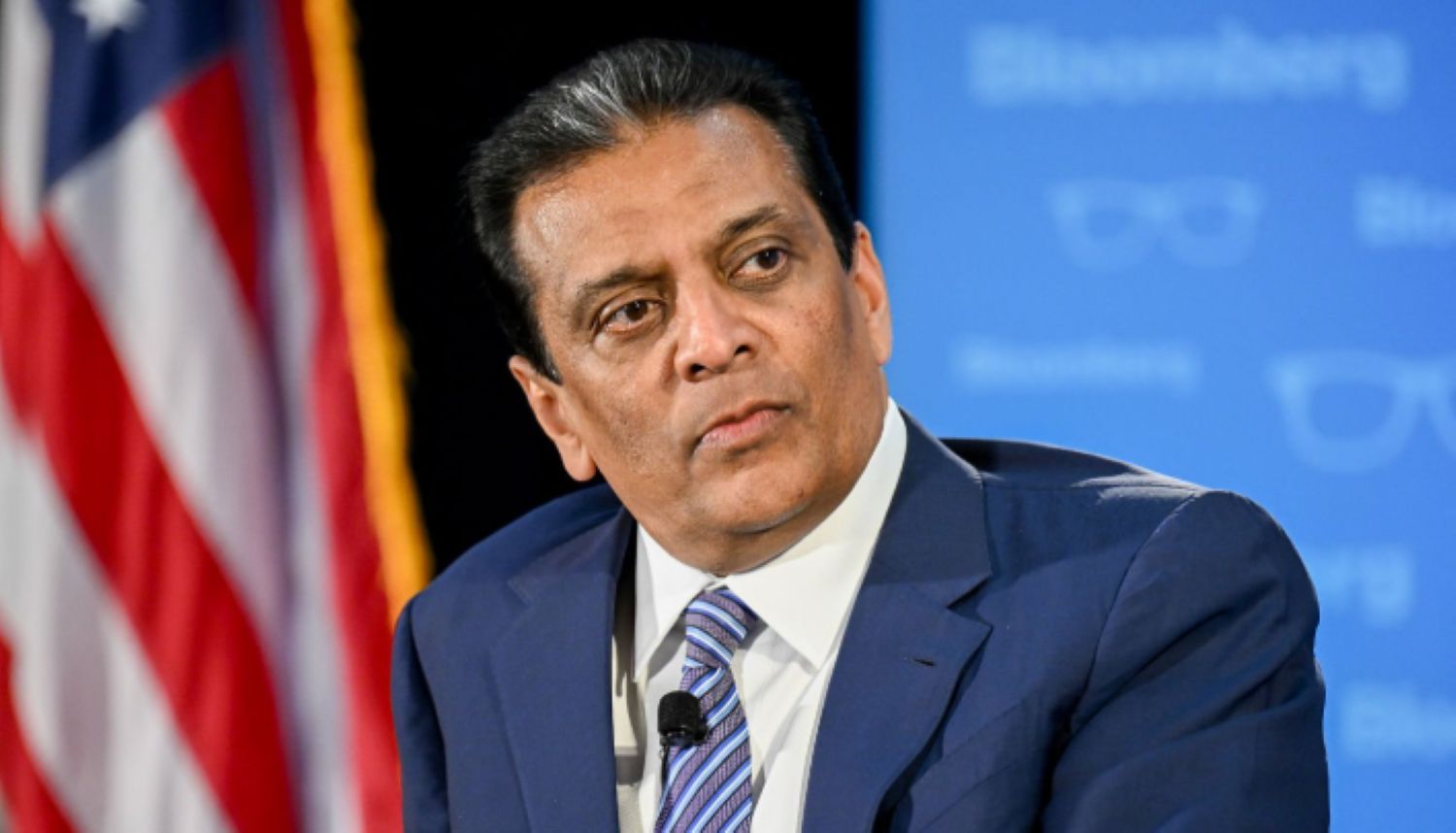
In 1991, Raj Subramaniam arrived at a job interview in Austin with a fairly specific concern.
The United States was in a recession, he had just finished his MBA, and he did not have permanent residency. He had already lost other opportunities because of it, so he decided to bring it up before they asked.
He explained to the two men sitting across from him that, if that was going to be a problem, he would rather know from the start and not waste their time.
As he recalls, they looked at him with some surprise.
One of them replied that first they had to find out whether he was good enough to work at FedEx. They could deal with the rest later.
Subramaniam got the job.
He had ended up at the interview almost by chance. A few days earlier, he walked into his apartment and found his roommate talking on the phone. He was turning down an interview because he was leaving the country.
The company was FedEx.
Subramaniam asked for the phone, called back and explained that his roommate could not attend, but that he was interested. He asked whether he could send in his résumé.
They said yes.
He joined as an associate analyst in international marketing, one of the lowest-level administrative positions in the organization.
Subramaniam was born in Kerala, in southern India. He grew up in a middle-class family where education was important, although he also played plenty of sports. He played cricket and badminton and competed in athletics.
When it came time to choose a university, the information available was far more limited than it is today. Rankings carried a great deal of weight, and one of the usual paths for an Indian student with good grades was to enter the Indian Institute of Technology and then seek a scholarship in the United States.
Subramaniam was offered two options: Syracuse and Florida.
Syracuse ranked two places higher for chemical engineering.
He chose Syracuse.
At the U.S. consulate in Bombay, they warned him that it was going to be cold. He did not give it much thought. Until then, he had never lived in temperatures below 24 degrees Celsius.
On the first day he walked to the university, it was about 21 degrees and sunny. Everyone was talking about what a pleasant day it was. He was cold.
He says that six months later he could already go outside in a T-shirt when it was seven degrees.
After finishing his studies, he completed an MBA and eventually arrived at the interview that would take him to Memphis.
When he joined FedEx, he knew little about the city and did not know anyone there. Nor did he imagine a three-decade career inside the company. Years later, he joked that if someone had told him back then that he would one day become CEO, he would have thought he had a better chance of playing for India’s national cricket team.
He moved through different positions and worked across several areas and markets. By 2019, he was already president and chief operating officer.
The next step came in February 2022.
Fred Smith, the founder of FedEx, called him and said that he was flying to Los Angeles the next day. He had looked at Subramaniam’s schedule, knew he had the day off and wanted him to get on the plane with him.
It was the day before Valentine’s Day.
According to Subramaniam, Smith got on the plane, turned around and asked him directly whether he wanted to become president and CEO of FedEx.
He replied that it would be an honor.
The flight lasted about four and a half hours. Smith spent much of that time talking to him about the company and the decisions he would soon have to begin making.
The transition could have been complicated. Smith had founded FedEx and led it for nearly half a century.
But it happened differently.
When Subramaniam began proposing major changes —among them integrating networks and bringing together operations that historically had functioned quite independently— he expected a longer discussion.
There was none.
Smith made it clear that he could offer his opinion, but that the decisions were now the responsibility of the new CEO.
Subramaniam has said several times that he considers himself fortunate to have had so much time to work with him.
Fred Smith died on June 21, 2025, at the age of 80.
It was Subramaniam who informed employees of the news. In the message, he wrote that Smith had been much more than the founder of the company and the creator of an industry, and emphasized the place he held within FedEx culture.
A year later, when he was asked what it was like to lead a company so closely associated with its founder, he turned to an old image: if he could see farther, it was because he was standing on someone else’s shoulders.
Meanwhile, FedEx’s transformation continued.
On June 1, 2026, the company completed the separation of its ground freight division, which began trading as an independent company in New York.
The scale of the business helps explain the difficulty of making any change.
FedEx has around 500,000 employees, nearly 700 aircraft and about 200,000 vehicles. It moves approximately 18 million packages a day across 220 countries and territories.
Goods worth close to two trillion dollars a year pass through its network.
Each package can be scanned around twenty-five times between its origin and destination. During the night, around 150 aircraft may arrive in Memphis, where thousands of people work sorting what they carry.
All of that activity generates an enormous amount of information.
Subramaniam often mentions one figure: two petabytes of data per day.
In 2020, FedEx began working on the idea that this data could have value beyond the traditional tracking of a package. It started organizing it and building an increasingly complete digital representation of its network.
By the time artificial intelligence began advancing rapidly, much of that infrastructure was already in place.
Subramaniam explains the change in fairly simple terms. For fifty years, FedEx focused on building a reliable network for moving physical objects. Now it wants to use all the information generated by that network to anticipate what may happen.
Not simply knowing where a package is, but where it is likely to be a few hours from now. Detecting a problem before it ends up affecting a delivery.
He often quotes something Fred Smith said in 1978: the information about the package is as important as the package itself.
That idea led to tracking systems that seem obvious today but were not obvious at the time.
Subramaniam also avoids presenting automation as an automatic replacement for people.
His argument is fairly concrete: there is still no artificial intelligence that can carry a package to someone’s home. If the number of shipments increases, people are still needed to operate the network.
According to him, FedEx added 29,000 workers in the United States over the past year.
International trade is another of his concerns.
After more than three decades working in logistics, he says he has rarely seen changes happen so quickly in the way companies produce, buy and distribute goods.
He speaks of a period of “re-globalization”: not necessarily less trade, but more diversified supply chains, new routes and a greater search for alternatives.
His broader view is that people will continue to want to trade and travel, even if the way they do so changes.
Some operations show just how far a network of that size can reach.
FedEx has transported around fifteen giant pandas between China and different zoos. Subramaniam calls them very important passengers.
The aircraft used for those trips even has a nickname: Panda Express.
He makes clear that this is not a major commercial business. It is primarily part of diplomatic and conservation agreements.
When discussing his own work as CEO, Subramaniam says that one of the first things he did was try to define the job.
He concluded that his scarcest resource was time.
From there, he organized his schedule around a few tasks: setting the strategic direction, choosing the people who would execute it, monitoring how the company was operating without intervening in every detail, and representing FedEx both internally and externally.
He travels approximately three out of every five days.
He says that one of the parts of the job he still enjoys most is meeting employees of the company.
To explain the internal culture, he frequently returns to an idea that came from Fred Smith: people, service and profit, in that order.
The logic is that if the company takes care of its people, those people can take better care of customers. Good service produces results, and those results make it possible to reinvest in people.
Subramaniam insists that he does not see it as merely a corporate slogan.
In a company with half a million employees, he argues, there is an enormous difference between having 500,000 people doing only what is necessary and having them genuinely engaged in their work.
His own story also comes up when he talks about diversity.
In one interview, he recalled that a few months earlier he had been introduced to a minister from an African country. The man seemed surprised and asked him several times whether he really was the global CEO of FedEx.
Subramaniam replied that situations like that are becoming less common.
He plays tennis and describes it as a way to disconnect. He often plays with people from FedEx in Memphis and says nobody lets him win points just because he is the CEO.
His parents, who live in India and are in their nineties, never imagined the path his life would eventually take either.
Subramaniam says his father’s advice remains practically the same as it has always been: work hard and do not let down the people who place their trust in you.
Toward the end of an interview, he was asked what the worst part of his job was.
He answered: unpredictability.
FedEx operates virtually everywhere in the world, and any conflict, natural disaster, political problem or disruption can affect some part of the network.
That is why, he said, lately he does something before looking at his phone in the morning.
He says a short prayer.