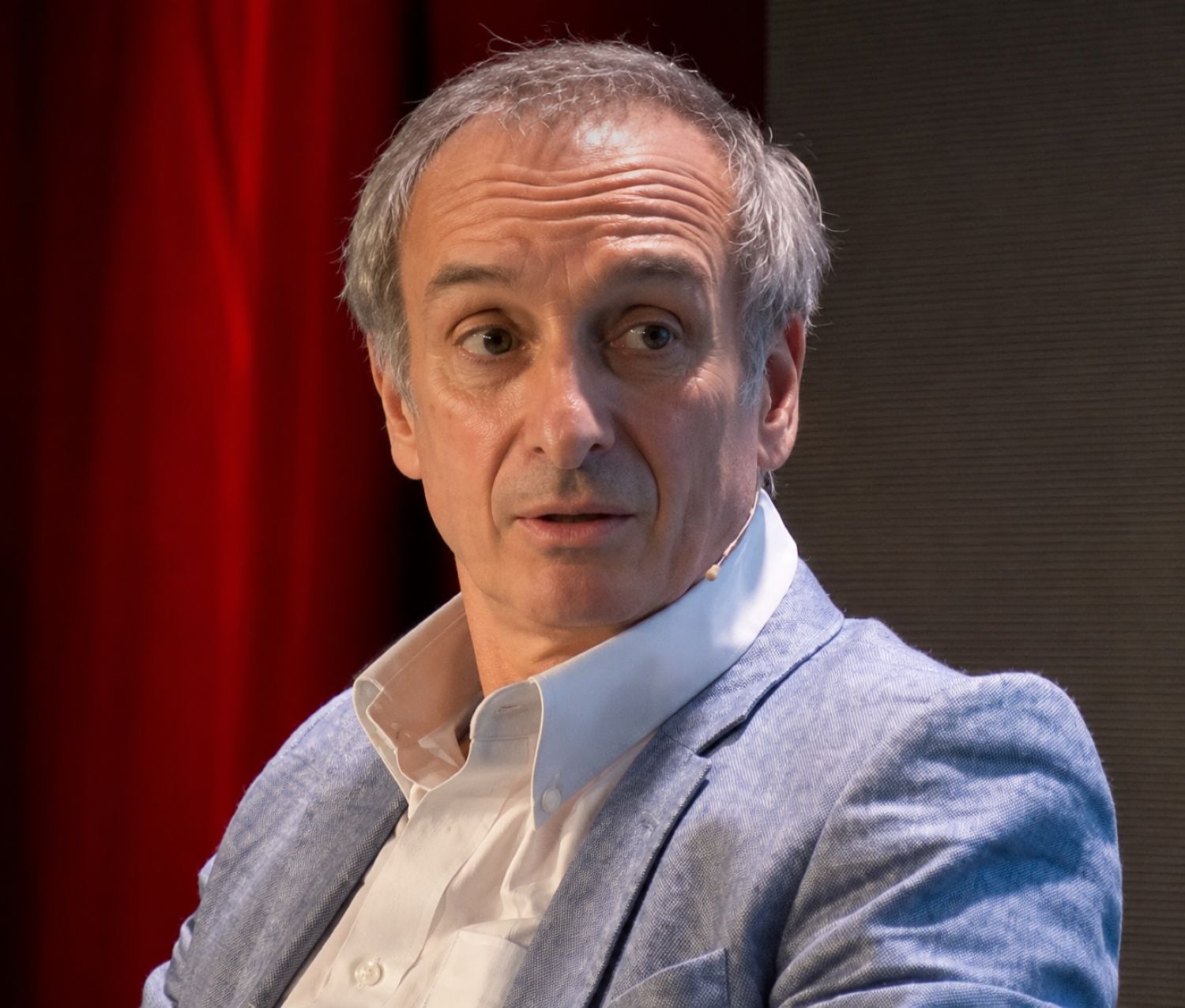
The committee chairman announced that Carlos Ormachea had to leave. It was around half past twelve.
Before that, Ormachea had spoken for twenty minutes. He explained why the RIGI benefits Argentina’s oil industry: the activity is capital-intensive, all the money has to be invested before the first barrel is produced, and the 21% value-added tax effectively represents an additional 21% of investment that must be financed. He said the sector had gone from a deficit of 6 billion dollars in 2022 to a surplus of 7.6 billion last year, and that this year it could reach 10 billion. He added that production had risen from 480,000 barrels per day at the end of 2023 to more than 900,000 today.
Then the questions began. And the questions were something else entirely.
What they asked him
Deputy Itai Hagman was the first to raise the uncomfortable issue. He said he was not surprised to hear the representative of the hydrocarbons chamber explaining why the regime benefited the industry he represented. What he wanted to know was something else: how that connected with the rest of the Argentine economy. How it generated employment, science and technology. Because the image that came to mind, he said, was not Norway. It was Nigeria, Congo and Angola: countries built around oil enclaves.
Julia Strada was more surgical. She read an article published by EconoJournal in July 2024 and quoted officials from Javier Milei’s government word for word: upstream oil did not need the RIGI, and the industry knew it. Deputy Chief of Cabinet José Rolandi and Secretary María Ibarzábal had told CEPH executives so in person. Federico Sturzenegger had rejected its inclusion during the debate over the Bases Law.
And yet, months later, the Executive included upstream activity through regulation. Today, Ormachea defends it.
Strada then asked for the only thing that matters: the cost structure. Without the RIGI, she asked, are you unable to invest? Is the sector unviable?
Ormachea did not answer. He had to leave.
The man who knows there is nothing to spare
None of this catches him unprepared. Ormachea is 75 years old, has spent forty years with the Techint Group, is a certified public accountant from the National University of La Plata and holds a master’s degree from Stanford. He served as Tecpetrol’s CEO for seventeen years and is now its chairman. He has presided over the CEPH since 2023.
For a decade, he has been saying the same thing, with a consistency that must be acknowledged: without price, there is no investment. It is his only law.
His argument is that Vaca Muerta makes no sense as a domestic project—there are enough resources for more than one hundred years of internal consumption, and by then global demand for fossil fuels may have disappeared—so it is either an export project or it is nothing. And if it is an export project, it must compete with the Permian Basin in the United States. Argentina, he says, enters that competition with a structural disadvantage: the cost of capital.
It is a solid argument. It is also exactly the argument used to justify the tax benefit.
What he says elsewhere
At a conference before the Mexican oil industry, with no lawmakers in front of him, Ormachea was far more candid about how the consensus surrounding Vaca Muerta was built.
He said YPF had secured the social licence, and that it worked because people perceived it as a state-owned company—a private company, he explained, is subjected to much closer public scrutiny. He also said Argentines have a kind of magical thinking: there is always something that is going to save them. Vaca Muerta became one of those things. People believed Vaca Muerta would save the country before there was a single figure on the table. And once something becomes a positive term, he concluded, politicians line up behind it.
It is a lucid and somewhat ruthless interpretation. It is also an exact description of the scene unfolding in that committee.
This is not a party
Ormachea usually ends his presentations by cooling the enthusiasm, and this time was no exception. The chamber’s projections are enormous—surpluses that could reach 49 billion dollars over the next decade—but he insists that the scenario is demanding in every respect and that there is nothing to spare. “This is not a party,” he said during another presentation a few months ago. No one should believe there is abundance available to distribute.
There is a generous interpretation of that statement: he is a cautious executive, shaped by forty years of watching Argentine production decline, subsidies consume two points of GDP and certainties evaporate.
And there is another interpretation, the one left hanging unanswered in the committee. When the man asking for the tax exemption is also the one saying there is no abundance to distribute, he is the one who does not distribute it.
The cost structure, in any case, remains unknown. Ormachea had to leave.