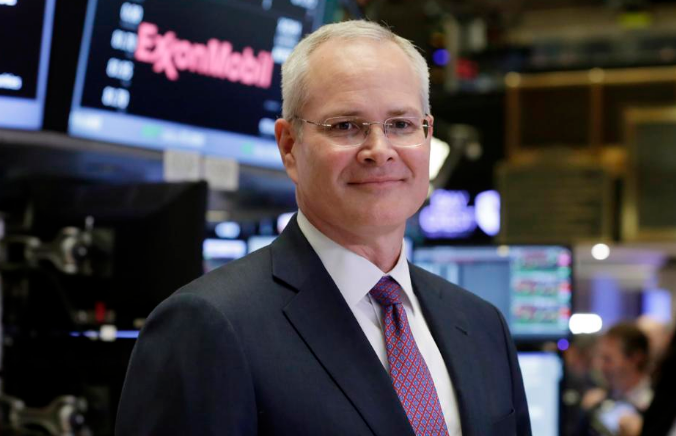
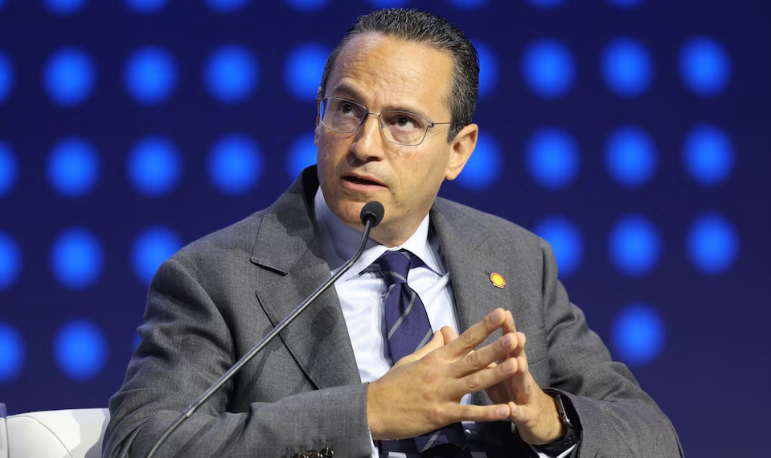
Patrick Pouyanné is the current CEO and chairman of TotalEnergies, a French multinational in the energy industry. Within Europe, it is the most important company in the sector, represents the largest market capitalization on the Paris Stock Exchange, has a presence in more than 120 countries and operates within the petrochemical sector. Across that entire line of activities, Pouyanné is responsible for managing and overseeing the work.
Several of these leaders and executives have expressed concern over the war in the Middle East and the oil and gas crisis. In the first quarter of 2026, the Strait of Hormuz, the world’s largest oil corridor, was blocked for several days amid the armed conflict between the United States and Iran.
Pouyanné’s warning over the oil crisis in the Middle East
“Blocking the Strait of Hormuz is not an aggression against one country; it is economic terrorism against the whole world. No country should be able to do that. It is not a supply problem; it is a security problem,” the CEO of TotalEnergies stated. He even drew a comparison with 2022, when the war between Russia and Ukraine began, and said that four years later, Europe’s supply in terms of tonnage is higher.
Unlike other executives who focused their warnings exclusively on crude oil price volatility, Pouyanné argues that the main problem is not oil itself, but the growing imbalance between global energy demand and the investment capacity needed to guarantee future supply.
The French executive has warned on numerous occasions that the oil industry has significantly reduced its investments compared with the levels seen during the 2010s. While global demand remains close to historic highs, many companies face regulatory, financial and social pressure to limit new hydrocarbon projects.
The French executive went even further and said: “We have no energy. The North Sea is in decline. We lost Russian gas, and we lost it for a long time.” The chairman and CEO of TotalEnergies has recently expressed strong concern over the geopolitical situation and the international context.
In his view, oil will remain indispensable for sectors such as heavy transport, petrochemicals and numerous industrial activities for several decades. For that reason, the French executive considers that abandoning investment in production is a strategic mistake that could lead to a new supply crisis.
What is his vision for the future? Pouyanné rejects the idea of a transition based exclusively on the rapid substitution of oil and gas. Instead, he proposes an approach that combines the expansion of clean energy with sufficient production of fossil fuels to avoid economic imbalances.
To avoid repeating mistakes from the past, the French executive warned that oil and gas in Europe must be a central issue in order to avoid dependence on Russian gas. Pouyanné pointed out that Europe experienced a concrete demonstration of that vulnerability. European energy dependence on Russian gas was exposed when exports began to decline. That forced countries across the continent to seek alternative suppliers and pay considerably higher prices.
The pragmatic vision of TotalEnergies’ CEO
A pragmatic vision is associated with someone who is decisive, effective and places practice above theory. Pouyanné consistently seeks solutions to the stress imposed today by the geopolitical context. For example, the French executive announced new investments in oil and gas in the United States amid the decline of wind farms.
TotalEnergies significantly increased its investments in solar energy, wind energy, electricity storage and power generation. At the same time, it is also developing oil and gas projects. For Pouyanné, both dimensions are not contradictory. He also said that Europe understood that setting climate goals is not enough, and that the continent also understands the need to ensure that households, industries and transport systems have sufficient energy at reasonable prices.
Patrick Pouyanné’s vision does not deny the need to transform the global energy matrix. The French executive, as the visible head of TotalEnergies, rejects approaches that ignore the technical and economic limitations of the present.
What is his proposal? It consists of moving toward an economy with lower emissions without compromising energy security, industrial competitiveness or the population’s access to affordable energy.
The combination of economic realism and gradual adaptation to climate challenges explains why he is often considered one of the most pragmatic and influential voices in the global energy industry. Patrick Pouyanné has led TotalEnergies for several years and has implemented ideas that align with his values and beliefs.