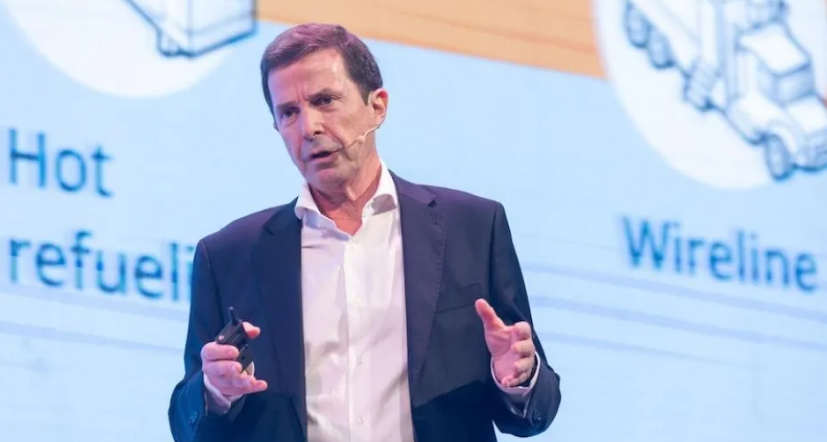
Paolo Rocca is one of the most important figures in the energy industry in Latin America. His surname comes from Agostino Rocca, an Italian who founded Grupo Techint in the 1940s, a leading company in steel, energy, construction and health. His career is closely linked to the development of Tenaris, a company that, under his leadership, became a world leader in the manufacture of pipes for oil and gas exploration and production.
Rocca became fully involved in the company after the deaths of Agostino and his brother Roberto. In the late 1990s, during Carlos Menem’s presidency, Rocca strengthened the company’s success and transformed it into a conglomerate of companies with a presence in more than 40 countries. Today, the multinational operates as a holding company for several firms, and Tenaris is one of them, where Paolo served as CEO for several years.
Techint’s international expansion coincided with the rise of major energy projects in the Americas, Europe, Asia and the Middle East. Through different companies within the group, Rocca took part in the supply of materials for some of the most important gas pipelines in the world.
What was Rocca’s management like at the head of Tenaris?
Since 2002, the year the company was founded, Rocca drew attention through Tenaris’s presence around the world. The Argentine company achieved a highly significant international reach, with operations in the United States, Canada, Mexico, Brazil, Argentina, Italy, Romania, Japan and the Middle East.
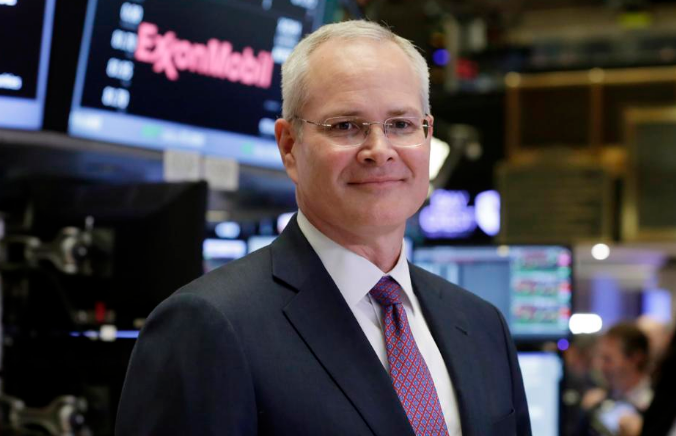
Rocca drove a strong expansion in the United States, especially during the boom in shale oil and shale gas. Tenaris’s consolidation in the Permian Basin and other North American producing regions became one of the company’s pillars of growth. The businessman also placed Tenaris at the center of the scene as a major supplier to ExxonMobil and Shell, two highly recognized companies within the energy industry.
His role in Vaca Muerta
Rocca played a central role in the industrial development linked to Vaca Muerta. For years, he defended the need to turn the country into a global-scale energy exporter through investments in gas pipelines, infrastructure and hydrocarbon production. His group actively participated in projects associated with gas transportation and the strengthening of the energy industrial chain.
For Rocca, Vaca Muerta represents a historic opportunity comparable to the major cycles of economic development that transformed other energy-producing countries. For years, he argued that the Neuquén formation has enough resources to structurally modify the Argentine economy. The businessman’s position is connected to the ideas of other Argentine executives involved in the energy industry.
Grupo Techint’s role was central in that expansion. Through Tenaris, the conglomerate supplied a large share of the pipes used in unconventional drilling within Vaca Muerta. Under Paolo’s leadership, Grupo Techint’s companies strongly supported the process. For many senior executives in the sector, Vaca Muerta represents an opportunity not only for the Argentine economy, but also to build a process of international expansion and attract new investors.
Through Tenaris, thousands of pipes were manufactured for the project, while different companies within the group took part in engineering and development stages. Rocca repeatedly emphasized that this type of infrastructure is indispensable for Argentina to fully harness its energy potential and increase its gas exports.
Rocca considers that Vaca Muerta should not be understood solely as an oil project, but as an industrial development platform for the whole country. His argument is that energy expansion can drive value chains linked to metallurgy, construction, logistics and technology, generating skilled employment and strengthening Argentina’s competitiveness. For that reason, in recent years he defended the need to integrate hydrocarbon production with a broader industrial strategy.
A long-term industrial vision
Paolo Rocca’s position was clear from the beginning: a long-term vision that goes beyond energy or oil interests. That conception explains much of the strategic decision-making he carried out at the head of Tenaris and Grupo Techint over recent decades.
Under that logic, he promoted investments in industrial centers, steel plants, technical training and applied research. His objective was always to build companies capable of competing globally from Latin America, something uncommon in industries traditionally dominated by corporations from Europe, the United States or Asia.
The investor considers that the energy transformation represents an opportunity to develop new industries, improve production processes and strengthen the competitiveness of emerging economies. That vision allowed him to position himself as one of the continent’s most influential business voices in productive development, energy and technological innovation. Above all, it reflects a long-term outlook with clear ambitions.