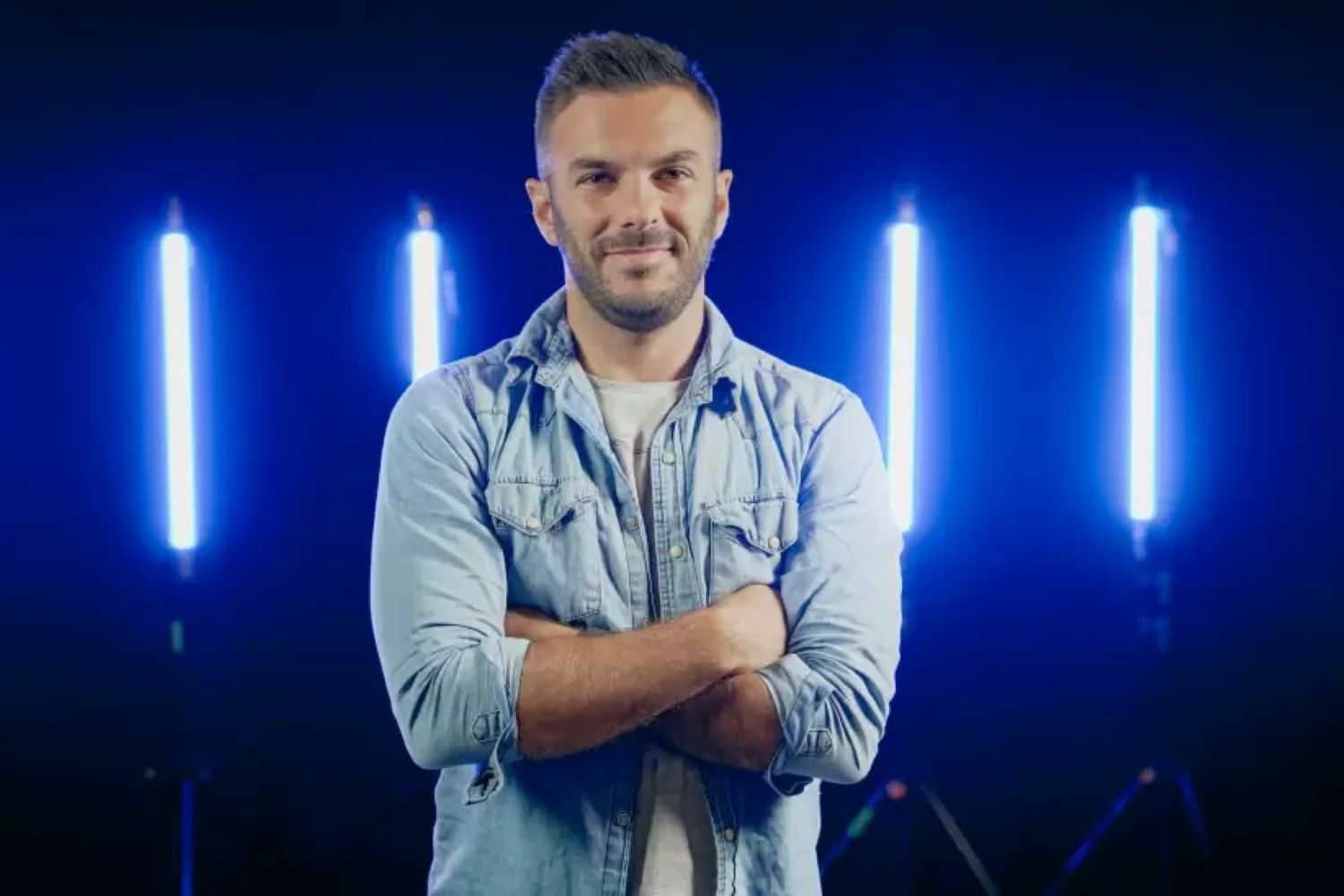

On one arm, Ariel Sbdar has the Cocos logo tattooed. On the other, an expression familiar to anyone who has studied compound interest: (1 + r) raised to the power of n. He got it in 2022, during the company’s first full year of operation. He says he wanted to remind himself of something he struggled with: to stop thinking that money would always run short.
That concern dates back to his childhood in Corrientes, where he watched his family experience financial problems and his father search for ways to keep working after the 2001 crisis. Before studying finance, he walked dogs himself to earn his own money.
Today, he is co-founder and CEO of Cocos, the investment platform that ended 2025 with two million users, US$49.7 million in revenue and more than US$2 billion in assets under management. The company has around two hundred employees and moved into banking with the acquisition of Banco Voii.
When he talks about money, Sbdar returns to the fear of losing it and the difficulty of enjoying it, even after saving enough to live comfortably.
What the Crisis Left Behind
Sbdar comes from a Sephardic Jewish family in Corrientes. When describing his upbringing, he speaks of a constant concern about what might happen. He uses an exaggerated image to explain it: living as though preparing for an atomic bomb. In that environment, he says, spending could trigger guilt, and investing felt dangerous.
His father worked in the timber business, with sawmills and retail stores. Among his memories of the 2001 crisis are the Johnson kitchen cabinets his father sold, which suddenly had no buyers. People had no money. Then came the attempt to find another line of business: the factory began producing sets of iron chairs.
That experience comes up when Sbdar talks about Argentine business owners. He says many of those he knows went through 2001 and had to start again. In his father’s story, he finds a reference point for his own decisions, especially when things become difficult.
At eighteen, he moved to Buenos Aires to study Business Economics at Universidad Torcuato Di Tella. He arrived in 2010, knew few people and initially lived in the maid’s room of a cousin’s apartment.
While studying, he worked at Restorando. In 2013, he traveled to Tel Aviv and, according to his account, offered to work without pay at a technology company. Later, he obtained a scholarship to pursue a master’s degree at HEC Paris. He returned to Argentina in 2015 and worked at Allaria Ledesma, Banco Macro and Banco Industrial, BIND, where he became head of strategy.
He had a stable position when he decided to leave it to buy a brokerage firm with Nicolás Mindlin. They paid US$50,000 for a firm whose license was close to expiring.
His family struggled to understand why he wanted to leave a good job for something uncertain. Sbdar recalls that his grandfather listened and told him to have confidence. Years later, with Cocos expanding rapidly, he says his family’s questions are much the same as they were then.
When Money Is Enough
One of his concerns is the difficulty of enjoying money even when one already has enough. He sees it, he says, in people who reach 65 with properties and savings but continue living in fear of being left with nothing.
He says that when he sits down with clients in that situation, he asks them to organize their numbers: what they own, how much they spend and what income they receive. He does the calculations with them and tries to show them how much they could use without jeopardizing their future. Even so, many cannot feel reassured.
Sbdar finds a useful distinction in English when discussing wealth: the difference between rich and wealthy. He gives the terms his own meaning. The first describes someone who has money; the second, someone who retains the ability to generate it again after a loss or a crisis.
That is why he talks so much about income streams. He is interested in the ability to sustain a way of life and recover from a setback. He also questions the association between prosperity and display: expensive cars, trips or purchases shown on social media.
In his experience, several of the investors he knows with the greatest net worth keep a low profile. They do not post what they own and think carefully before making a major expenditure. Sbdar often mentions the cost of maintaining a boat as an example of a purchase that can become a burden even for someone with a great deal of money.
His definition of abundance involves needing less. It is an idea he also tries to apply to his own life, having grown up worrying that money could run short at any moment.
Optimistic, but Keeping Liquidity
Sbdar considers himself an optimist. He believes that constant fear of the next crisis can ultimately be a poor companion when investing.
He explains this through those who waited for a downturn like the one in 2008 to enter the market. Some, he argues, did not buy when prices fell either: the news was worse, and the fear was still there. The opportunity they had been waiting for was not enough to make them act.
That outlook coexists with a cautious approach to managing part of his investments. He says he keeps a substantial portion in liquid assets and that Cocos’s own portfolio is conservative.
He also finds it difficult to select individual stocks. He prefers indexes because he distrusts how easily an individual investor can become convinced they have spotted something everyone else missed. On the other side are analysts and funds that devote entire teams to studying a company, even using satellite imagery to count the trucks entering and leaving a factory.
He mentions Cisco and Intel when explaining that a well-known company can be an investment from which it is difficult to recover one’s money if the price paid was too high. In his case, confidence in the future does not eliminate concern about the entry price.
When he takes the conversation beyond investing, he returns to enjoyment. He says he worries about reaching the end of his life and feeling he put too much off. He works hard and wants to keep growing, but he also questions the habit of saving everything good for later.
The Decisions Behind Growth
Cocos announced the acquisition of Banco Voii for US$20 million and obtained approval from the Central Bank in June 2026. A month later, it announced the acquisition of Warren, a Brazilian wealth management platform, in a transaction reported in Brazil to be worth around US$60 million.
The scale of the business requires him to make decisions affecting far more people than at the beginning. Sbdar speaks of the responsibility of leading, alongside Mindlin, a company with almost two hundred employees. At the same time, he feels that standing still also has a cost. He describes intense competition and mentions Brubank among the companies that force him to stay alert.
He says he enjoys managing risk. That includes deciding when to increase exposure and when to reduce a position. His enthusiasm for growth does not remove the need to review how much he can commit at any given moment.
Something similar happens with artificial intelligence: he is fascinated by what it can do and tests it himself. He participates on GitHub without having trained as a programmer and encouraged hackathons within Cocos so employees could develop solutions to problems in their work.
As those tools handle more technical tasks, he places greater importance on judgment, creativity and personal stability. He talks about having one’s house in order, referring both to where one lives and to family, partners and relationships. He believes problems in that sphere ultimately affect decisions at work.
The 2022 tattoo is still on his arm. Sbdar connects it with his intention to change his relationship with money. Cocos has grown since then, bought a bank and pursued business opportunities in Brazil. The question he asked himself before all that still comes up in his conversations: how to stop worrying about what is missing and start enjoying what he already has.