

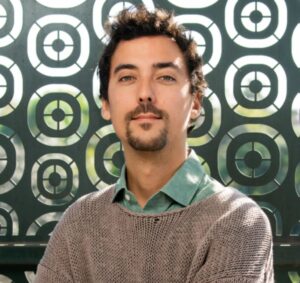
To explain what Puna Bio does, Franco Martínez Levis uses the example of a runner who trains at altitude. When the runner returns to sea level, he says, they may perform just like everyone else under normal conditions. The difference becomes apparent when the effort increases: their training helps them withstand it.
He uses this comparison to describe the work of the microorganisms his company takes from the Puna’s salt flats to agricultural crops. They come from environments more than four thousand meters above sea level, with little water, scarce nutrients, saline soils and intense ultraviolet radiation. The characteristics that allow them to survive there can help a plant through periods of drought or heat.
Martínez Levis, co-founder and CEO of Puna Bio, points out that even a high-yielding field can spend fifteen or thirty days under stress. During those periods, he explains, the microorganisms produce substances that help the plant tolerate those conditions and reduce yield losses.
The company was founded in 2020, is based in Tucumán and, according to its figures, its products are used on between three hundred thousand and four hundred thousand hectares per growing season. Private investors have contributed more than ten million dollars to the company. Corteva Agriscience led its Series A round, and the Gates Foundation participated as a minority investor.
The Research Came First
When recounting Puna Bio’s history, Martínez Levis often explains how much work had already been done before the company existed. He arrived after María Eugenia Farías, Elisa Violeta Bertini and Carolina Belfiore, researchers at CONICET, had spent more than two decades studying the Puna’s environments.
The scientists wanted to understand how plants grew under such difficult conditions. They found that certain microorganisms helped them tolerate water shortages, extreme temperatures and a lack of nutrients. Building on that knowledge, they began studying whether those microorganisms could do something similar for agricultural crops.
Martínez Levis came from consulting and startups and had pursued an MBA at Wharton. He partnered with the researchers to develop the business. GRIDX, the biotechnology investment fund, participated in the company’s formation.
They needed to find a way to produce those microorganisms at scale, preserve them and offer them at a price that made sense for farmers. They also had to demonstrate that the results could hold up outside the laboratory.
From a Sample to a Product
To begin, the team collects plants and small soil samples in the Puna. Microorganisms are isolated from them and then studied separately. Martínez Levis explains that thousands of bacteria and fungi can coexist in a tiny grain of soil; choosing which ones to keep investigating takes time.
Work starts in the laboratory. Then come greenhouse trials with plants, where the team observes whether the microorganism supplies nutrients or helps tolerate a particular stress condition. The results must also be verified in the field.
Once a microorganism has been selected, the formulation still needs to be developed. The product must be capable of being manufactured, transported and stored without losing its effectiveness. Martínez Levis describes it as a highly concentrated juice of microorganisms.
It is applied to seeds alongside other standard treatments. That compatibility matters when selling it: farmers can incorporate it without having to change their entire way of working.
According to company figures, Puna Bio has around fifty people. Thirty-five work in science, and eighteen hold doctorates. It maintains more than two thousand five hundred strains for its research.
The Cost of Nitrogen
Kanzama, the product for wheat and barley, found an opportunity when urea became more expensive. Farmers were looking for ways to supplement it and make better use of the fertilizer they applied.
Puna Bio maintains that, through biological fixation, the product can supply the equivalent of around thirty-six kilograms of nitrogen per hectare. Martínez Levis also explains how the microorganism works.
According to him, it can fix nitrogen from the air, participate in processes that make use of nitrogen already in the soil, and help crops use the urea applied. Having those alternatives allows it to act in different ways throughout the crop’s growth.
Fixing nitrogen from the air requires a great deal of energy. That is why, he points out, being able to draw on other sources is useful when conditions change.
For farmers, that explanation needs to translate into an improvement that offsets the expense. The company estimates a return of between six and ten times the product’s cost. This is its own estimate, dependent on trial conditions and the circumstances of each farm.
Three and a Half Years to Choose One
Kunza, the biostimulant for soybeans, cotton and beans, has been on the market for three years and has been tested on more than three hundred thousand hectares, according to Puna Bio.
Tyrix, the company’s first biofungicide, emerged after three and a half years of testing fifty different Trichoderma candidates. The selected one also comes from an extreme environment.
The company says it achieved results similar to or better than the standard chemical treatments against the disease complex known as damping off.
Years of work went into the product before it was ready for market. During those years, there were salaries, trials and tests involving candidates that were ultimately discarded. Even after the microorganism had been selected, work remained to turn it into a commercial product.
Corteva and the Gates Foundation
Corteva Agriscience led the Series A round. The Gates Foundation joined as a minority investor, although the size of its investment was not disclosed. Puna Bio also received support from the Bayer Foundation and recognition from the Falling Walls Foundation in 2024.
With the Gates Foundation, it is working on a program aimed at smallholder farmers and family farming in Africa. There, beyond verifying agronomic results, the technology must also be made usable on farms with fewer resources.
The company reported direct operations in the United States, Brazil and Paraguay, along with plans to reach Europe, Australia and Africa through partnerships. At the same time, it is expanding its Tucumán laboratory and preparing a satellite facility in the United States.
Another project involves working with seed companies so that they deliver seeds already treated. This would spare farmers from applying the product before sowing. To offer that option, the company must ensure that the microorganisms retain their effectiveness during storage.
When discussing the obstacles facing Argentine biotechnology, Martínez Levis focuses on the economy and regulations. He points out that those conditions affect both incoming investment and the ability to operate in other markets.
In his field, timelines are long: years can pass between the first trials and a sale. Throughout that time, the work must be financed without any certainty that the development will ultimately become a product.

