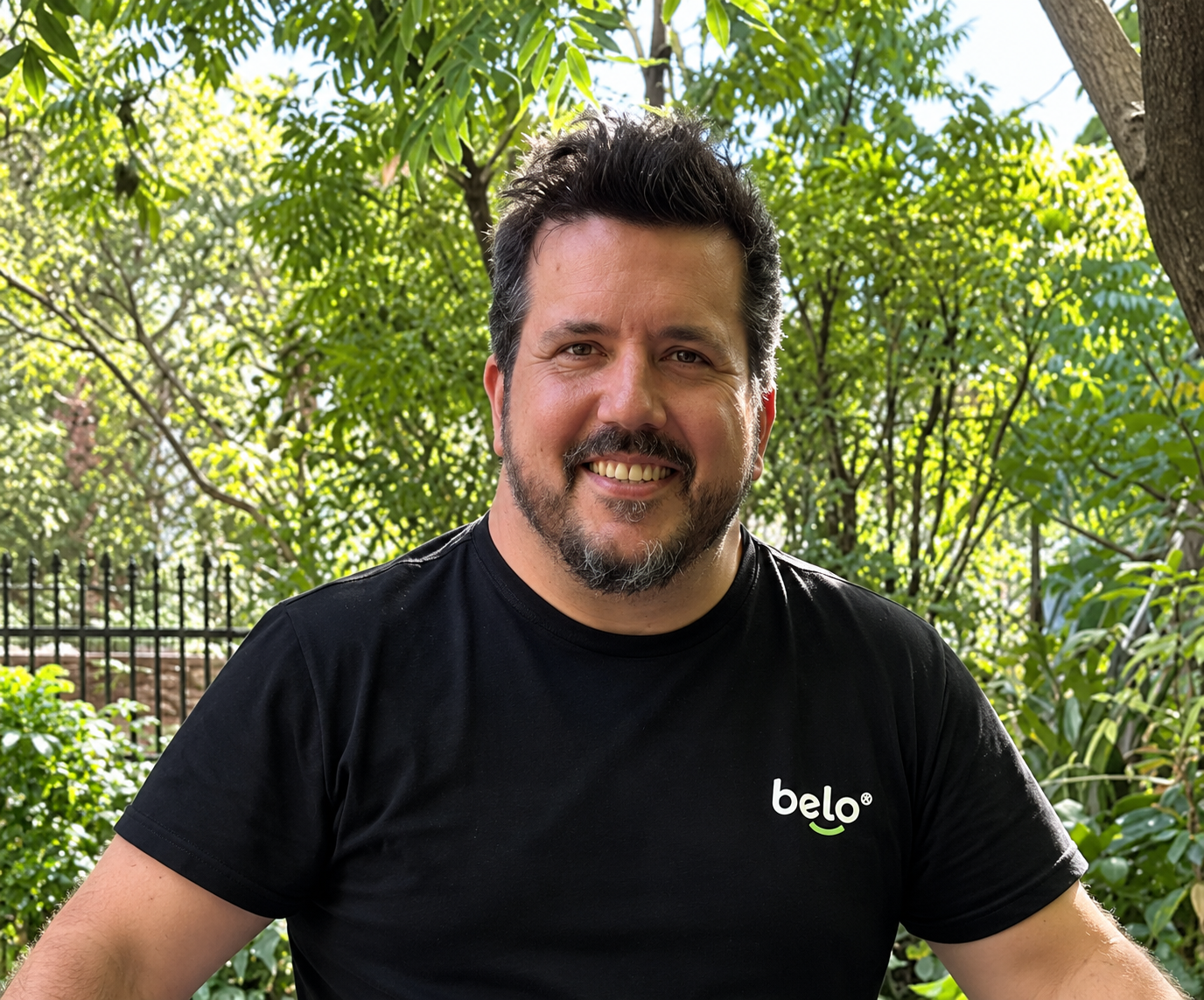
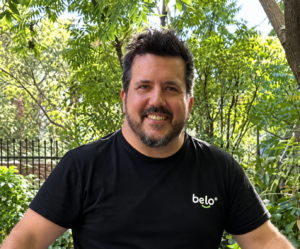
Bitcoin fell below $70,000 after reaching a peak of $125,000, in a decline whose speed puts it close to the steepest in its history. Manuel Beaudroit, CEO and co-founder of Belo—the Argentine crypto neobank with 3.4 million users across eleven countries—was landing in Rio de Janeiro when the market plunged. His interpretation was less dramatic than the trading screens: the peak of a cycle is followed by years of decline, the market clears itself out and, for those taking a long-term view, it is an opportunity to buy cheaply.
Beaudroit continues buying small amounts of Bitcoin every day, even when the price falls. He uses a strategy known as DCA, which spreads purchases over time, and holds what he buys with the intention of keeping it for years. He does not try to profit from each day’s price movements. He acknowledges that nobody knows how far the price might fall.
Nor is he counting on intervention from the United States. When Treasury Secretary Scott Bessent was asked whether he would rescue Bitcoin, he replied that he had no authority to do so. Following those remarks, the price fell again. Beaudroit believes these declines may attract political figures: he mentions Nancy Pelosi as a potential buyer, although he does not claim that she has entered the market.
Miners moving into artificial intelligence
One theory about the causes of the decline, which Beaudroit treats cautiously, is that some Bitcoin mining capacity is moving into artificial intelligence data centers because miners find it more attractive to rent out their computing capacity than to keep competing for blocks. This lowers the hash rate—the network’s processing power—and ultimately affects the price.
A structural change adds to this: Bitcoin no longer moves independently and now follows the global financial system, tied to interest rates and the macroeconomic environment. Institutional investors accessing Bitcoin through US ETFs buy shares in funds that track its price, without having to hold the cryptocurrency themselves. For Beaudroit, that inflow of money can push the price higher and makes market cycles harder to interpret.
The last halving, which cuts the issuance of new bitcoins in half, occurred in 2024. The next is scheduled for 2028. But this time, the price did not follow the path of previous cycles. Beaudroit believes there is still more to understand about how the market has changed and prefers not to take what comes next for granted.
US inflation, which has just reached an annual rate of 3.8% because of the war’s effect on fuel prices, works in the opposite direction: it reinforces Bitcoin’s role as a store of value. His underlying forecast remains unchanged: with an issuance limit of twenty-one million bitcoins, between five and six million lost forever and around fourteen or fifteen million effectively circulating, he believes the asset will be worth one million dollars in the coming years.
The peso entered the blockchain and pays 25%
While the price dominates headlines, the industry is looking elsewhere. Beaudroit estimates that between 70% and 80% of the conversations at Consensus, the industry conference in Miami, now revolve around stablecoins. These are digital currencies such as USDT and USDC that seek to maintain the dollar’s value. Bitcoin and Ethereum, he says, no longer command almost all the attention.
He compares this with TCP/IP, the protocols we use whenever we access the internet, even though most people do not know what they are. Something similar happens at Belo: users pay with Mastercard or Visa, with QR codes in Argentina or, according to him, with Pix in Brazil, Bolivia and Peru. Colombia would be the next step. Cryptocurrencies are involved in the payment, but users do not need to handle them. Merchants receive local currency, and travelers avoid buying dollars or exchanging money at the airport.
The second wave involves local-currency tokens. Belo bought Num Finance last year and issued eight stablecoins representing currencies from the region. In December, it launched an Argentine peso token that pays an annual yield of 25%. Many people deposited pesos, bought the token and traveled to Brazil to pay with Pix. The point Beaudroit repeats most often is that this digital peso is already the world’s third-most-liquid token, behind only dollar tokens, and allows anyone in the world to gain exposure to Argentina’s currency. If more buyers enter, the rate falls, which is part of what the government wants.
Regulation in high gear and funding from Tether
Argentina enters this phase with an established track record. Beaudroit recalls that the local industry is a global pioneer—in Silicon Valley, Wences Casares is called patient zero, the person who spread the idea of Bitcoin to investors such as Reid Hoffman around 2010—and that economic crises taught Argentines to value a scarce, decentralized asset that nobody can take from them. Regulation arrived in 2024 with the National Securities Commission’s register of virtual asset service providers. It was introduced somewhat hastily, he acknowledges, but is now among the world’s most progressive frameworks. What interests him most is the tokenization regulation: the possibility of a company issuing its own tokens to raise capital, an equivalent to going public in a market where credit is scarce.
The international framework is also moving forward. In the United States, the GENIUS Act and the CLARITY Act are advancing, and the Federal Reserve has a new chair who is more sympathetic to the sector. Beaudroit, who has recently met with US and Asian investors, senses expectations of a substantial inflow of capital into a battered industry, currently overshadowed by artificial intelligence, which is attracting all the investment. Even there, he sees an opening: potential stock-market listings by Anthropic and OpenAI, at valuations he describes as absurd, would generate liquidity that could spill over into crypto.
Belo is pursuing that opportunity with a new partner. Tether, the creator of USDT and the largest company in the crypto world, led its fourteen-million-dollar Series A. The company is already buying a business in Mexico to continue expanding throughout Latin America, with Asia and Africa also on its radar.