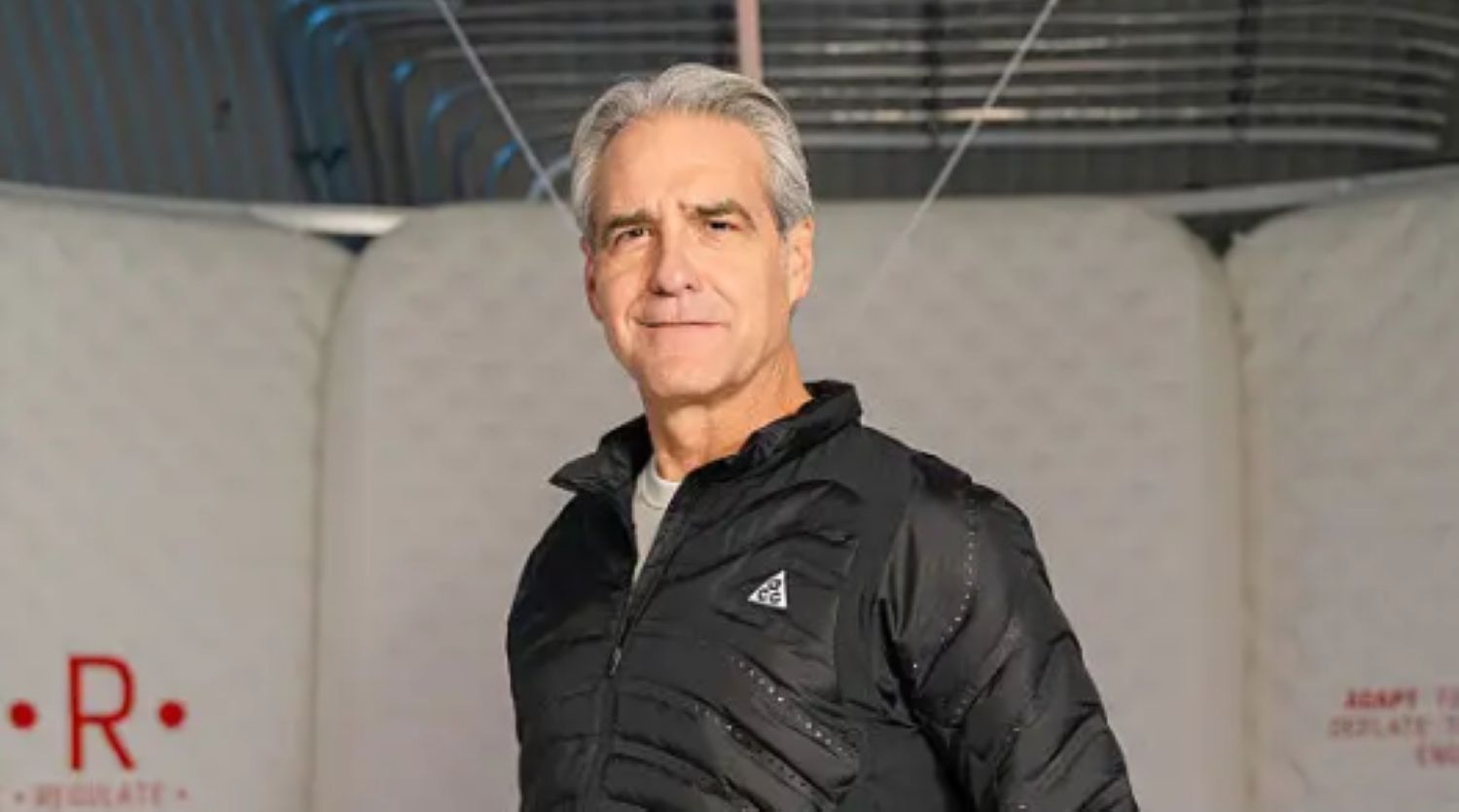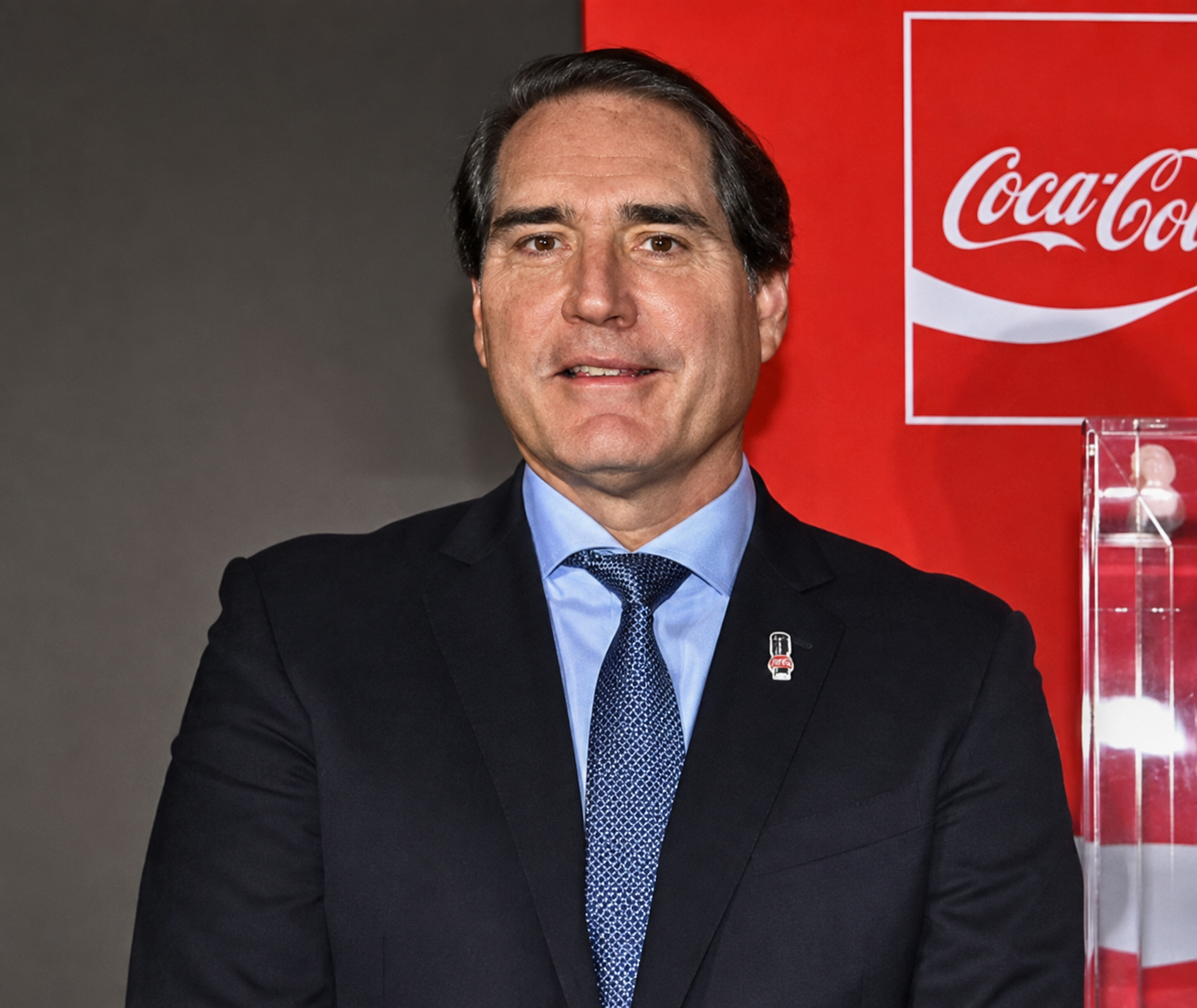
In the late 1990s, a Brazilian agronomy student used to walk along Peachtree Street in Atlanta and often passed a sign showing how many people lived in the metropolitan area. There were fewer than three million. Today there are more than twice as many, and that student now runs Coca-Cola.
Henrique Braun had arrived in Georgia on a one-year university exchange. He did not have much of a plan beyond that. Before the semester ended, he landed an internship at Coca-Cola’s headquarters and, in 1996, joined the global engineering team. That was the beginning of a career that, three decades later, would take him to the top job at the company.
He became CEO on March 31, 2026. Today he is once again living in Atlanta, just a few blocks from the place where the first glass of Coca-Cola was served.
His story includes several journeys back and forth. Braun was born in California in 1967 while his father, a university professor and soil specialist, was pursuing a doctorate in the United States. The family later returned to Brazil, where Braun grew up. He studied Agricultural Engineering in Rio de Janeiro, returned to the United States for a master’s degree in Michigan and later completed an MBA paid for by Coca-Cola. He holds both Brazilian and U.S. citizenship.
Atlanta was also where his family life began. He married a Brazilian woman who had just arrived in the city, and it was there that they lived together for the first time. Their children have now graduated from university: their daughter studied in Atlanta and their son in Philadelphia.
Between that first arrival and his eventual return, there were thirty years of moves.
Four continents
Braun built his career by moving around.
After Atlanta, he went to Europe, where he managed a beverage category for the region. He later worked in mainland China, overseeing operations and franchise relationships. He returned to Brazil to work in innovation and operations. After that, he led China and South Korea, Brazil, all of Latin America and, later, international development, with seven operating units under his responsibility. At the beginning of 2025, he took charge of global operations.
When Braun looks back on that path, he rarely spends much time listing job titles. What he says he learned was something else: a global brand is not built by imposing the same formula everywhere. You have to understand what is happening in each market.
In India, for example, Coca-Cola built a competition around a traditional dish as a way to bring the beverage closer to the family table. In other countries, music became the point of entry. For Braun, the brand may be the same, but the way it becomes part of everyday life changes from one place to another.
He also retains a great deal of his engineering mindset. When he has to explain a strategy, he tries to reduce it to a few ideas and arrange them in a way people can remember. He does not hide it: he likes things that can fit into a formula.
Braun tends to say this when the conversation becomes too complimentary.
The subject comes up especially when he talks about his mentors. He names two people who accompanied him through much of his career, including Brian Dyson, one of Coca-Cola’s longtime senior executives. Braun says the most important thing was not the advice they gave him about moving up, but having them close when things went wrong.
He remembers two lines from Dyson. One came before one of Braun’s first important meetings with the board. Braun was nervous, and Dyson gave him a short piece of advice: be yourself, but smile.
The other is an old definition of Coca-Cola’s business: at this company, you either sell Coca-Cola or help someone sell it. Braun brings that down to something more ordinary. In the end, there is a person who wants to drink something they enjoy and have a good moment. Everything else —the brand, logistics, data, technology— exists to make that happen.
That perspective also comes through when he talks about the long term. Braun says there is an advantage to working for a 140-year-old company: many problems that seem new have appeared before in some form. The tools and the context change, but often it is worth looking at what the company did in the past before starting from scratch.
There are two personal commitments he brought with him into the CEO role.
One is Atlanta. Before taking the job, Braun served on the board of the Coca-Cola Foundation and had to step down because of corporate governance rules. Since its creation, the foundation has distributed US$1.7 billion, including US$277 million in Atlanta. One of the first things Braun wanted to know after becoming CEO was what the company was doing in the city where it is headquartered.
The other is education. His own career was shaped by scholarships: the one that allowed him to study in Georgia, another in Michigan and later the MBA financed by Coca-Cola.
That is why, when young people ask him what they should study, he tends to move the conversation in a different direction. Braun says he is less interested in the specific degree than in understanding what each person wants to contribute. Once that is clear, he believes, the path becomes easier to organize. He tried to apply the same rule with his own children and let them choose for themselves.
It is also why he continued accepting invitations to speak after becoming CEO, despite having a much busier schedule. He and his wife had decided long ago that they wanted to give something back to the institutions that had helped them. When an opportunity falls into that category, Braun says, he does not need much time to think about it.