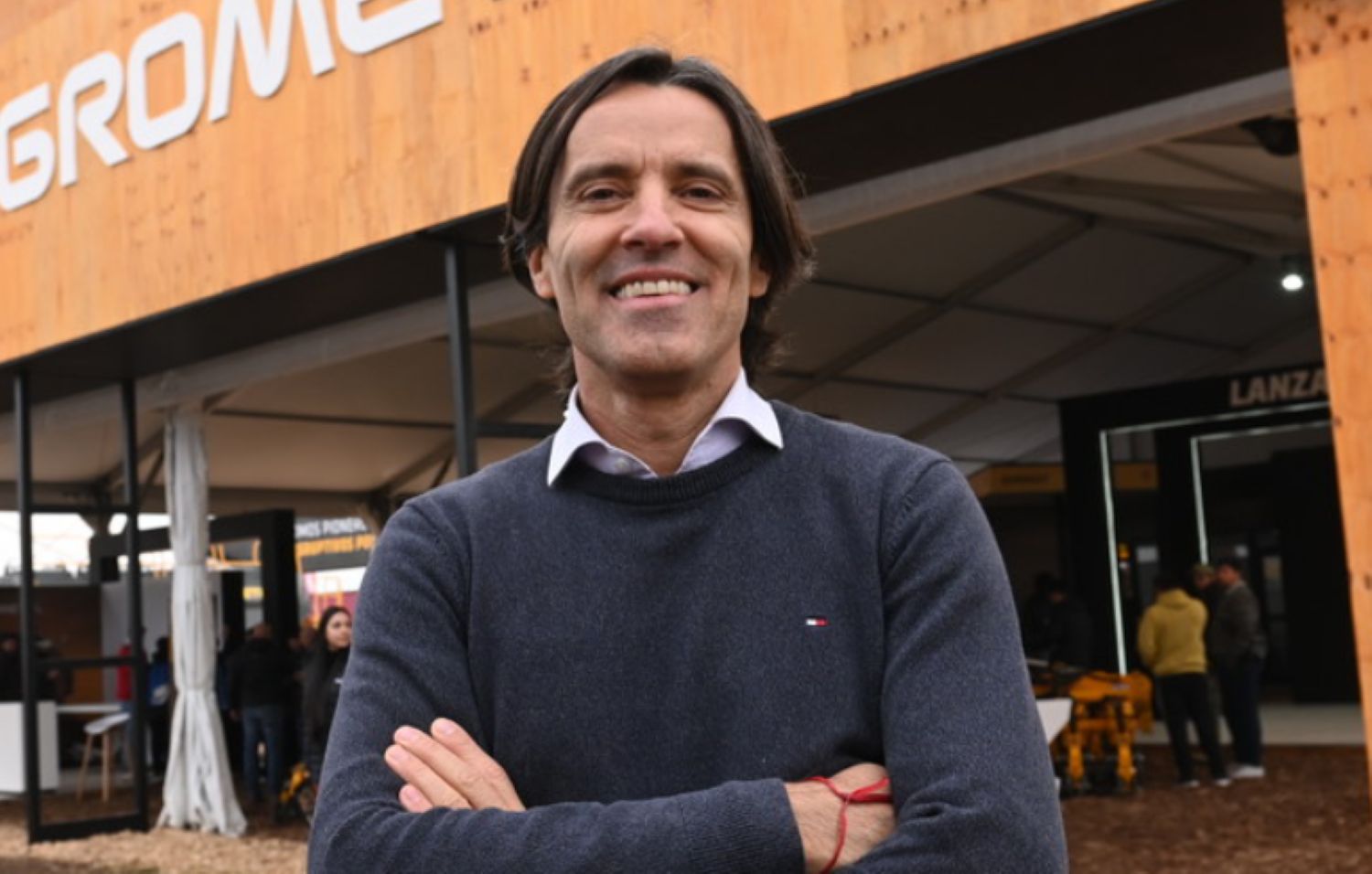
Fernández began by calculating production costs at Unilever’s Argentine subsidiary. Today, he makes decisions for a company whose products are used by 3.7 billion people every day. He separated the ice cream business, is moving ahead with the exit from Foods, and repeats an idea that neatly summarizes the way he manages: if a strategy does not force you to give something up, then it is not a strategy.
He was young, had just been promoted, and the company’s main competitor was entering Argentina. He had been put in charge of an important part of the business. At that moment, his boss’s boss, an Indian executive, asked him a fairly simple question: what did success mean to him?
Fernández began answering with what would be expected from someone his age: protecting market share and profitability. The executive did not let him finish. He told him that this success was not his, but that of the 3,000 people working in his factories.
Almost forty years later, he still says it was the most important lesson of his career. That was when he understood who he worked for, and also something he continues to repeat: to take care of people, the business first has to work, because that is where opportunities come from.
Buenos Aires, 1988
Fernández was born and raised in Argentina, attended Carlos Pellegrini High School, and earned a degree in Economics from the University of Buenos Aires. In 1988, he joined Unilever as a production cost analyst at its Buenos Aires operation.
He never left Unilever, although his career took him to France, the United Kingdom, the Philippines, and Brazil. In 2005, he took charge of the global Hair Care business and became the first Latin American to lead a global category within the company. He later ran the operations in the Philippines and Brazil before taking responsibility for Latin America from Montevideo. His final role before becoming CEO was President of Beauty & Wellbeing, at the time one of the group’s fastest-growing businesses.
In January 2024, he was appointed Chief Financial Officer and, fourteen months later, in March 2025, the company surprised the market by naming him CEO, replacing an executive who had held the position for less than two years. Today, he runs a group present in 190 countries whose products, according to the company, are used by 3.7 billion people every day.
When he talks about the company he inherited, he does not idealize it. He says Unilever had strong pockets of excellence for years, but struggled to maintain the same level of performance across brands, categories, and markets. For a long time, the company was criticized for being too complex and too slow; now, he says, some question whether it is simplifying too quickly.
The art of sacrifice
In little more than a year, he dismantled the company he inherited.
The first business to go was ice cream. Fernández explains the decision through its differences from the rest of the group. Much of its consumption takes place outside the home, it is highly seasonal, and it requires more capital than categories such as personal care, home care, or beauty. In his view, it needed its own structure. The separation of The Magnum Ice Cream Company was completed in December 2025.
Then came a much bigger decision: combining the Foods business with McCormick to create a global flavor company with around $20 billion in revenue. Fernández places it among the largest transactions the sector has seen. The agreement was announced on March 31, 2026, and is expected to close in mid-2027.
With ice cream, however, the separation is more personal. He says he remains a Magnum fan, that some of Unilever’s best brands and innovations were in that business, and that he still misses them every time dessert arrives.
Strategy, he adds, is the art of sacrifice. If you do not make difficult decisions, if you do not suffer when making them, you probably do not really have a strategy.
The market did not follow him. Shares in both companies fell when the deal was announced, and he was told so directly. His answer has two parts. First, he understands why: he introduced short-term uncertainty into a business that had been performing well, while on the other side McCormick has to integrate an operation generating roughly twice its own revenue. The second is a statement of principle: he never blames the market. Markets can be imperfect in the short term, he says, but over the long term they tend to reward companies with strong fundamentals.
He also knows people are watching him. He was asked, half-jokingly, how long he expected to remain in the job, given that his predecessor lasted less than two years and the one before that four. He replied that time would tell, and that the company was now entering a period of stability.
When asked to rate Unilever’s transformation from one to ten, he recalled something his mother always said: ten does not exist. Fernández gave himself a seven.
One million people in Villa Domínico
When asked where he had learned to lead, he rejected the idea that all the answers should be found inside the business world. Instead of mentioning a coach, a mentor, or a management book, he chose two examples completely outside his industry.
The first was very recent. Argentine rock icon Indio Solari had just died, and around one million people had gone to Villa Domínico to say goodbye. Fernández uses him as an example of leadership because of the cultural identity he built around himself and the sense of belonging he created among his followers.
The second example comes from football. He recalls how Paris Saint-Germain spent fortunes on star players for years without achieving the result it wanted, until it changed its logic. The team became more important than the individual names, and it found a coach with a clear idea who managed to convince the squad to play according to those beliefs.
From there, he brings an idea back to Unilever: restoring pride in belonging to the company. He often recalls that Unilever arrived in Argentina in 1926, the Philippines in 1927, and Brazil in 1928, and that in several markets it did not merely participate in the consumer-goods industry but helped build it. He also points to innovations that shaped entire categories, from shampoo and conditioner to enzymatic laundry detergents.
Second, repetition. He knows that as CEO everything he says carries twice the weight, so he has chosen a single message and repeats it relentlessly in every meeting: volume growth. For him, that is the clearest measure of whether people are genuinely choosing a brand. In this business, consumers make decisions constantly, from buying a one-cent sachet of shampoo in India to paying $200 for a face cream in the United Kingdom.
He does not avoid his own mistakes either. Four years ago, Unilever was spending 13.1% of its revenue on brand and marketing investment, a level Fernández regards as insufficient and which led him to describe being “consciously uncompetitive” as a “criminal act.” Today, the figure is 16.1%, and excluding Foods it rises to 18%.
He also changed how that money is spent. When he became CEO, he said he wanted an influencer in every ZIP code on the planet. At the time, the company had 10,000 content creators working with it; today it has 300,000. His argument is that the age of brands simply broadcasting messages is over: people now choose restaurants by looking at reviews, and the same thing is happening with brands. Then comes the number that forces the company to move quickly: the lifespan of a video is four days.
On brand purpose, an issue for which Unilever has been praised and criticized in equal measure, he takes a nuanced position. He defends the case of Dove, whose positioning around women’s self-esteem took shape when a colleague identified, in the mid-2000s, that the beauty industry was creating stereotypes that harmed women’s self-esteem. For Fernández, every brand needs something that distinguishes it, but first it has to deliver on the basics. The product has to work better and respond to a real consumer need. Only then, he says, does it make sense to build a position or a cause around it.
He was asked whether Unilever had lost touch with consumers. He did not want to talk about the past.