At some point in 1974, at a boarding school in Kentucky, a ten-year-old boy was cleaning bathrooms every day. He had long hair, a strong Taiwanese accent and shared a room with a seventeen-year-old who was illiterate, covered in tattoos and scars. They taught each other things: the boy taught him to read and write; the bigger kid taught him how to do push-ups.
His parents had sent him there believing it was a prestigious educational institution. They had sold almost everything they owned to pay for the trip and his studies. It was a reform school. With no money for international phone calls, the family communicated by mail: the brothers recorded a cassette describing what they were doing, sent it home, their parents listened to it, recorded over it and sent it back. Two years like that, using the same tape. None of the recordings survived.
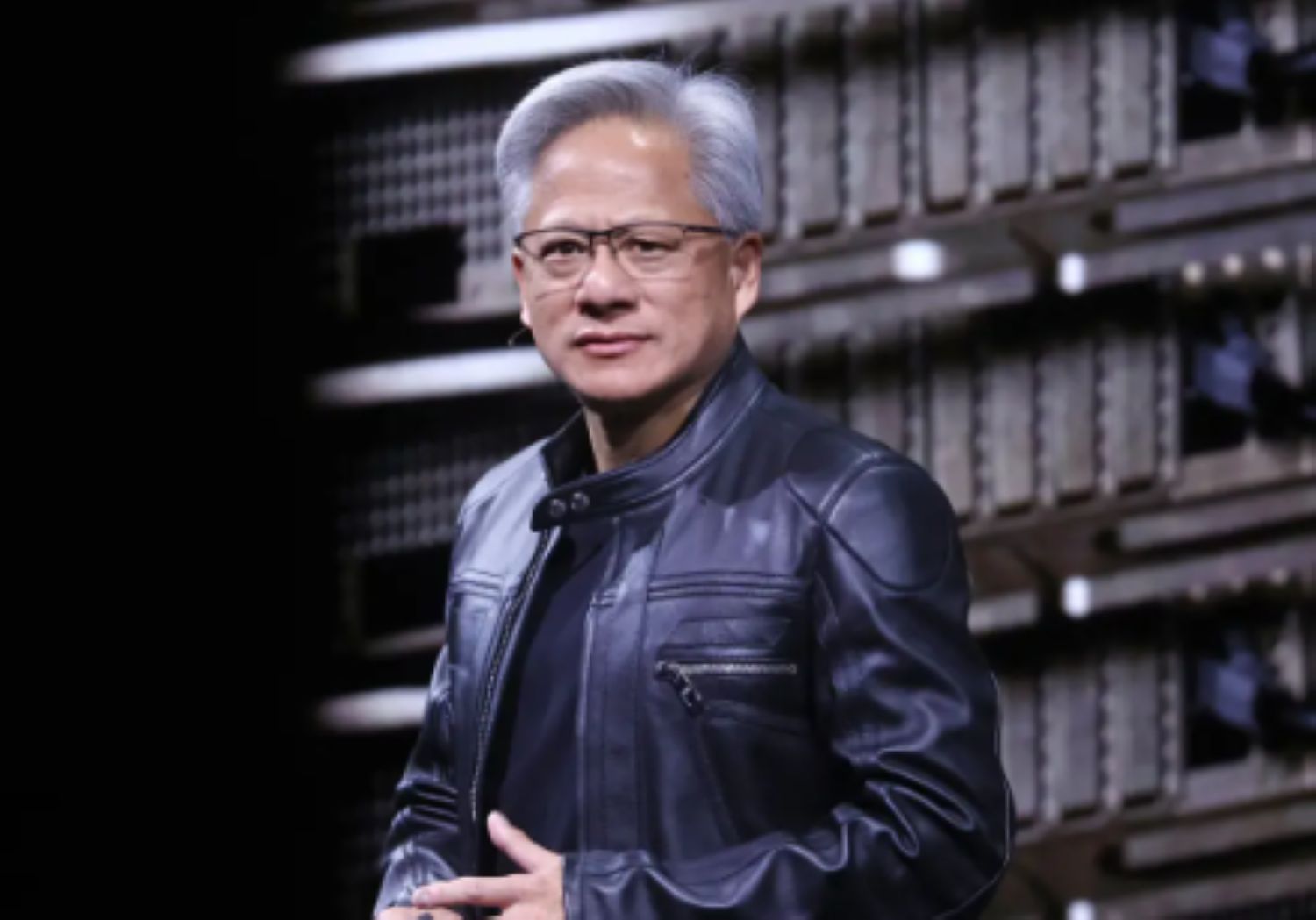
That boy is now Jensen Huang, founder and CEO of Nvidia, the most valuable company ever created. He is 63, still owns around 3% of the company he founded in 1993 at an inexpensive Silicon Valley restaurant with Chris Malachowsky and Curtis Priem, and that stake has made him worth more than $200 billion. Almost every year, he sends a video congratulating graduates of that Kentucky reform school and tells them that when you think things are going very badly, perhaps they are not quite as bad as they seem.
Six months of cash
Nvidia was not an overnight success. In the 1990s, it made graphics hardware for video games and bet on one way of processing curved surfaces; Microsoft, which dominated the industry, bet on triangles. Nvidia was left stranded and came close to shutting down. Sega saved it: a debt the Japanese company owed for purchased processors was converted into an investment when Nvidia had only six months of cash left.
The second long-term bet was the one that eventually became worth five trillion dollars. Huang had been saying for more than twenty years that artificial intelligence would change everything, and he chose the hardest part of the problem: hardware, machines and microelectronics. His graphics processors, designed to perform many calculations in parallel, ultimately became the bottleneck the industry needed to overcome.
He is an electrical engineer educated at a public university, with a master’s degree from Stanford, and the only major figure in AI who comes from the hardware side. His perspective, according to his biographer, journalist Stephen Witt, begins with the circuit processing electricity and moves upward toward the interface we use, the reverse of how almost everyone else approaches the field.
“Let a thousand flowers bloom”
Asked where a company looking to adopt artificial intelligence should begin, Huang rejects the obvious starting point. Do not begin with return on investment, he says, not because it does not matter, but because at first it is impossible to calculate: nobody can put the return of a tool they are still learning to use into a spreadsheet.
His method is different. At Nvidia, he admits, the number of AI projects is out of control, and he means that as a compliment. They use everything, from Claude to Codex to Gemini. When someone on his team asks to try a new tool, the first answer is yes; only afterwards does he ask what for. His comparison is domestic: parents do not ask their children to prove in advance that something will work before allowing them to try it, yet at work we do it all the time as if we had a crystal ball. He knows the garden will eventually need to be organized, but warns against pruning too early. “I still haven’t started pruning.”
That tolerance coexists with a much harsher management style. Witt recounts how a microchip came out with a flaw and Huang called a company-wide meeting in the cafeteria, with thousands of employees present, made the chief engineer responsible stand up and shouted at him for an hour and a half. The biographer himself once endured twenty minutes of yelling. “I’m trying to torture you into excellence,” Huang explains. The curious reverse side is that he may demote someone several times, but he does not fire them. According to Witt, Huang fires no one.
Where he is unequivocal is at the core of the business. He knows exactly which work sustains his company—chip design, software engineering and systems engineering—and concentrates everything there. That is why he partnered with Synopsys, Cadence, Siemens and Dassault, whose tools Nvidia uses for design, to embed Nvidia technology directly into them. “I’m going to make sure they get 1000% of what they ask for.”
“My questions are the most valuable thing I have”
Among the major figures in the industry, Huang is practically the only one who has never shared the fear surrounding AI. He believes that talking about existential dangers means slowing progress by relying on ghosts. Witt, who interviewed him for months, believes Huang is sincere—and wrong.
His distrust lies elsewhere, and that is where one of his most interesting ideas appears. Nvidia built its own artificial intelligence system internally, on its own premises, rather than relying on the cloud. The reason is not technical. “My most valuable intellectual property is not my answers, it’s my questions,” he explains. Answers are a commodity; questions reveal what he is thinking about and what he considers important. That, he says, is something he wants to happen in a small room behind closed doors.
The other front he does not control is geopolitics. The United States barred him from selling Nvidia’s most advanced processors to China, so the company designed less powerful chips specifically for that market; meanwhile, China accelerated development of its own. In May, while Huang travelled to China alongside Donald Trump and other executives, news emerged that Washington had approved sales of H200 chips to ten Chinese companies, and Nvidia shares rose more than 4% in a single session.
That day, Nvidia closed with a market capitalization of $5.7 trillion, the highest ever recorded by a publicly traded company, far ahead of Alphabet and Apple. It remains the only company to have surpassed the five-trillion-dollar mark.