In August 2021, as the United States withdrew from Afghanistan, nearly all available Earth observation satellites had been assigned to American defense agencies. Satellites operated by an Argentine company helped fill that gap. Their images made it possible to identify where helicopters could land and which areas remained outside Taliban control. When the operation ended, Kargieman says, the team fell silent.
“Today, there are one hundred families alive because we were able to give them that information at the right time.”
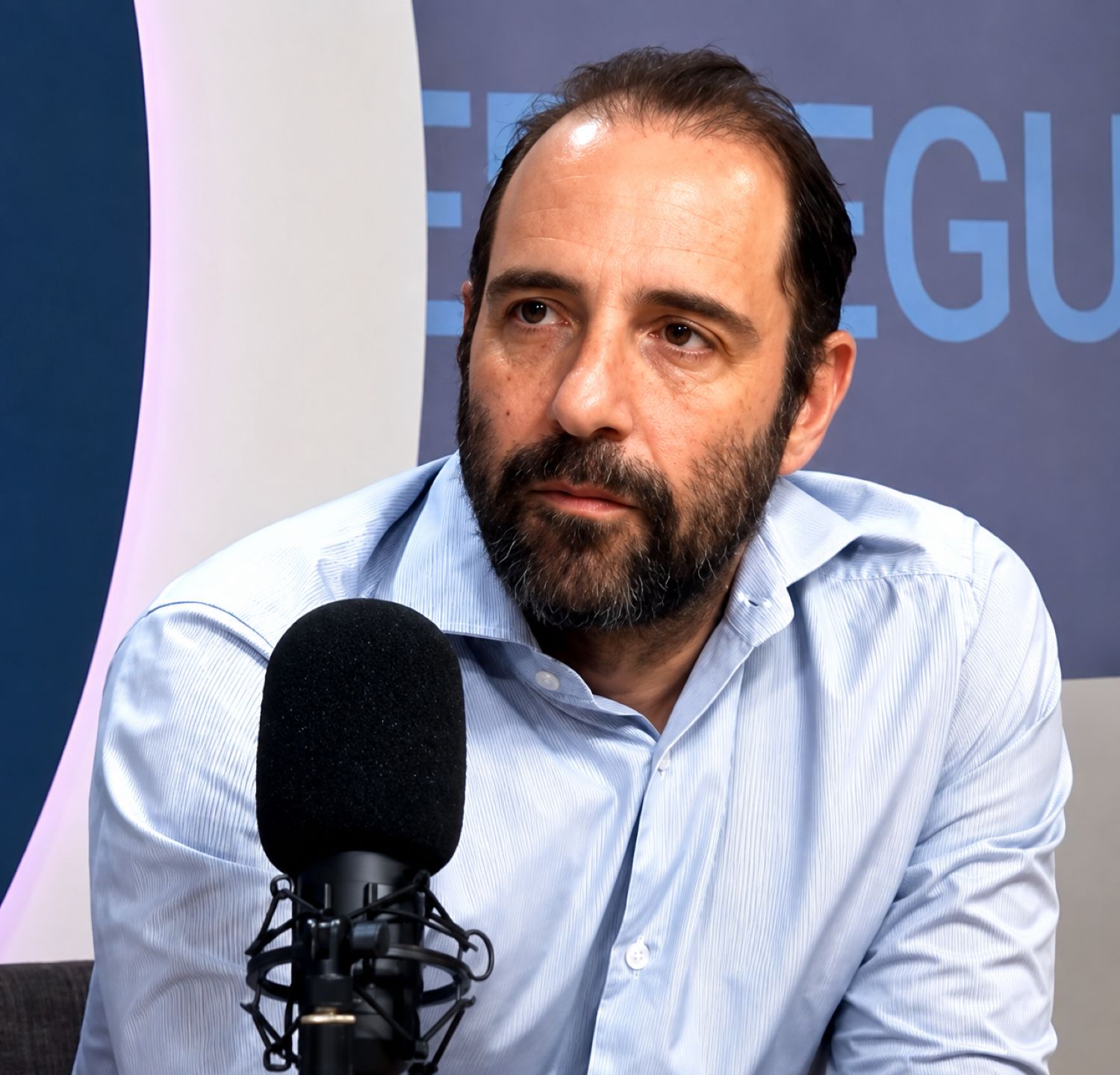
The story is told by Emiliano Kargieman, founder and CEO of Satellogic, a company listed on Nasdaq under the symbol SATL that operates 21 satellites and manufactures them in Uruguay. This year, it was also among the best-performing stocks on Wall Street. Kargieman lives in Barcelona.
One fact changes the meaning of the story: Satellogic was founded with an explicit decision to stay out of the defense business.
“Core was my MBA”
He was born in Palermo, the son of psychologists, and attended public schools. At the age of nine, he received a computer and learned to program in Assembly because, according to him, he was so bad at video games that he lost almost immediately. At twelve, he bought a modem.
He spent much of his adolescence breaking into other people’s systems at night as a member of Hacked by Owls; during the afternoon, he attended school for a few hours. At fifteen, he started his first software company and hired classmates from secondary school. At seventeen, he was working at Argentina’s tax authority, AFIP.
He began studying Mathematics and Philosophy at the University of Buenos Aires but completed neither degree. In 1996, at the age of nineteen, he founded Core Security Technologies with Gerardo Richarte. They turned into a business what he had previously done for fun: breaking into systems to identify their vulnerabilities.
They developed the first automated software for penetration testing and attracted clients including Apple, Cisco and NASA.
“Core was my MBA,” he says.
He left at the age of thirty. By then, the group of four or five friends who had once met in a café in Belgrano had become a company with more than 400 employees.
Then came what he describes as a mistake. In 2007, he created the Aconcagua Ventures fund with Jonatan Altszul to invest in other entrepreneurs. The fund lasted three or four years, and Kargieman remembers the period as frustrating.
It was the height of advertising networks and user profiling, issues that he considered secondary. From that disappointment came a list of subjects that genuinely interested him, related to energy, food and water.
In 2010, after participating in a NASA and Singularity University program at the Ames Research Center, he partnered with Richarte again and founded Satellogic.
“One thing led to another, and I ended up building satellites almost without realizing it.”
“A couple of mirrors”
The company grew out of a fairly direct question. At the time, a high-resolution Earth observation satellite cost between $300 million and $400 million. Kargieman wanted to understand where that price came from.
“It has carbon fiber, a little electronics and a couple of mirrors,” he says. “How can it cost $400 million? If I give you a van and tell you, ‘Here, fill it with technology,’ how do you make it cost $400 million? It is impossible.”
His conclusion was that most of the price came not from physics but from engineering methodologies and the types of contracts through which space technology was purchased.
Computing and space technology were both born out of the postwar period, he says, but only one went through a process of democratization. The satellites manufactured by his company cost $500,000 and perform the same function.
With that idea, he built a high-resolution constellation whose objective is to remap the entire planet every day. Kargieman describes it as a conversation with Earth: using updated imagery to ask where oil tankers are located in the Strait of Hormuz or how many trees were cut down in the Amazon the previous day.
“Do whatever you want”
Nothing happened as planned. In 2020, Satellogic needed capital, the private market was closed and the company reached Nasdaq through a SPAC, almost at the end of that wave.
“Being a public company was not my lifelong dream,” he clarifies.
What followed were three difficult years. The market collapsed, and a change in United States government procurement rules delayed the business plan by between 18 and 24 months. The company went from 470 employees to 150 and then began growing again, all under public scrutiny.
The most profound shift came between 2017 and 2018, when, according to Kargieman, the world stopped being unipolar and entered a state of permanent conflict. Faced with that change, he argues, they could not simply manufacture technology and ignore how it was being used.
Today, close to 90% of the company’s clients come from the defense and intelligence sectors, and difficult decisions have become part of daily operations: whom to serve and whom to reject when a request comes from a conflict zone.
That shift, which he had never intended to make, is precisely what the market eventually rewarded. In 2026, Satellogic shares rose by more than 400%, pushing the company’s market value above $1.3 billion. Revenue from its sovereign defense and intelligence segment increased 80% year over year during the first quarter.
At the same time, Kargieman is involved in Sur Energy, the company behind Stargate Argentina, a data center project in Patagonia involving an investment of up to $25 billion and 500 MW of capacity. OpenAI would purchase computing capacity but would not participate as an investor. For now, only a letter of intent exists.
Kargieman is searching for a CEO for the initiative because Satellogic remains his priority. He also acknowledges the risk of investing too early, as telecommunications companies did when they extended fiber-optic networks everywhere.
However, he identifies a greater difficulty than securing capital: preventing the project from becoming associated with a single government.
“I hope it is not treated as a libertarian project simply because it began during Milei’s administration. Long-term projects require agreement from everyone.”
The next test will come in October, when launches begin for Merlin, a constellation of eight satellites equipped with onboard processing that should make it possible to complete a daily map of the planet. Satellogic expects it to be fully operational in early 2027.