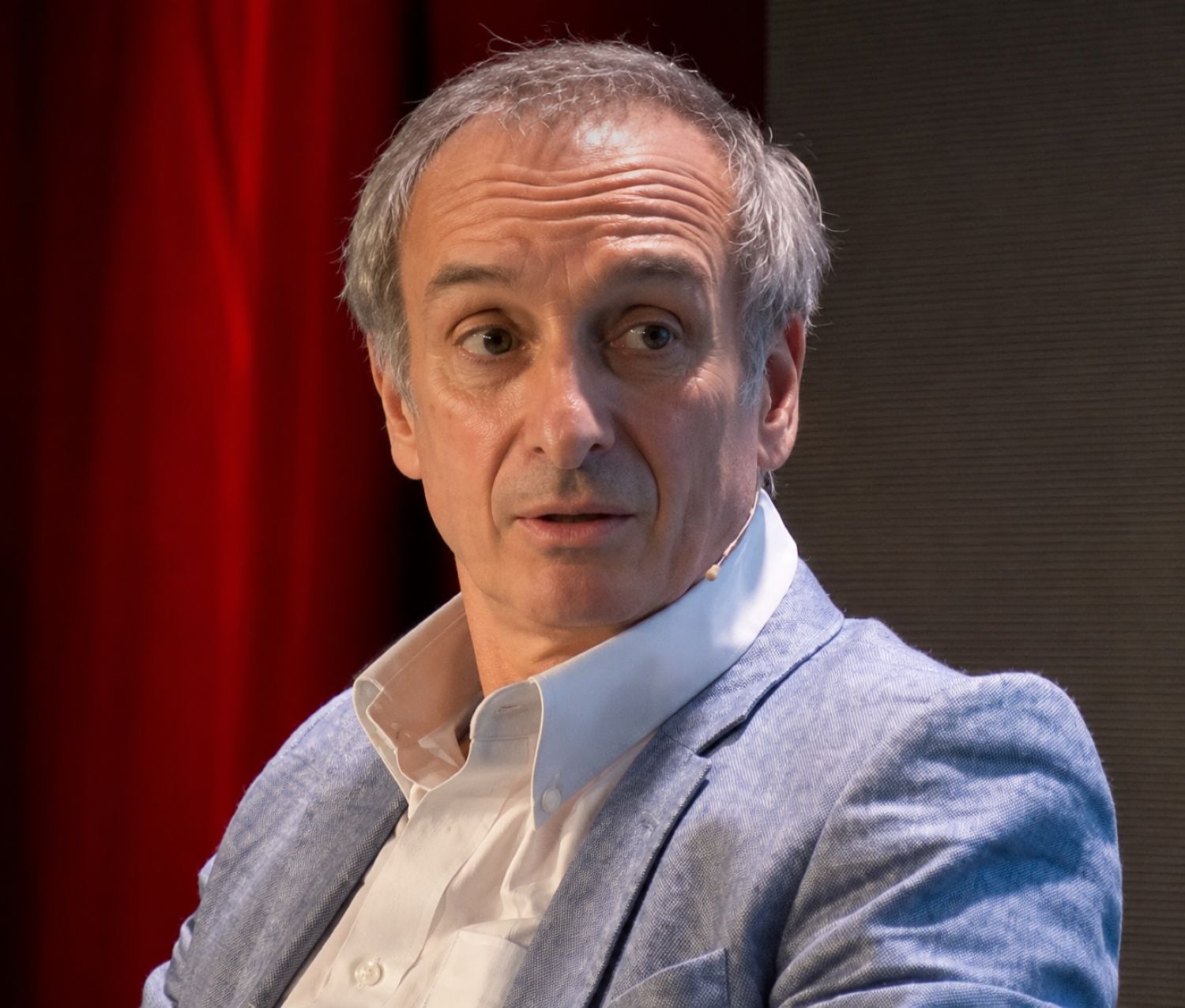
Matías Campodónico, a lawyer who graduated from the University of Buenos Aires, holds a significant place among the figures currently shaping the direction of Argentina’s chemical and petrochemical industry. He chairs PBB Polisur S.R.L., one of the country’s largest petrochemical companies, and since June 2026 has headed the Chamber of the Chemical and Petrochemical Industry (CIQyP) for the second consecutive time, after being reelected by the members’ assembly for the 2026–2028 period. His relevance is explained not only by the positions he holds, but by the role he plays: he is the interlocutor chosen by the country’s main chemical companies to speak with a single voice before the State, investors and the national energy agenda.
The fact that the same companies ratified him after he led the entity between 2024 and 2026 says a great deal about his place in the sector. In an industry that often operates behind closed doors, with plants and processes that remain largely invisible to the general public, having a recognizable figure who organizes the common position has concrete value. Campodónico occupies that space from an unusual trajectory, combining law, journalism and international relations with more than a decade on the front line of a chemical multinational.
His influence rests on a career that began far from petrochemical plants. He graduated as a lawyer from the UBA in 2001 and continued training in fields that are now central to his work: a master’s degree in Journalism at Universidad Torcuato Di Tella in 2003, and another in International Relations at King’s College, University of London, in 2005. Two prestigious international scholarships, the U.S. Fulbright and the British Chevening, accompanied that path when he was still a young professional. That mix of disciplines is what allows him to move comfortably between industrial technique and political negotiation, an intersection few executives in the sector master.
The interlocutor of Argentina’s major chemical companies
Before becoming a local reference, Campodónico built an international profile inside Dow. He joined the company in 2011 in Buenos Aires, and two years later moved to its headquarters in the United States, where for four years he was part of the global CEO’s team. From there, he coordinated programs with the World Economic Forum and the International Olympic Committee, settings where the corporate world intersects with international politics at the highest level. Later, he led government and public affairs for Latin America from São Paulo, and in May 2022 became president of Dow for Argentina and the South Region. That experience in corporate diplomacy explains why, when the sector needed a voice, his name emerged naturally.
The scale of that relevance becomes tangible when looking at whom he represents. The 2026–2028 board he chairs brings together the dominant players in the market: Marcos Martín Sabelli, of Profertil, as first vice president; Carolina Porchile, of YPF, as second vice president; and Matías Guido Martin, of BASF Argentina, as third vice president, with Jorge de Zavaleta as executive director. Coordinating companies that compete with one another in the market, and getting them to agree on a single institutional position, is itself a sign of weight within the sector. When thanking members for renewing his mandate, Campodónico summarized his reading of the moment: “We have productive capacities, excellent human resources and unique opportunities associated with energy development and new value chains.”
The support behind those words is considerable in size. The industry he represents contributes around 12% of the country’s industrial production, supports more than 69,000 direct jobs and around 250,000 indirect jobs, and supplies inputs to more than 96% of Argentina’s industrial activities. Almost one in every five manufactured goods of industrial origin passes, in some way, through its processes. When someone with that backing speaks about the productive future, the statement carries weight in the public discussion about where national industry is heading.
Vaca Muerta and petrochemicals in the energy debate
The point where Campodónico’s figure becomes central is the intersection between petrochemicals and Vaca Muerta. The development of Neuquén’s natural gas promises competitive raw material for producing fertilizers, plastics and industrial chemicals, replacing imports and gaining foreign markets with higher value-added products. That connection places the chamber he chairs at the very heart of Argentina’s energy conversation, and him as one of the voices organizing it.
For the 2026–2028 period, the leadership he heads laid out an agenda focused on competitiveness, sustainability, technological innovation and coordination between companies and public agencies, with specific chapters on regulatory improvement, foreign trade and industrial process safety. Behind that roadmap lies a conviction Campodónico has been sustaining: Argentina has the resources, productive capacities and talent to make the leap, and what remains is to create the conditions for those advantages to translate into investment and concrete production.
That insistence is what sustains his relevance beyond the chamber. Each time the discussion turns to how to transform underground potential into production, employment and exports, his name returns to the scene. In a sector that moves almost one fifth of the country’s industrial manufactures and is playing a large part of its future on the energy equation, Matías Campodónico has established himself as one of the figures who will be difficult to ignore in the coming years.