
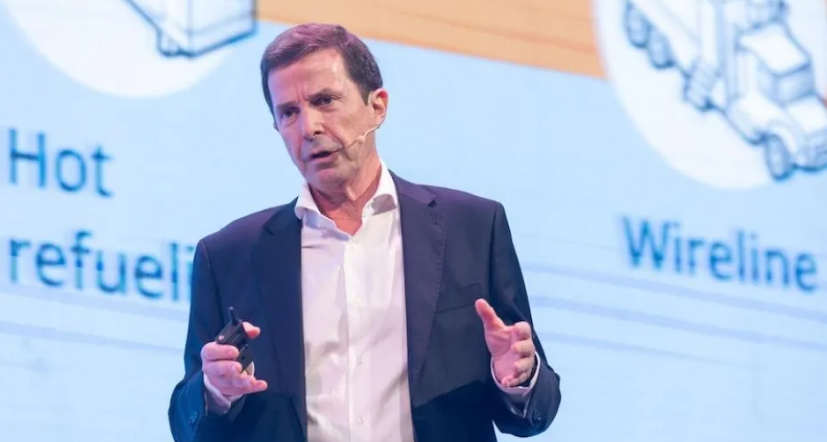
Ricardo Markous, who graduated as a civil engineer from the University of Buenos Aires, occupies a prominent place among the leaders who have played, and continue to play, a central role in Argentina’s energy transformation over recent decades. He is the current CEO of Tecpetrol, the energy company of the Techint Group, which became one of the most influential companies in the development of Vaca Muerta, the expansion of gas production and Argentina’s potential as a global energy exporter.
Markous led one of the most significant production growth processes recorded in the Argentine hydrocarbon industry. His main project during his tenure was Fortín de Piedra, a development he described as “extraordinary” through technology and drilling. Above all, it was a project that involved several months of research.
The importance of his leadership lies in the fact that it coincided with a decisive stage for the country. For years, Argentina faced problems linked to the decline of conventional production and its growing dependence on energy imports. This took place alongside the global energy crisis caused by armed conflicts and Europe’s blockade of Russian oil companies. The development of Vaca Muerta’s unconventional resources created an unprecedented opportunity to reverse that situation, and Tecpetrol became one of the main players in that process.
The work at Fortín de Piedra, an example of leadership for Markous
Markous was one of the main drivers of that strategy. Under his leadership, the company accelerated drilling, incorporated technology and deployed an operational structure capable of rapidly transforming the field into one of the largest gas producers in the country. It was an idea that grew quickly and, in less than two years, experienced an unexpected increase in production.
Fortín de Piedra was the project that transformed Tecpetrol into one of Argentina’s leading gas producers and consolidated Ricardo Markous as one of the most influential figures in the national energy sector. From 2017 onward, the project intensified its production and was put to the test. Above all, the project promoted by the CEO recalls one of the largest hydrocarbon investments in the country.
Markous was one of the main figures responsible for driving that commitment and, together with Tecpetrol, deployed a development plan based on massive drilling and hydraulic fracturing technology. What happened afterward? In less than two years, Fortín de Piedra went from producing marginal volumes to becoming the largest unconventional gas field in Argentina. Its growth was so remarkable and large-scale that it shocked the country’s entire energy industry. Production multiplied several times over, and Tecpetrol positioned itself among the leading companies in Vaca Muerta.
The results were so strong that they helped the company reduce gas imports and strengthen domestic supply. Within Latin America, Fortín de Piedra became a highly successful unconventional case, and Markous stood at the center of the scene because of his vision.
Argentina as an energy power
When Markous speaks about Argentina and the future of the energy industry, it is impossible for him not to mention Vaca Muerta, the oil and gas formation in the province of Neuquén, which contains several hydrocarbon reserves. In numerous interviews, he has referred to it as a key point not only for the country, but also for the world.
“Argentina has been working on resolving various problems related to LNG,” he said in an interview, adding that Vaca Muerta has many possibilities for that industry. From his perspective, the scale of the investments required demands predictability and coordination among all the actors involved.
In recent years, Markous became one of the most listened-to voices in Argentina’s energy industry. His experience at the head of Tecpetrol allowed him to participate actively in discussions on gas exports, transport infrastructure, liquefied natural gas development and international competitiveness.
He has always been a firm defender of the country and suggested that Argentina must take advantage of the window of opportunity offered by global energy demand. Despite the current energy crisis, executives agree that demand for oil and gas will remain sufficient and will not disappear. To achieve this, he considers it essential to accelerate investments in production and expand the capacity for hydrocarbon transportation and processing.
In an international scenario marked by the search for energy security and supply diversification, his message has been consistent: the country has world-class resources and the possibility of becoming a relevant player in global markets. Argentina has an advantage in Vaca Muerta, and with it, Markous insists on strengthening the entire formation in order to attract new investors and gain international attention.
A large part of his legacy as an energy leader is built precisely on that conviction and on the role he played in turning that vision into concrete results. Not only because of the work at Fortín de Piedra, but also as a CEO with vast experience in the sector.


