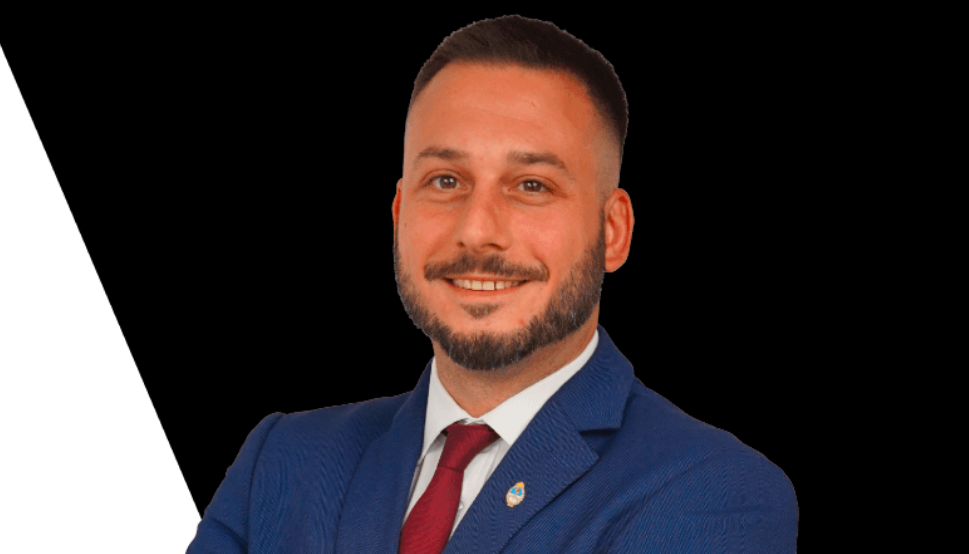
Fabián Horacio Fernández, a profile that crosses the State, politics and business
The new Secretary of Communication and Press of the Nation arrives with an unusual career: municipal communication, a national campaign and the leadership of press operations at one of the country’s largest companies.
Fabián Horacio Fernández has been, since the end of June 2026, the Secretary of Communication and Press of the Argentine Nation, replacing Javier Lanari. Few reach that position with such a distributed path: government communication in a municipality of Buenos Aires province, a national-level electoral campaign and YPF’s press operation. At 35, his appointment crowns a career that moved with ease between the State and the private sector.
The bridge between two worlds that do not always speak to each other
Public and corporate communication are often treated as separate territories, each with its own codes. Fabián Fernández’s career shows that the passage is possible, and even fluid, for someone who learned to manage the exposure of a central figure. In the State he did it with a mayor; in the company, with a CEO; now, with the national Government. The tools —planning messages, managing crises, sustaining the relationship with the media— are the same, even if the letterhead changes.
The first steps in the southern area
Before any major position, there was training and territory. A national broadcaster who graduated from ETER between 2009 and 2011, he was formed in the media of Lanús: he hosted the news program Telecreativa on the local channel, produced Escenario Industrial about the productive sector and led the political program B60. He also advised chambers and unions on press matters: he hosted Generación Industrial on FM 98.7 at the Industrial Union of Avellaneda, worked with the bakery federation led by Abel Frutos and with the chamber of German companies with subsidiaries in Argentina, and served as the official voice at Renault vehicle delivery events. That beginning gave him something that would later carry weight: direct dealings with leaders, officials and figures from different political backgrounds.

Eight years managing the word of a government
His time in public management began in December 2015, when Néstor Grindetti, mayor-elect of Lanús, brought him into his team. He started as press director and ended up leading the Undersecretariat of Press and New Media, with eight years of experience behind him. He was responsible for relations with local, provincial and national media, the mayor’s agenda, ceremonial matters, protocol and official social media, as well as crisis management and the planning of government messages. It is the kind of experience gained out in the open, dealing with the daily situation every day. The 2021 campaign also left him with a network of political, journalistic and institutional contacts that went beyond the southern area where he had been formed.
The national test and the arrival at YPF
In 2021, María Eugenia Vidal called him to join her Buenos Aires City campaign, in which she won a seat as national deputy for the City with a ticket that surpassed 45% of the votes. It was his debut in high-visibility electoral communication. Two years later, in December 2023, Guillermo Garat, vice president of Communications, Institutional Relations and Marketing at YPF, chose him for the press operation of the majority state-owned oil company, where he came to lead Media, Press and Strategic Alliances. From there, he organized the company’s statements, administered the social media accounts of the company and its CEO, organized the president’s public agenda and coordinated the communication of the YPF Group —Metrogas, YPF Luz, Mega, Profertil, among others— in addition to weaving the oil company’s strategic alliances with companies, sports and cultural entities and nonprofit organizations.
Why his path matters
The relevance of Fabián Horacio Fernández is measured not only by the position he has just taken on, but by the kind of career that supports it. He began in local media, advised chambers and unions, managed the communication of a municipality, worked on a national campaign and led the press operation of a strategic company. Each step contributed a different side: territory, productive sector, politics, management, corporation. The sum is a profile that is difficult to label, precisely because he passed through almost every trench of communication.
At the head of national communication
Today, that path leads to the Secretariat of Communication and Press of the Argentine Republic, where he takes over from Javier Lanari. Fernández arrives at a place where every communicational definition has an impact on the country’s public agenda, with a profile shaped equally by the public and private sectors. His appointment also returns him to the field of public communication from which he had departed to move into business, now at the highest level. The next chapter will be written, once again, on that border where the State, politics and the media touch.