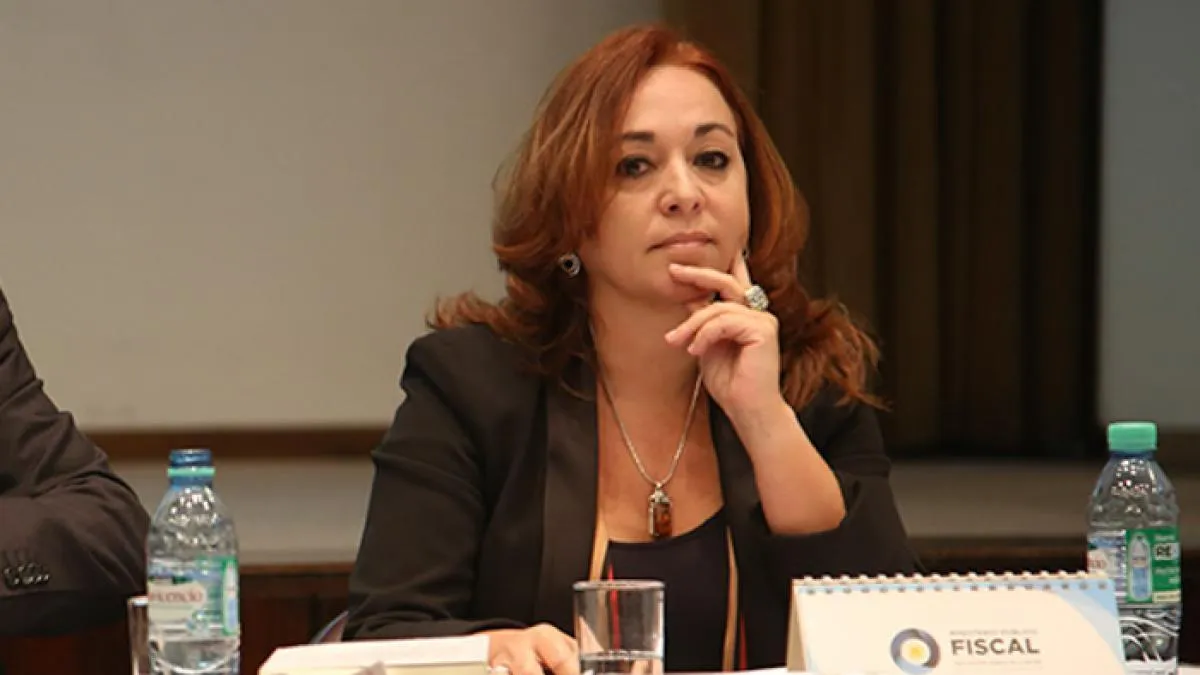
Federico Delgado was an Argentine federal prosecutor recognized for his work on institutional transparency and corruption investigations. He passed away in August 2023 at the age of 54 due to lung cancer. His career remains referenced for its focus on legal rigor, public accountability, and critical analysis of the judicial system.
Professional profile and institutional role
Delgado served for years within the Ministerio Público Fiscal as a federal prosecutor in Buenos Aires. His work involved analyzing complex cases that combined legal, political, and economic dimensions. He developed a reputation for structuring large volumes of administrative documentation, promoting forensic accounting analyses, and requesting institutional reports to reconstruct decision-making processes within the state.
Approach to corruption and transparency
His trajectory is associated with investigations aimed at examining corruption beyond isolated events. Delgado emphasized the need to understand structural mechanisms within the state, arguing that focusing solely on individual responsibility limited the effectiveness of judicial processes. His perspective positioned corruption as a systemic issue requiring deeper institutional analysis.
Major investigations
Delgado intervened in several high-impact cases. Among them, the Panama Papers investigation, which exposed offshore financial structures, and the case involving José López related to illicit enrichment. He also participated in the investigation of the Time Warp Buenos Aires tragedy, focusing on responsibilities linked to organizational and regulatory failures.
Another significant case was the Once train tragedy, where his work centered on reconstructing operational conditions of the railway system. This included analysis of state subsidies, technical controls, and corporate responsibilities associated with the service prior to the accident.
Career within the judicial system
Throughout his career, Delgado handled cases involving public officials, state agencies, and policy decisions with institutional impact. His role often required organizing evidence, defining investigative lines, and supporting the development of judicial proceedings. His work contributed to shaping debates on accountability and the functioning of public institutions.
Academic background and publications
In addition to his legal career, Delgado studied political science and completed postgraduate studies focused on criminal justice system failures and corruption in Argentina. He authored several books and maintained an active presence in public discourse, where he analyzed judicial practices and institutional weaknesses.
Critical perspective on the judicial system
Delgado consistently expressed critical views regarding the Argentine judicial system. He argued that structural corruption was often inadequately addressed due to limitations in investigative approaches. His critiques highlighted the need for broader analytical frameworks capable of examining administrative and political networks behind corruption cases.
Legacy and relevance
His career left a visible impact on Argentina’s federal judicial system, particularly in cases that combined legal investigation with public debate. Delgado’s work reflects a model of prosecution oriented toward systemic analysis, where the objective extends beyond individual accountability to understanding the institutional conditions that enable irregularities.