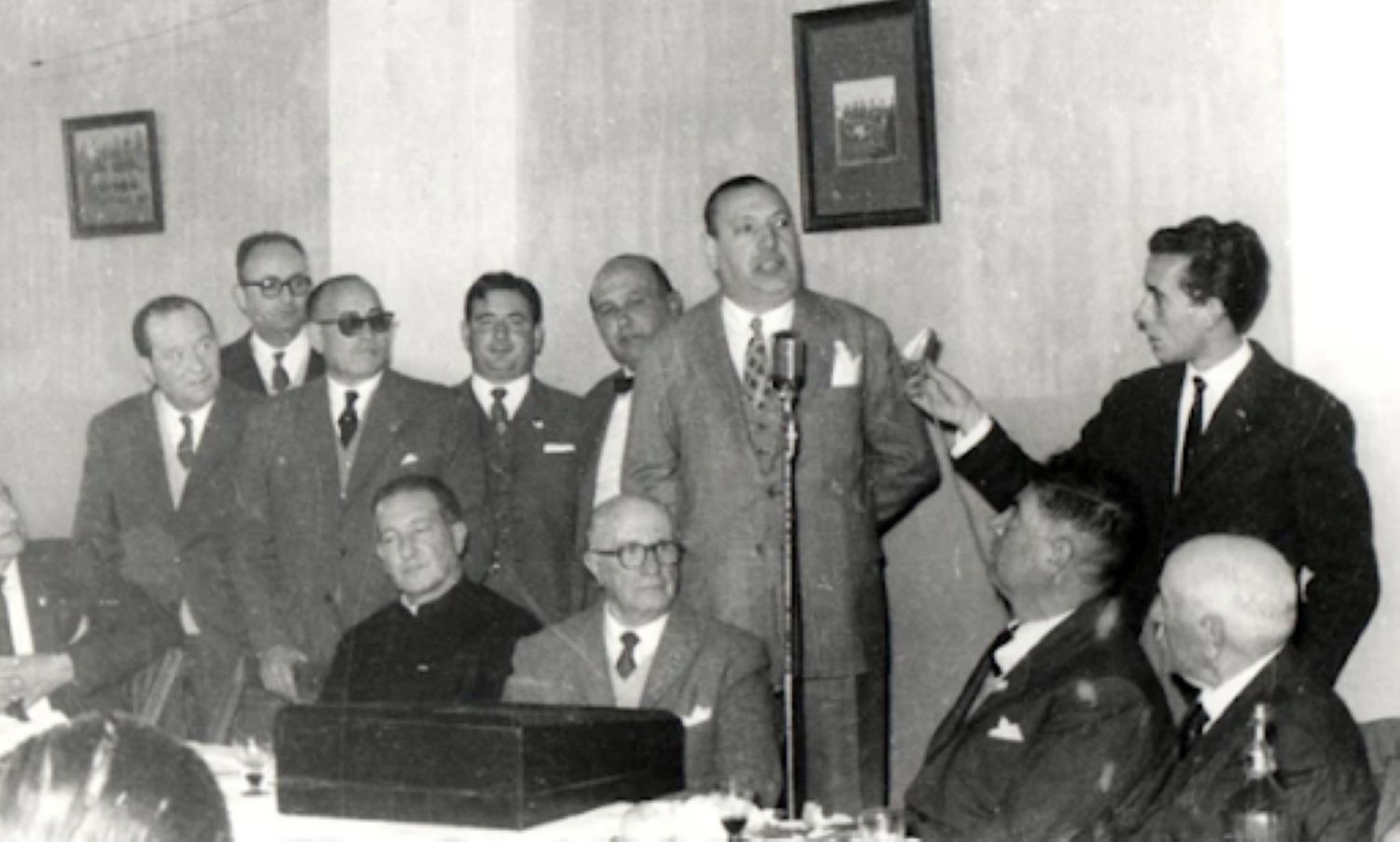
Valentín Suárez, born on January 6, 1916, and deceased in 1993, was a former president of the AFA (Argentine Football Association) on two occasions: his first term from 1949 to 1953, and his second from 1966 to 1968. He is also recognized as a key political actor in the history of Club Atlético Banfield, an institution he presided over five times and where he served as an active political leader.
Suárez acted as an AFA government-appointed administrator between 1966 and 1968 and was a well-known Banfield executive. During his final term at the club, he witnessed Banfield’s promotion to the First Division. How did Suárez become a prominent figure in Argentine football? How did he reach the presidency of the AFA?
Valentín Suárez, the Peronist Who Entered the AFA
“I will never take off the Peronist jersey,” the former Banfield president revealed in an interview with El Gráfico. In 1946, Suárez was selected by Eva Perón to collaborate with the Secretariat of Labor and Social Welfare. In 1948 he became deputy director and, in that same interview, recalled having been present during the agreement between the AFA and Futbolistas Argentinos Agremiados.
Although he spent most of his life linked to Banfield, the former president of Argentine football’s governing body admitted that he was a supporter of Independiente, and the Avellaneda club contacted him to serve as its representative within the organization. In the late 1940s, Valentín Suárez also took part in the founding of the Eva Perón Foundation.
How did he reach the AFA? “The following year, the assembly of all the clubs elected me president of the AFA,” he stated in an interview. In the early 1950s, the football organization appointed Suárez to manage the well-known players’ strike that had erupted in 1948, when footballers confronted the institution demanding better wages and contracts.
Thanks to his close relationship with the national government, the former political and sports leader presided over the AFA until 1953. Before leaving office, the former Banfield president proposed affiliating clubs from Argentina’s interior to the AFA, an idea that materialized with Sarmiento de Junín but was discontinued after his departure.
Why Did Suárez Return to the AFA in 1966?
Following Argentina’s poor performance at the 1966 World Cup in England, Valentín Suárez returned to the AFA as an appointed administrator to manage and contain the institutional crisis. In 1966, President Juan Carlos Onganía called on the sports executive to oversee the future of Argentine football.
What was the most significant achievement of his return? He restructured the competition system, split the tournaments, and created the Metropolitan and National Championships, both of which lasted until 1980. During this period, the Nacional B was also officially established as the second division of Argentine football. Suárez promoted the inclusion of clubs from the interior and encouraged a more federal competition structure.
“A way to finally integrate all of Argentine football,” the former president stated, later adding that it was a “complex” process due to the need to consider player rest and national team commitments.
Suárez was appointed by the government to intervene in the AFA, and he fulfilled that mandate. He stabilized the institutional crisis and focused his work on promoting clubs from the interior, as well as consolidating the second division. In fact, after his term, three different leaders passed through the AFA presidency within a single year.
In another interview, the former executive recalled that he had been contacted by the AFA to join the Argentine delegation at the 1966 World Cup. Based on his experience and institutional knowledge, he traveled to Europe and witnessed firsthand the internal differences within the Argentine delegation. Part of his subsequent appointment as president was shaped by the national team’s performance at that World Cup.
Life at Banfield
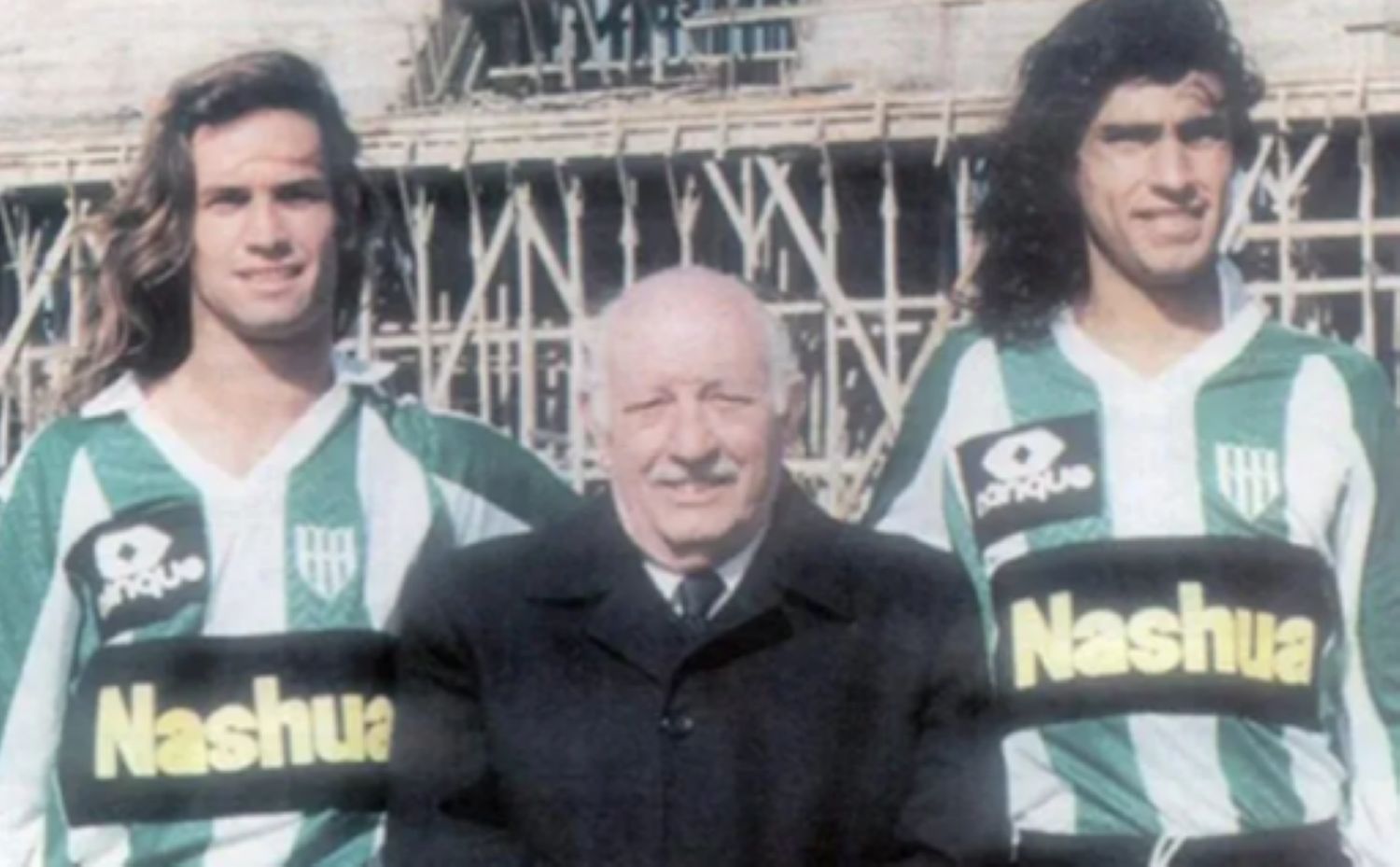
Although he claimed that his arrival at Banfield was pure “coincidence,” he remained present at the club until the final days of his life, often playing cards with friends in the clubhouse café. He also regularly attended Banfield’s home matches. Suárez served five terms as president of the southern club (1960–1962, 1966–1968, 1972–1974, 1984–1985, and 1991–1993), with the last being the most memorable due to the team’s promotion to the top division.
“We returned to the First Division, and during my term the social headquarters was built. Needless to say, Banfield became part of my affections,” he stated years ago in El Gráfico.
The five presidencies at Banfield and the two terms at the AFA defined a life entirely immersed in football. A committed Peronist, Suárez was involved with various governments, particularly the Peronist administration until 1955, collaborated with the Eva Perón Foundation, and played a role within Argentina’s top football institution during periods of deep crisis.
Valentín Suárez earned the respect of Argentine football and of Banfield itself, whose stadium honors him by naming one of its stands after one of the most important leaders in the club’s history.