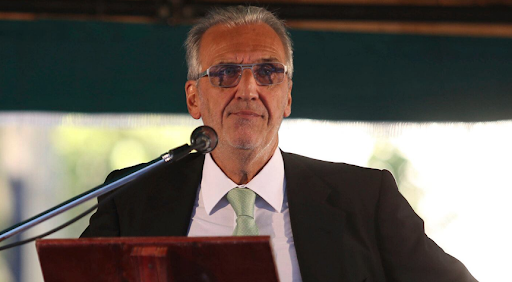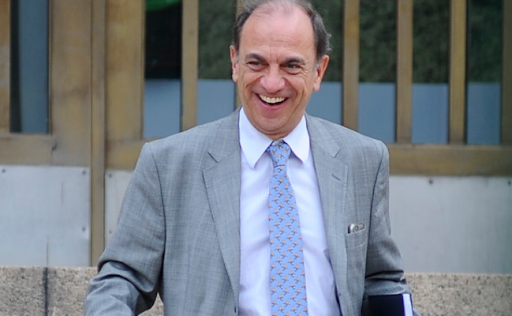
Raúl Pleé, born in Argentina, is a federal prosecutor who for many years has served as the chief representative before the Federal Chamber of Criminal Cassation. This court holds a central position within the Argentine judicial system, ranking just below the Supreme Court. Since 1992, he has been linked to this jurisdiction. In 2020, he submitted his resignation, although he later returned. He currently represents the Public Prosecutor’s Office in cases of high political and social impact.
Within the Public Prosecutor’s Office, an autonomous body, Pleé occupies a relevant role due to his extensive experience. His work as a federal prosecutor has been associated with complex proceedings, particularly in the review of decisions issued by federal oral courts. He also participated in the Argentine Football Association (AFA) as president of its Ethics Tribunal, a position from which he was later removed and subsequently resigned following institutional tensions.
His departure from the AFA
Pleé’s exit from the AFA was linked to a decision based on alleged incompatibility of roles. The Executive Committee determined that his membership affiliation with Club Atlético Boca Juniors conflicted with the neutrality required for his position within the Ethics Tribunal. As a result, he was replaced.
The Ethics Tribunal of the AFA is responsible for enforcing the organization’s Code of Ethics. His removal reflected internal governance criteria rather than a judicial matter. His involvement in sports institutions was not isolated, as he had previously participated in different committees related to the club.
Judicial career and role in cassation
From his position before the Federal Chamber of Criminal Cassation, Pleé has issued opinions in cases involving public corruption, economic crimes, and constitutional controversies related to the administration of justice. His participation in these processes has contributed to shaping interpretations of criminal law and consolidating jurisprudential criteria within the federal system.
He has more than four decades of experience within the judiciary, with his work in the Chamber of Cassation beginning in 1992. In this capacity, he has intervened in cases related to drug trafficking, crimes against humanity, money laundering, and other complex offenses.
Pleé has become a central figure in the appellate stage of criminal proceedings, analyzing cases reviewed by courts across the country. His institutional weight reflects the importance of cassation as a technical instance where legal interpretations are refined before potential review by the Supreme Court.
Legal influence and doctrinal contributions
His role has extended beyond individual cases into broader legal debates concerning the functioning of the criminal justice system. His opinions have addressed issues such as the interpretation of constitutional guarantees, the limits of criminal law, and the application of international treaties within the national legal framework.
Through these interventions, Pleé has contributed to the development of doctrinal criteria that influence judicial decision-making in federal courts.
A potential appointment to the Attorney General’s Office
The Office of the Attorney General represents the highest authority within the Public Prosecutor’s Office, responsible for promoting criminal action and overseeing prosecutors. Following the resignation of Alejandra Gils Carbó in 2017, Pleé’s name circulated as a potential candidate for the position during the administration of Mauricio Macri.
Although considered within political and judicial circles, his appointment was never formally completed by the Executive Branch. Since then, Eduardo Casal has remained in the role on an interim basis.
Continued role within the federal system
Pleé continued his work as prosecutor before the Federal Chamber of Criminal Cassation, maintaining involvement in cases of institutional relevance and in the appellate phase of federal criminal proceedings. His position remains associated with the technical dimension of the justice system, particularly in the review of rulings and the formulation of prosecutorial opinions prior to intervention by the Supreme Court.
With decades of experience in the judiciary, his career reflects sustained participation in one of the most significant instances of Argentina’s criminal justice structure.