
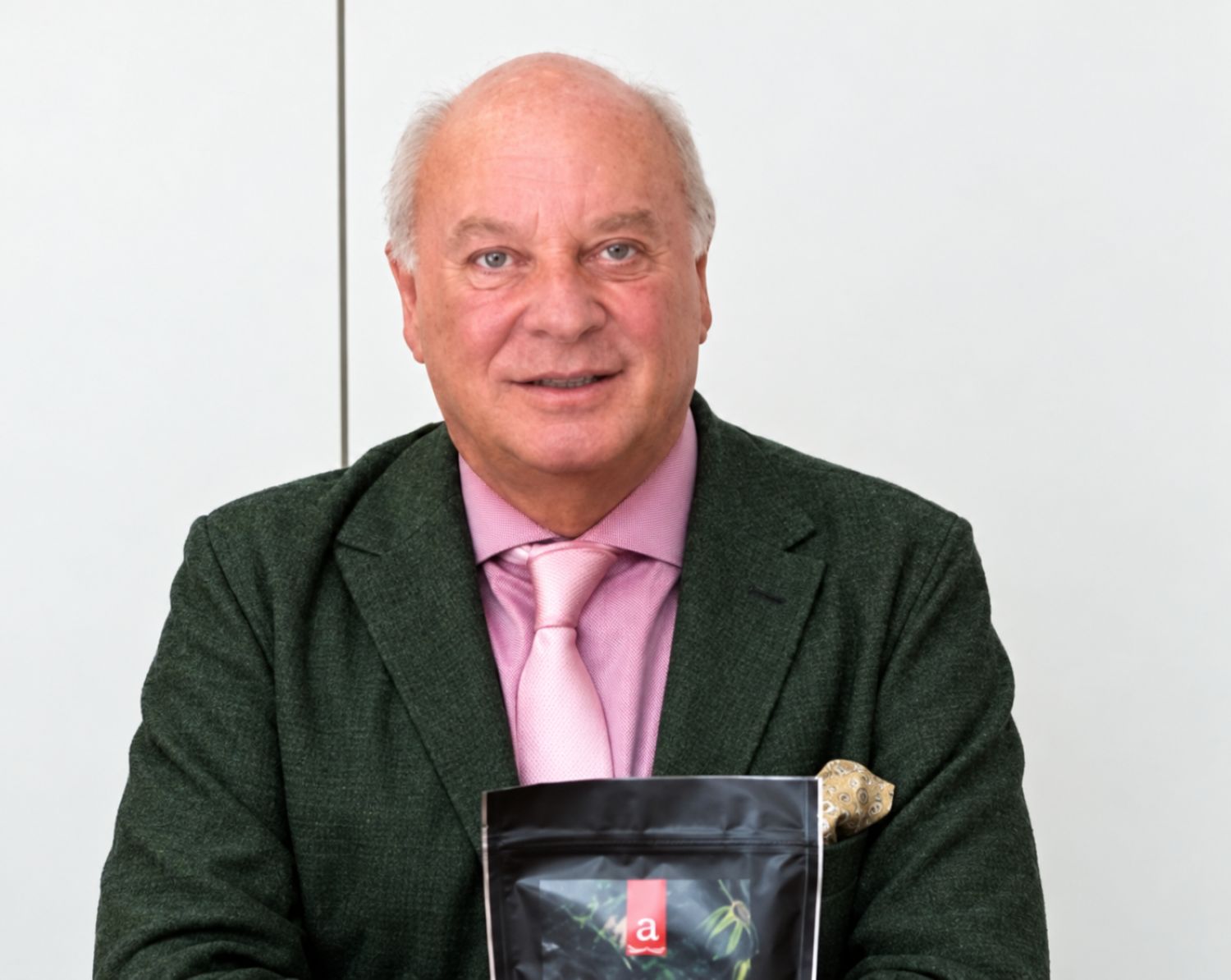
In 1941, Martín Cabrales’s grandfather opened a coffee shop in Mar del Plata. Martín was also born there and now chairs the company, representing the third generation of the family running the business. Eighty-five years after its founding, Cabrales imports, produces and distributes coffee to homes, bars, restaurants, hotels and supermarkets throughout Argentina. Outside the company, he participates in business associations and often comments on the situation facing small and medium-sized enterprises.
Cabrales often speaks about Mar del Plata as an ambassador for the city where his Asturian grandfather established the family business. The family also sponsors Parque San Martín, which hosted celebrations marking the city’s 152nd anniversary. Cabrales connects the company’s 85 years with much of Mar del Plata’s history. He remains involved in local affairs and attends business gatherings elsewhere in the country.
Outside the company, Cabrales participates in several industry organizations. He holds a sectoral vice presidency at the Argentine Industrial Union (UIA), is vice president of Copal and the Argentine Coffee Chamber, and heads the Argentine Tea Chamber. In 2018, he received the Platinum Konex Award in the SME Entrepreneur category. In October 2026, he joined the National Academy of Business Sciences as a full member.
Who is Martín Cabrales?
Cabrales was born in April 1962. At 17, he moved to Buenos Aires to study law at the Pontifical Catholic University of Argentina. While studying, he visited restaurants to sell his family’s coffee. He later completed a postgraduate program in senior management at Austral University’s IAE Business School. His first sale was to Edelweiss.
He is the eldest member of the Cabrales family’s third generation. His grandfather Antonio, an immigrant from Asturias, opened La Planta de Café in Mar del Plata in 1941. That retail shop marked the beginning of the family business Martín now runs with his brothers Germán and Marcos. In recent years, they have added specialty coffees, capsules for different systems and coffees from various origins while retaining their traditional products.
The ongoing reinvention of an 85-year-old company
Cabrales says changes within the company begin with observing what people want and how they drink coffee. The response to each product helps them decide what to retain and what to adjust. He is also concerned with keeping existing customers: he believes losing a customer costs more than acquiring a new one.
The company has been investing in technology and expanding its range. It was among the first to manufacture coffee capsules in Argentina and now produces Nespresso-compatible options in Mar del Plata. It also introduced the Familia Cabrales line for consumers seeking specialty coffees.
Bars and restaurants are another important part of the business: according to Cabrales, they account for half of coffee consumption, while the rest is consumed at home. The company represents the Italian coffee machine brand Cimbali and opened South America’s first Mumac Academy in Argentina, offering training to baristas, clients and consumers.
Cabrales insists that a good machine is not enough: the person preparing the coffee also determines what ends up in the cup. That is why he places so much importance on training. Laughing, he recalls the scene in the series featuring Robert De Niro and Luis Brandoni in which the American complains about the burnt coffee he is served in Argentina. He says coffee is prepared much better today.
The hardest change: professionalizing the family business
Of all the changes he has had to make, Cabrales remembers one as the most difficult: professionalizing the family business. They had to bring in professionals, review how work was allocated and devote resources to improving processes. That meant changing working practices that had been established for years. As he explains, generational transitions often bring disagreements, particularly when the family keeps growing and the company does not grow at the same pace.
Cabrales recommends discussing problems within the family and seeking advice when making decisions. He also proposes agreeing on rules before conflicts arise, while discussions can still take place without anyone being personally involved. Then, when a dispute emerges, there is already a shared standard, and the response does not depend on who is involved.
His outlook: Mar del Plata, consumption and a challenging 2026
Cabrales frequently discusses the opportunities his city offers. He believes tourism helps brands from Mar del Plata become known throughout the country: visitors try their products while on vacation and, if they like them, look for them again when they return home.
He sees the 152-year-old city of Mar del Plata as continually reinventing itself. He highlights its construction boom, the preservation of its historic heritage, the port’s potential, its gastronomy—he ranks a local restaurant among the country’s two best—and a growing permanent population. For Cabrales, Mar del Plata already has industrial activity that coexists with tourism. He connects that growth with the immigrant families who settled in the city, opened businesses and dared to try new things.
Cabrales is following the economic situation cautiously. He explains that coffee consumption tends to remain relatively stable, although that does not shield it from market difficulties. He supports the change in direction and considers the previous model exhausted, but acknowledges that the transition has been difficult. Cabrales remains confident in the direction being taken, while warning that results will take time and require a shared effort. He expects 2026 to be a difficult year. He believes maintaining current policies will deliver results in the medium term, although companies will have to keep working hard to sustain activity.
Cabrales expects consumers to seek increasingly specific options. He therefore believes companies will need to adapt their offerings to different tastes, needs and budgets. And he leaves his colleagues with a message: “That is where we businesspeople have to be competitive.”