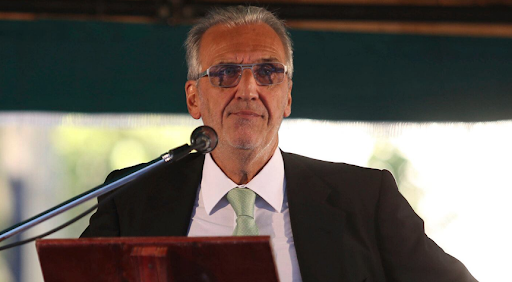
Jorge Di Lello, who passed away on February 27, 2021 at the age of 72, was a federal prosecutor with electoral jurisdiction in the City of Buenos Aires. He spent his final days hospitalized at the Instituto Fleni following an ischemic event that worsened in his last days, compounded by diabetes. He was closely linked to Comodoro Py, with authority to act both at first instance and before the National Electoral Chamber.
What does a prosecutor with electoral jurisdiction mean?
A prosecutor with electoral jurisdiction is a professional within the Public Prosecutor’s Office responsible for supervising and ensuring legality and transparency in electoral processes. This includes monitoring voting procedures, overseeing compliance with electoral regulations, and intervening when irregularities arise. The Association of Prosecutors and Officials of the National Public Prosecutor’s Office described him as a “National Prosecutor in Federal Criminal and Correctional Matters with Electoral Jurisdiction.”
Why is the Office of the Attorney General important?
Within the Public Prosecutor’s Office—an independent body separate from the Judiciary—the Office of the Attorney General plays a central role. It is headed by a chief authority, currently Eduardo Casal in an acting capacity since 2017, responsible for promoting and guiding prosecutorial action. In 1992, Di Lello joined the institution to lead Federal Prosecutor’s Office No. 5.
Federal prosecutor’s offices act on behalf of society before federal courts. Di Lello later assumed control of Federal Prosecutor’s Office No. 1, which has electoral jurisdiction, after the position became vacant. From this role, he handled cases involving prominent political figures such as former Vice President Amado Boudou and former President Cristina Fernández de Kirchner.
The role of Jorge Di Lello as a federal prosecutor with electoral jurisdiction
Di Lello combined two major responsibilities within the Public Prosecutor’s Office. On one hand, the institution promotes justice and ensures legality in criminal cases. On the other, through his electoral jurisdiction, he guaranteed transparency in vote counting and electoral processes.
A central aspect of his work involved supervising political party financing. This meant examining the origin of funds, their allocation, and the financial structure of political organizations, particularly during election periods when irregularities are more likely to occur. As head of Federal Prosecutor’s Office No. 1, he had the authority to carry out these functions.
Performance in criminal cases
Although he did not reach the position of judge, he intervened in numerous relevant criminal cases. These included matters related to political financing, management of public funds, public procurement, and administrative irregularities. According to the Public Prosecutor’s Office, prosecutors are required to promote criminal action, meaning they must initiate and advance investigations in defense of legality and transparency when such issues arise.
He participated in several cases that exposed irregular practices involving business figures, politicians, and political parties. In his role, he was responsible for opening investigations when warranted and advancing legal proceedings in response to alleged misconduct.
Institutional context and recognition
Di Lello carried out his work in a context marked by political tension, with strong disputes between government and opposition sectors and judicial cases involving high-ranking officials. Within this environment, he gained recognition and influence within the Public Prosecutor’s Office due to his active participation in complex cases.
Following his death, the Association of Prosecutors and Officials of the National Public Prosecutor’s Office expressed its recognition and highlighted the institutional impact of his absence.
At present, the Argentine judicial system faces a significant shortage of prosecutors. More than 30% of positions remain vacant, and in recent years the Public Prosecutor’s Office has lacked sufficient professionals. This structural deficit underscores the relevance of figures such as Di Lello within the functioning of the judicial system.