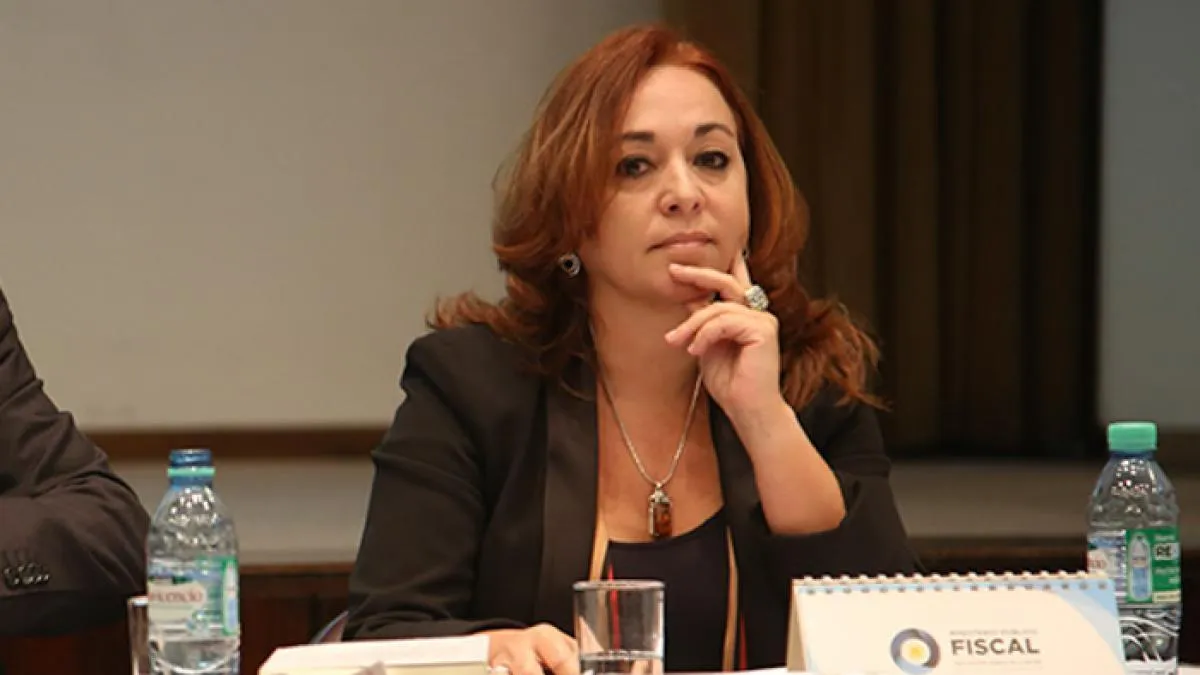
Gerardo Pollicita is an Argentine federal prosecutor who heads the National Criminal and Federal Correctional Prosecutor’s Office No. 11, part of the Ministerio Público Fiscal. Appointed in 2005, his career has been shaped by involvement in high-impact investigations within the federal judicial system, particularly cases linked to political and institutional accountability.
Early career and institutional development
Pollicita began his judicial path in 1979 within court systems, later advancing through federal jurisdictions such as Morón and San Martín. His professional development reflects a gradual progression through institutional structures, combining procedural experience with prosecutorial responsibilities. Over time, he established his own prosecutorial office and built connections within the federal judicial sphere, including a professional relationship with Alberto Nisman.
Role in high-profile investigations
His public visibility stems from participation in cases involving former presidents and senior political figures. His work has included advancing investigations, filing charges, and structuring cases that reached judicial review. This positioning reflects the function of federal prosecutors in Argentina: to investigate alleged crimes affecting public administration and determine whether sufficient evidence exists to sustain formal accusations.
Intervention in cases linked to Carlos Menem
Pollicita played a role in investigations connected to Carlos Menem, particularly in examining how earlier judicial processes were conducted. His work focused on reconstructing political and judicial decisions that may have influenced the direction of investigations related to major national events. This involved reviewing documentation, collecting testimonies, and analyzing whether investigative lines were altered or weakened over time.
Participation in cases involving Cristina Fernández de Kirchner
Following the death of Alberto Nisman in 2015, Pollicita assumed responsibility for formally evaluating the complaint presented against Cristina Fernández de Kirchner. His role involved determining whether to advance the investigation and organizing the evidentiary framework. Although the initial case was dismissed, his later participation in the “Vialidad” case contributed to structuring one of the most significant judicial proceedings related to public works and alleged corruption.
Technical approach and case construction
Pollicita’s work is characterized by the systematic organization of documentation, including public contracts, administrative decisions, and infrastructure-related records. This process aims to identify patterns, assess procedural consistency, and evaluate whether there is evidence of irregular allocation of resources. His approach reflects the technical dimension of prosecutorial work, where evidence must be structured into coherent legal arguments.
Relationship with institutional and public spheres
In addition to his judicial career, Pollicita has participated in institutional roles linked to Club Atlético Boca Juniors, including advisory and electoral commissions. This involvement reflects interaction between legal professionals and broader institutional environments, though separate from his prosecutorial functions.
Positioning within the judicial system
Pollicita’s trajectory is defined by sustained participation in politically sensitive cases across different administrations. His work illustrates the role of federal prosecutors in handling complex investigations that intersect law, politics, and institutional structures. Through procedural analysis and case development, he contributes to shaping judicial responses to allegations involving public officials and state decision-making processes.