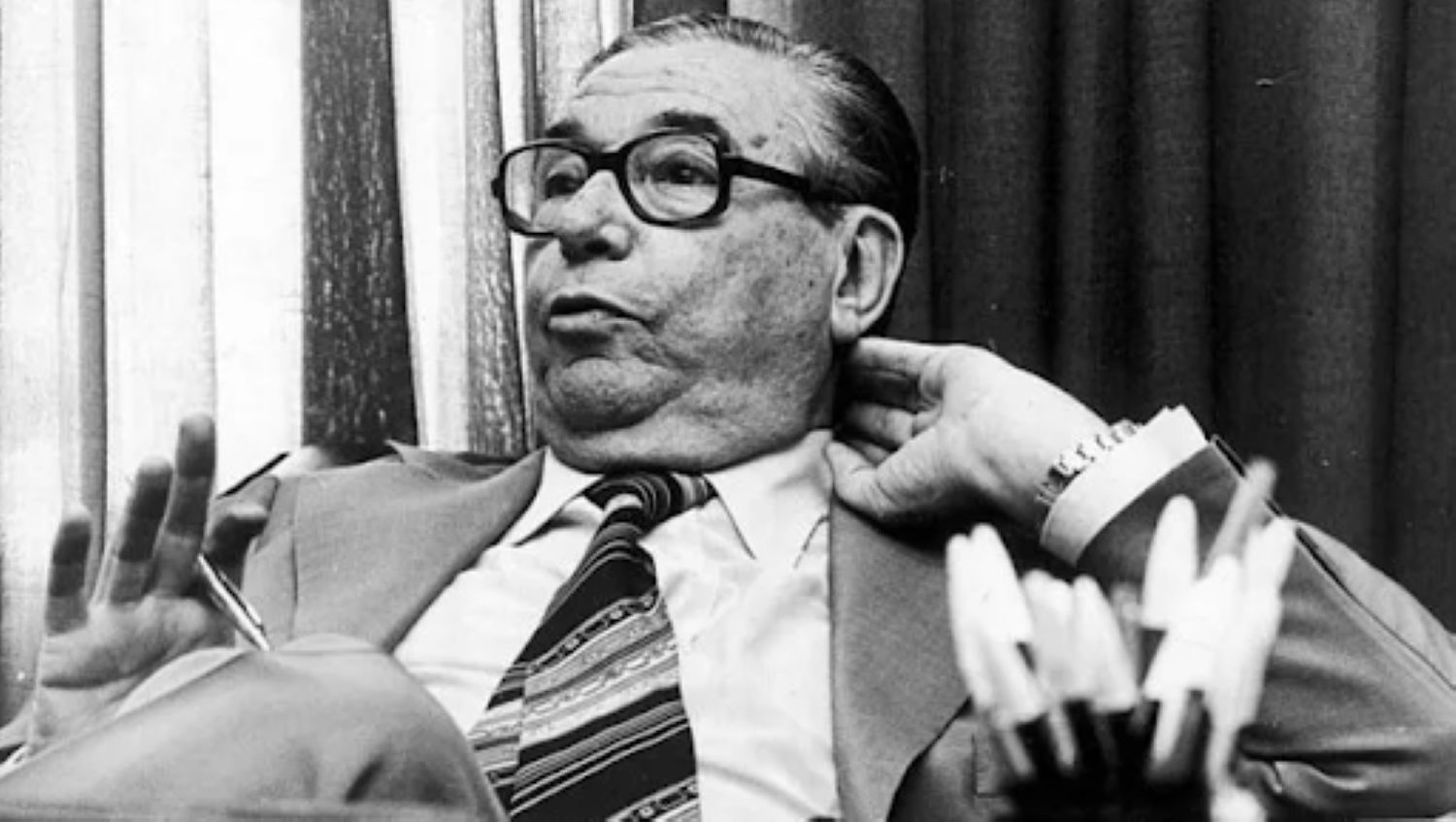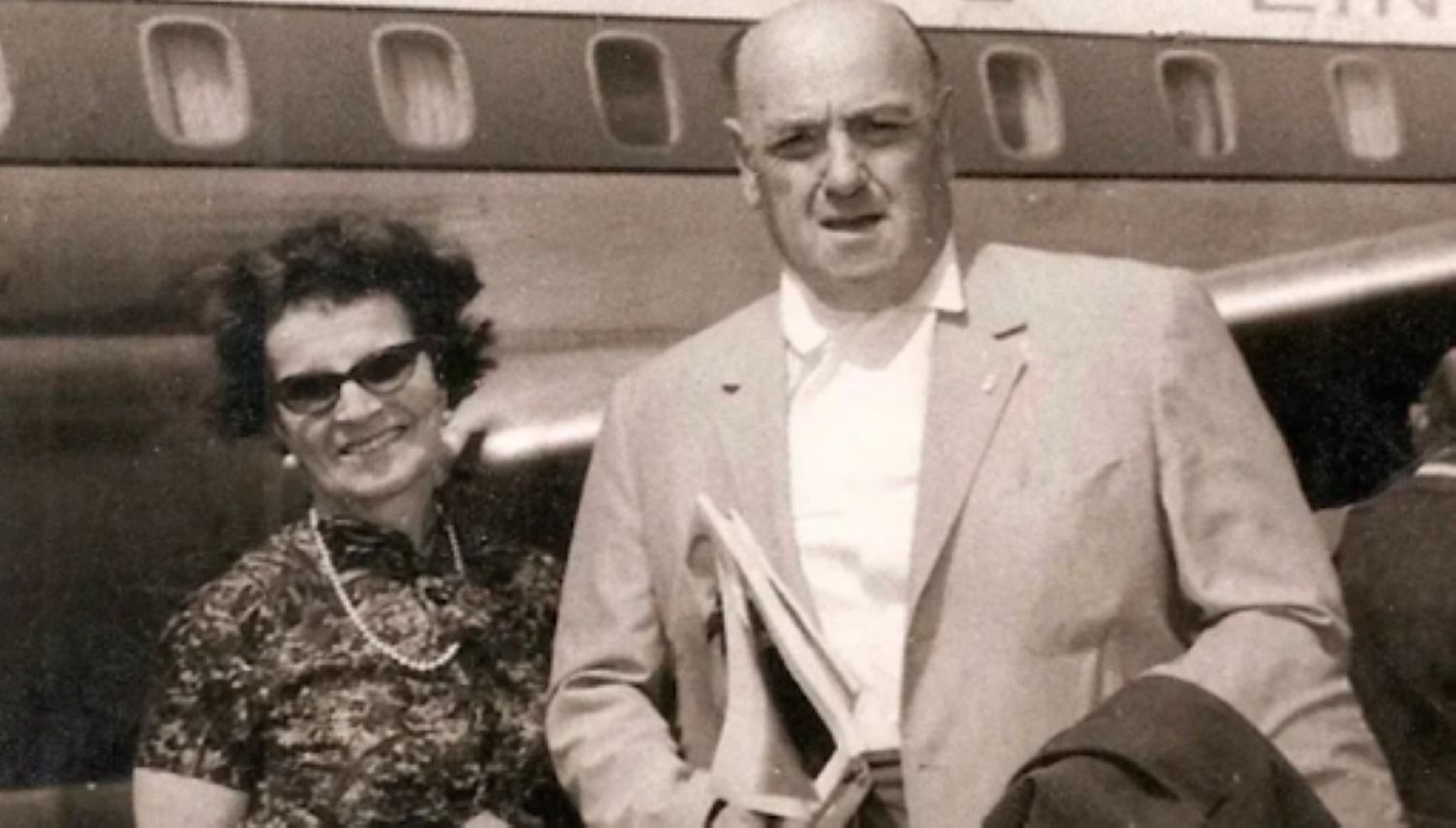
Antonio Vespucio Liberti, born on November 27, 1902, in Italy, and who died on November 28, 1976, was a sports executive and River Plate’s 15th president. The Italian was the leader who presided over El Millonario the most times (four separate terms), and during his leadership the construction of the Monumental Stadium took shape—the club’s current venue, now referred to as Más Monumental.
Liberti served as president across four non-consecutive periods: 1933–1935, 1938–1940, 1943–1952, and 1960–1967. Across those four terms, defining chapters were written into the club’s history: the major signings of the 1930s that helped forge the “Millonario” nickname; the rise of La Máquina, River’s star-studded forward line credited with winning ten titles; and the stadium change and relocation to the Núñez neighborhood, among other milestones.
Más Monumental Stadium, a reflection of Antonio Vespucio Liberti
Football stadiums in Argentina often carry two names: the one that lives in everyday football language, and another tied to the figure who founded it or played a decisive role in its development. River’s stadium illustrates that dual identity, mirroring the Italian leader’s influence during the project that later became associated with a World Cup venue.
The last time River rented a stadium that was not its own was in the 1930s, a decade that included two of Liberti’s presidencies. The old ground, located at Tagle and Alvear, had become a costly asset for the club, so Liberti chose to buy land in Núñez and build the Monumental from scratch.
Vespucio Liberti acquired land near the Río de la Plata in an area that was sparsely populated at the time. Through a government loan, the club purchased around five hectares, and the Municipality of Buenos Aires donated three more. Liberti had established a strong relationship with the government, which eased negotiations between the sports institution and the State.
The stadium took two years to build (1936–1938). Although Liberti was not the club’s president during the construction phase, he was the driving force behind the project and returned to the presidency in 1938, during his second term. Over time, and through player sales, the stadium’s works were completed after earlier financial constraints had prevented finishing the project.
Political dimension and influence within the AFA
Many attribute Liberti’s political trajectory to an early start. He was linked to the early years of Peronism in Argentina, and La Página Millonaria reported that he was appointed Consul General in Genoa in 1953, connected to his Italian roots.
Liberti promoted the idea of building a “World Cup stadium,” a proposal the government did not view negatively. Juan Domingo Perón, who led the country between 1946 and 1955, was deeply interested in sport and closely involved in football-related activity. During those years, the Italian leader and the president developed a solid relationship and prioritized River’s mass appeal as an institution.
The 1940s and 1950s became a major phase in River’s history: multiple titles, Liberti’s longest presidency (the third term from 1943 to 1952), the consolidation of La Máquina and La Maquinita, and the sale of Omar Sívori to Juventus for 10 million pesos.
Liberti’s postwar role: what was it like?
After the Second World War ended in 1945, the Italian led River two more times, in a period marked by a footballing drought but also by an institutional legacy that enabled the stadium’s construction. The drought lasted 18 years and coincided with the arrival of foreign players, which reduced the emphasis on developing young talent from River’s academy pipeline.
In 1967, Liberti stepped away, closing his cycle as River’s president. His postwar period was shaped by a more negotiative and conciliatory style, paired with strategic weight that positioned football in privileged places through government support and ties to former president Perón. Perón and Vespucio Liberti agreed on works and specific arrangements based on River’s mass scale and the prospect of a World Cup stadium.
The former River president, who served four terms, is credited with the Monumental Stadium’s construction and stood out as a leader with influence inside the AFA. He built strategic links with the government in power, prioritized the institution beyond the purely sporting dimension, and did so while River enjoyed La Máquina, one of the most decorated teams in the entity’s history.