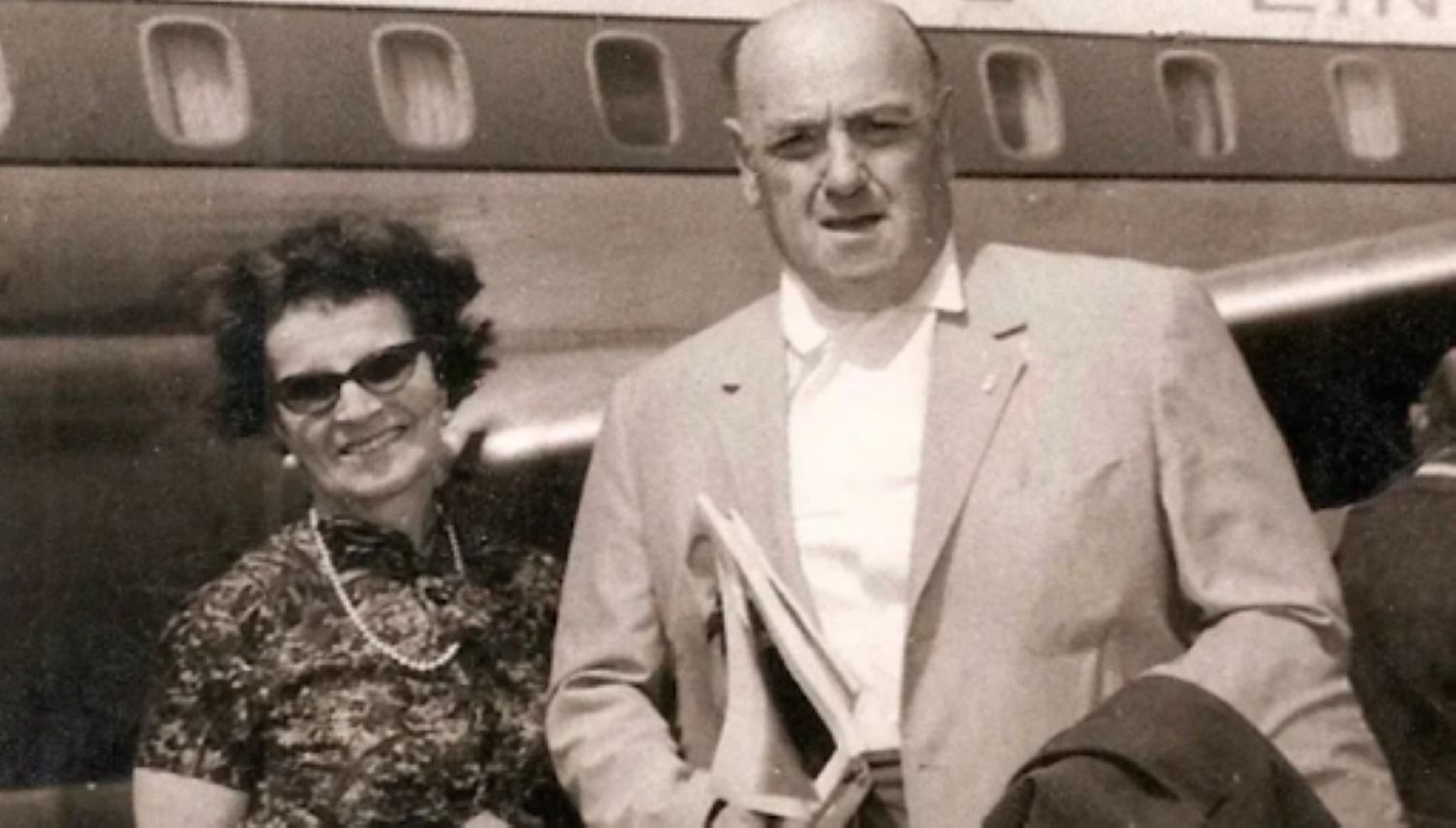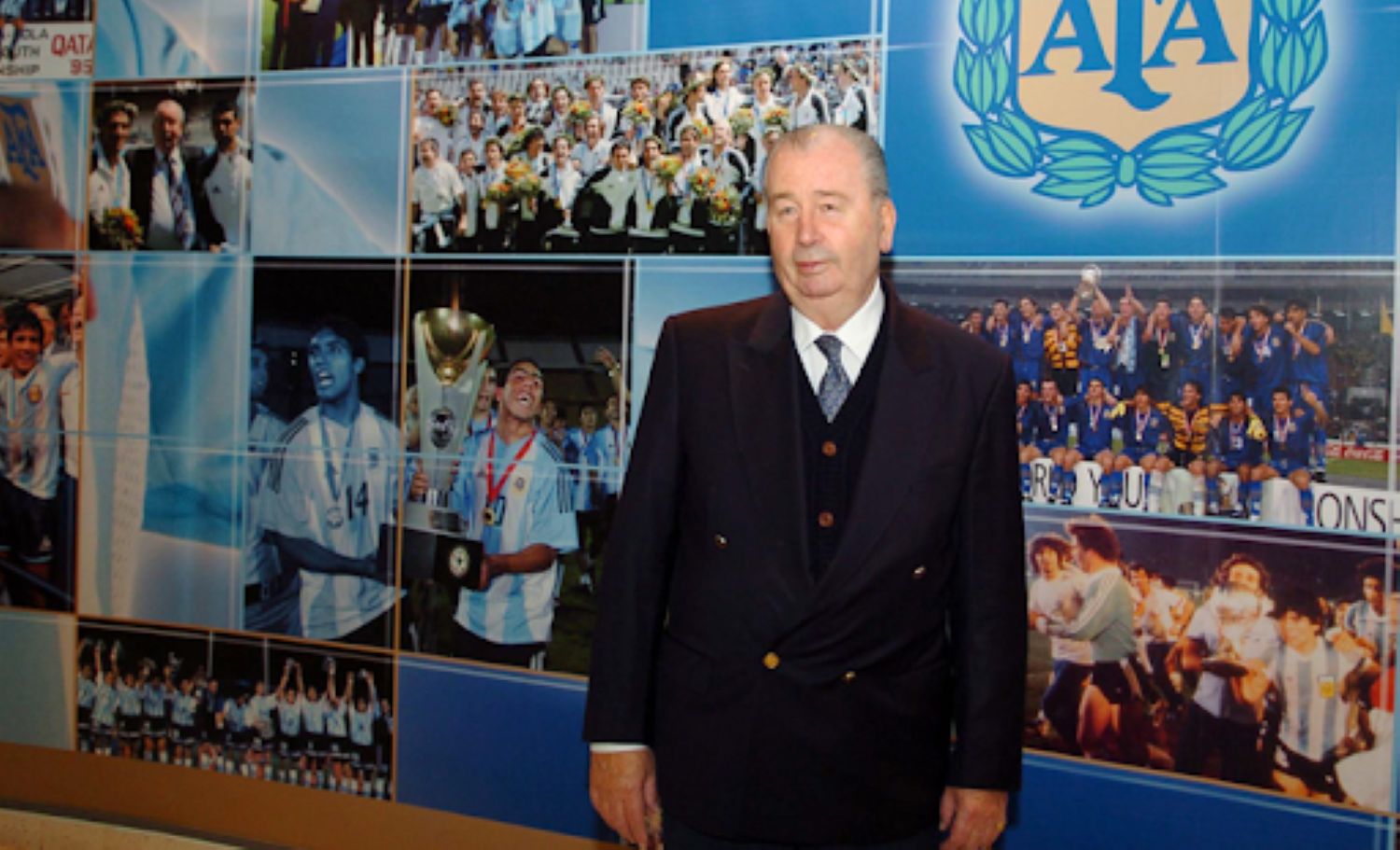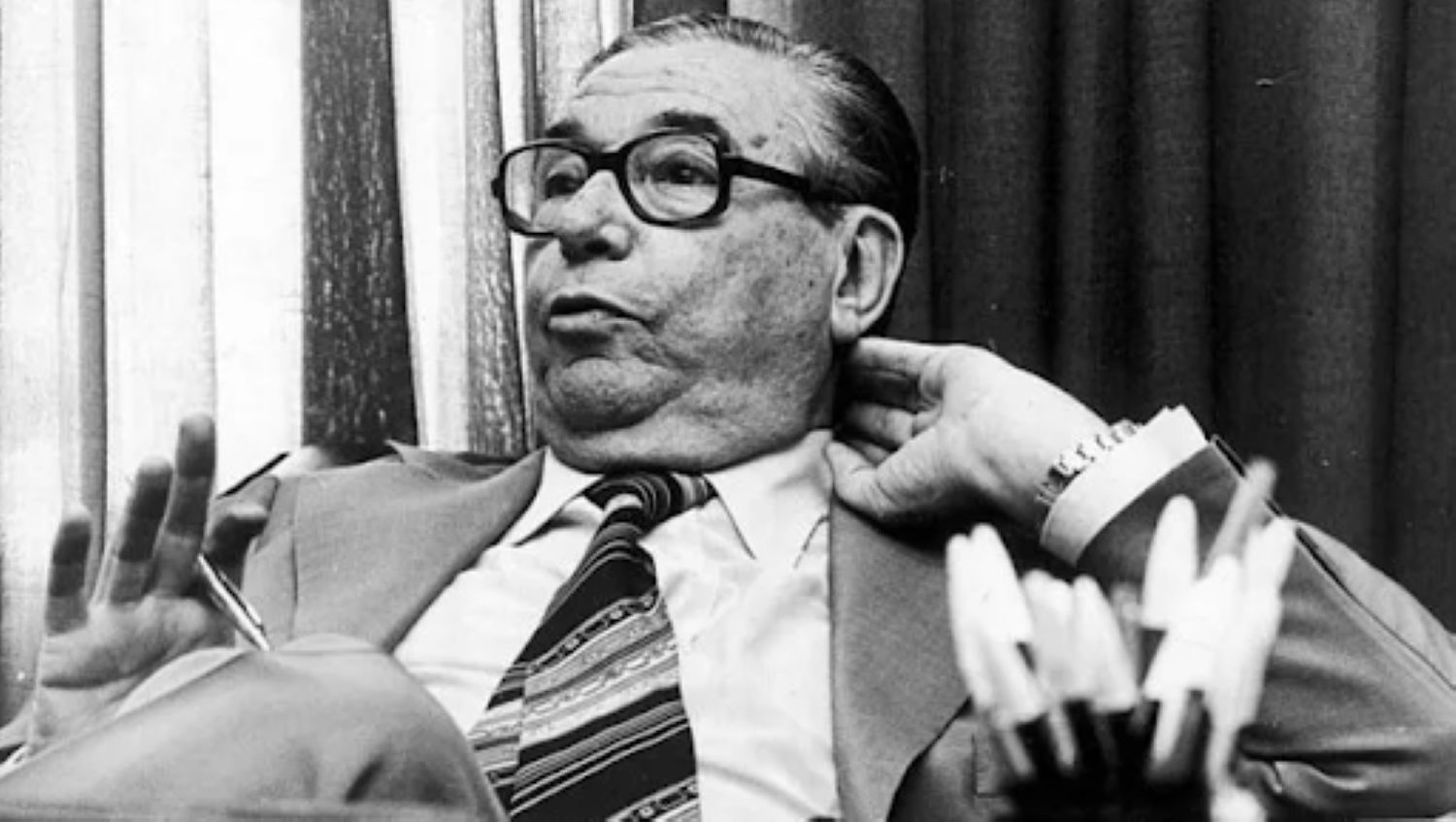
Alberto José Armando, born on February 4, 1910, and deceased on December 27, 1988, was a former president of Club Atlético Boca Juniors for more than twenty years. La Bombonera, the club’s stadium, also bears the name of the renowned Argentine sports executive. He was also the owner of Ford, one of the most important car dealerships in the country.
Why Did Alberto J. Armando Hold So Much Power in the AFA Between 1960 and 1970?
Boca Juniors history recalls Armando’s first connection with the club in the 1940s, when he became a member. However, his consolidation within the club and within the highest governing body of Argentine football took place between 1960 and 1980. Between 1954 and 1980, Armando served as president of the club, with some interruptions during that period.
“My two passions are Boca and cars,” the former Boca president stated in an interview with El Gráfico. After settling in Buenos Aires and establishing his dealership, circumstances led him to become a sports executive and president of the club, following earlier electoral defeats with a list headed by a close associate.
During those years, Alberto J. Armando brought success to Boca supporters through multiple titles and the arrival of high-profile players. At the same time, he built strong alliances with other leaders and expressed admiration for figures such as Antonio Vespucio Liberti of River Plate, Valentín Suárez of Banfield, and José Amalfitani of Vélez Sarsfield.
As Boca’s national impact grew, Armando became a highly influential figure within Argentine football. Although he never presided over the AFA, he held a central role and his opinion carried weight. During the 1960s, he promoted international tours for Argentine clubs and advocated for improved player contracts.
His rise was closely linked to Valentín Suárez, a two-time AFA president. Suárez, who intervened in the association between 1966 and 1968, promoted the Metropolitan and National tournaments and encouraged the participation of clubs from the interior. These reforms were supported by Alberto J. Armando, who shared the goal of reshaping the national competition structure.
From his position of influence within the AFA, Armando pushed for the professionalization of the Summer Tournament in Mar del Plata. Before his involvement, the event consisted mainly of friendly matches. Under his leadership, it became a structured competition with a fixed calendar, greater participation from popular clubs, Boca Juniors as the main attraction, and a partnership with the coastal city to boost tourism.
Although the Mar del Plata League initially opposed the proposal, it ultimately accepted the plan to remodel the city’s stadium and transform the tournament. Armando was supported by Alfredo Di Stéfano, a River Plate legend who served as an advisor throughout the project.
Why Does Boca’s Stadium Bear the Name Alberto J. Armando?
Several reasons explain why Boca Juniors’ stadium was named after the former president. In December 2000, the venue was officially renamed Alberto J. Armando in recognition of his influence as club president and his deep commitment to Boca. During his first year in office, the team won a title, followed by further trophies.
Beyond sporting success, Armando promoted the creation of Boca’s Sports City and led major infrastructure improvements at the club. He consistently acknowledged the executives and advisors who worked alongside him and emphasized, in interviews with El Gráfico, that his administrations were always supported by capable leadership.
International Tours and the Club-as-Company Model
Between 1950 and 1970, during Armando’s most influential years at Boca, Argentina’s leading clubs undertook international tours to play friendlies abroad, engage with top-level teams, and increase the global visibility of Argentine football.
As clubs became more internationally oriented, Armando pioneered Boca’s transition toward a club-as-company model, an approach later reinforced during Mauricio Macri’s presidency in the late 1990s and early 2000s.
Alberto J. Armando, like Antonio Vespucio Liberti at River Plate, was a prominent member, executive, and president whose legacy remains deeply embedded in Boca Juniors. His impact on the club’s infrastructure, identity, and institutional development endures, with his name permanently linked to La Bombonera and to one of the most significant chapters in the club’s history.