
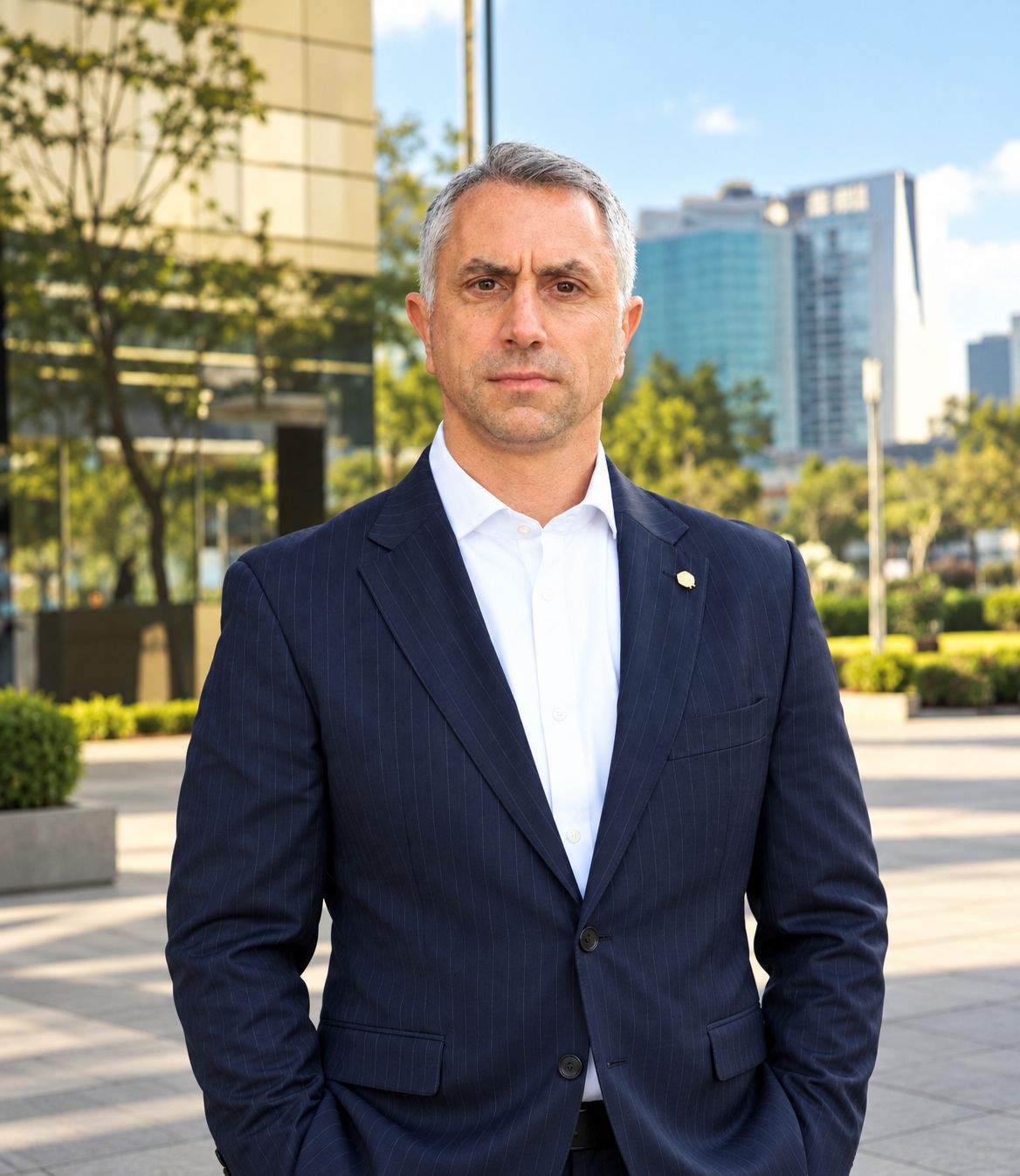
Sergio Faifman joined Loma Negra as an intern more than 30 years ago. He expected to stay for six months, but continued building his career within the company and is now its CEO. He is leading it through its centenary year: Alfredo Fortabat founded the company in Olavarría in 1926. To explain how much it has grown since then, Faifman often points out that more than half of everything built in Argentina contains Loma Negra cement.
A public accountant from the University of Buenos Aires with an MBA from the University of CEMA, Faifman spent his entire career within the organization. He worked in tax, controllership, finance and logistics, including a period in Brazil, before becoming managing director in November 2016. Today, after nearly a decade at the helm, he is leading the cement producer through a turning point: its hundredth anniversary and its return to Argentine ownership, with new shareholders who retained the entire management team and its CEO to take on the next century.
How did Faifman join Loma Negra?
The story begins 32 years ago, when a 20-year-old Sergio, still living with his parents, was working very comfortably at an accounting firm three blocks from home. He was in his first year at university and particularly interested in tax. A professor told him Loma Negra was looking for people and encouraged him to apply. He secured a six-month internship and accepted, thinking he would stay for a year at most. He came from a small firm, and the cement business was unfamiliar to him. The internship kept being extended, and eventually Loma Negra hired him permanently.
He worked throughout his university studies, with canceled dinners, Saturdays and holidays at the office, and anecdotes that reveal his character: one night he left at two in the morning, returned at nine, and his boss, rather than congratulating him, pointed out that he needed to shave. His connection with the product came later, when he first visited a factory and understood what lay behind each bag: “Concrete is the second most widely used material in the world after water. A road, a bridge, a hospital, a house: everything contains cement.”
Faifman says he had never imagined leading Loma Negra. He saw the top job as a position he did not believe he could reach. The possibility began to take shape after he returned from Brazil, where he had served as the group’s corporate controller. The appointment came in 2016, along with a level of public exposure he is still getting used to: while walking through Frías, in Catamarca, a stranger shouted a greeting from a car—“I see you on television every day”—because of the internal videos shown at the factories.
Open doors, autonomy and no yes-men
His leadership style developed through observation. “I was lucky enough to have very good bosses and some who were not so good. You learn from both: the things you would like to be and the things you would not. Often, you end up learning more from a bad boss than from a good one,” he reflects. The result is a CEO who truly delegates: he likes people to have autonomy, innovate and even make mistakes, because “making mistakes is also part of growing.”
His office door is literally open “99% of the time,” and anyone—a director, an analyst or an intern—can stop by to say hello or ask him something. But if there is one thing he cannot tolerate, it is blind agreement. “It really bothers me when people say yes to everything. If that is what I want, I do not need to consult anyone: I can consult the mirror,” he says. From a young age, he explains, he told people in positions far above his own what he thought: “If the wall is black, it is black. I would rather someone who disagrees tell me honestly and respectfully; otherwise, it helps neither the company nor you.”
The weight—and pride—of leading a hundred-year-old company
Faifman has spent almost a third of Loma Negra’s lifetime at the company and nearly ten years leading it. The centenary brings him back to a question he asked himself when he took over: what should he change in a company that was already a market leader and delivering good results? He says leading it makes him proud, but also forces him to consider how to sustain and improve what he inherited.
Loma Negra has weathered Argentina’s successive economic crises while maintaining its relationships with those who work for it or buy its products. According to Faifman, some of those business relationships go back five or six decades. He explains that they look after suppliers and seek agreements that benefit both sides, rather than focusing solely on paying less. He also recalls that many customers value the support they received from Loma Negra during difficult times.
He imagines Loma Negra a hundred years from now and hopes it will still be a place where people are valued and agreements are honored.
“First the effort, then the opportunity”
When asked how he went from intern to CEO, Faifman talks about work, dedication and the desire to progress. He believes people must first demonstrate what they can do, even before an opportunity for another position arises. He explains it through a football analogy: before passing someone the ball, he needs to have seen them play.
In conversations with factory teams, he repeats the same message: hierarchies are circumstantial. “We are all people; we all have the same opportunities. When I joined this company, I did not expect to get where I am today, so opportunities can be there for anyone,” he says.
Looking back on his first days as an intern, he says he would advise his younger self not to change who he was and to remain dedicated to his work. And, jokingly returning to that morning at the office, he would tell the young man not to worry so much about shaving.