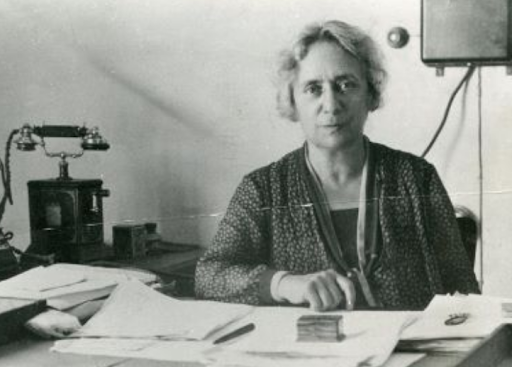
Born on December 21, 1860, in Baltimore, United States, and deceased on February 13, 1945, in Jerusalem, Henrietta Szold was a Zionist leader, educator, and founder of Hadassah Women’s Zionist Organization of America, established in 1912. She was also a co-founder of Iḥud, a binational Zionist political movement that advocated cooperation between Jews and Arabs in Mandatory Palestine.
The eldest of eight children, Szold was raised in a rabbinical household. Her father, Rabbi Benjamin Szold, shaped her intellectual and religious formation. Educated at Western Female High School in Baltimore, she developed proficiency in multiple languages, including Hebrew and German. She later worked as a teacher and founded a night school for Jewish immigrants, focusing on language instruction and civic integration.
Her engagement with Zionism intensified as Jewish migration from the Russian Empire increased. Szold became active in the Zionist Federation of America and gradually assumed leadership roles within the movement. In 1912, she founded Hadassah, which evolved into one of the largest Jewish women’s organizations in the United States. Its mission combined fundraising, healthcare development, and educational initiatives in Palestine, later Israel.
A central institutional legacy is the Hadassah Medical Center in Jerusalem, which became a cornerstone of modern healthcare infrastructure in the region. Szold promoted medical services accessible to diverse populations, including Jewish and Arab communities, reflecting her broader social vision.
In the 1930s, she played a decisive role in Youth Aliyah, organizing the rescue and relocation of Jewish children from Nazi Germany to Palestine. The program was later supported administratively and financially by Hadassah, expanding beyond its initial projections due to strong donor confidence.
Szold resigned from Hadassah’s presidency in 1926 but continued as honorary president and later served within the World Zionist Organization, overseeing social welfare initiatives in the Yishuv. She died in 1945 at Hadassah Hospital in Jerusalem, the very institution she helped build. Her work integrated education, healthcare, and organized philanthropy into a structured Zionist institutional framework whose influence continues in Israel and the United States.